
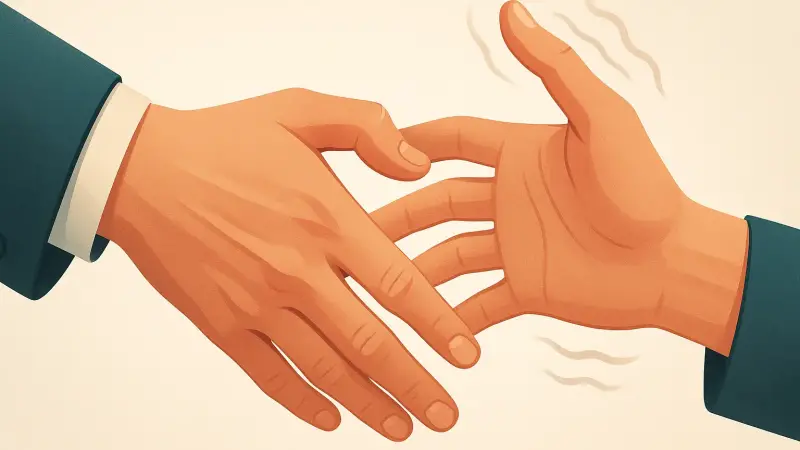
That shaky feeling shows up fast
Someone can feel steady all day, then their hands start to tremble right before something that matters. A talk at a TEDx event, a penalty kick in a World Cup match, a courtroom appearance, an audition. It isn’t one single “big moment,” and it varies a lot by person and setting. The common thread is speed: the body flips into high alert before the mind finishes the sentence. That tremble is usually a side effect of the same system that makes a heart race and a mouth go dry. It’s the nervous system pushing the muscles toward readiness, even when “ready” looks messy.
The body is trying to be useful
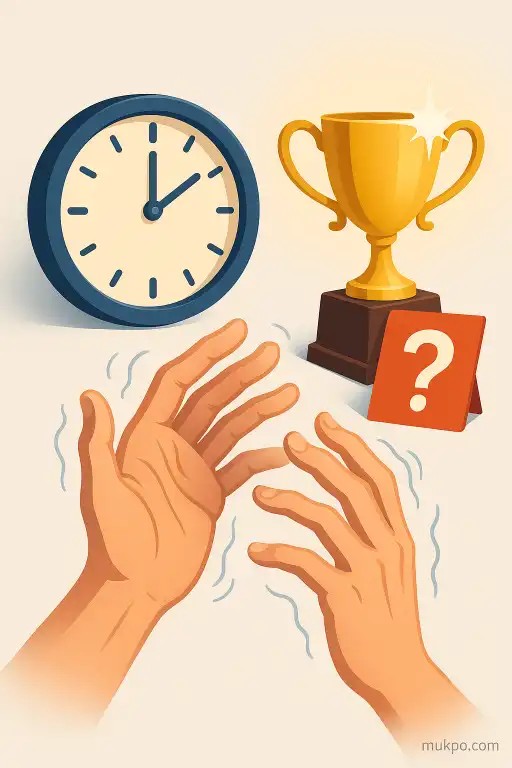
Right before a stressful performance, the sympathetic nervous system tends to surge. Adrenaline (epinephrine) rises, and so does norepinephrine. Blood flow gets prioritized for large muscles. Breathing can get quicker. The goal is not calm hands. The goal is rapid movement and fast reactions. Fine motor control is a luxury compared with sprinting, bracing, or reacting.
Small muscles in the hands are especially exposed to this shift. They’re tuned for precision. When overall muscle activation ramps up, they can start to “oscillate” instead of holding a perfectly still position. That oscillation is tremor. It often gets worse when someone is holding their hands out or trying hard to keep them still, because the muscles are actively contracting and correcting in tiny loops.
Tremor is partly physics, partly chemistry
Even at rest, muscles and nerves produce small fluctuations. Everyone has a low-level “physiological tremor,” but it’s usually too subtle to notice. Stress hormones make that background tremor larger by increasing how strongly motor units fire and how sensitive muscles are to signals. Caffeine, nicotine, some asthma inhalers, and many decongestants can push the same pathway, so a “normal” amount on an ordinary day can look different on a high-stakes day.
One detail people often overlook is temperature. Cold fingers can shake more because muscles need more activation to do the same work, and the nervous system compensates. Another is blood sugar. If a big moment arrives after a long gap without food, shakiness can be a mix of adrenaline and low glucose. The feeling can be similar, even though the drivers aren’t identical.
The brain’s threat filter matters
The tremble isn’t just about the event itself. It’s also about evaluation. Moments that involve being watched, judged, or recorded tend to pull harder on the threat system. A person can be fine rehearsing alone, then start shaking the second a panel sits down or a camera light turns on. That’s social threat: the brain treats status loss and public failure as real danger, even when the room is safe.
Attention changes the experience too. When someone monitors their hands closely, the movement becomes more noticeable and often feels worse. The sensory system is tuned up, scanning for errors, and the motor system is making constant micro-corrections. That combination can amplify the perception of shaking, even if the actual movement hasn’t doubled.
Why it can look different from one person to the next
Two people can stand in the same spotlight and have different bodies. Sleep loss, recent stress, fitness level, medications, and baseline anxiety all shift the threshold for tremor. So do thyroid hormones and illnesses that affect nerves. For most people in big moments, it’s a temporary spike in normal physiology. For some, the shake can be strong enough to resemble essential tremor or another condition, and the line can be unclear without a medical evaluation.
The setting changes it as well. A violinist backstage might notice shaking in the bow hand first. A speaker might see it in a clicker or a sheet of paper. A soccer player might not notice their hands at all, but see it in their first touch on the ball. The same stress response shows up wherever precision is demanded right when the body is primed for speed.
Related reads
- How tiny bedtime rituals quietly prepare your brain for sleep
- Why your recorded voice sounds like a stranger
- A bakery that bakes secret birthday messages into loaves that appear only when toasted
- Why pupils widen when someone catches your eye
- Why you cannot tickle yourself
- What happens to memories overnight when sleep seals them in