

That split second when you hear it
You can be half-listening at a noisy wedding in Brooklyn or in a crowded pub in London, and still snap to attention when someone says your name. It feels oddly automatic. There isn’t one single “place” where this happens. It shows up anywhere speech is competing with speech. The basic mechanism is that your brain treats your name as high-priority information. It keeps a light watch for it, even when you’re focused on something else. Researchers often point to the “cocktail party effect,” the idea that attention can select one stream while still monitoring the background for personally meaningful signals.
Your brain keeps a low-level scan running
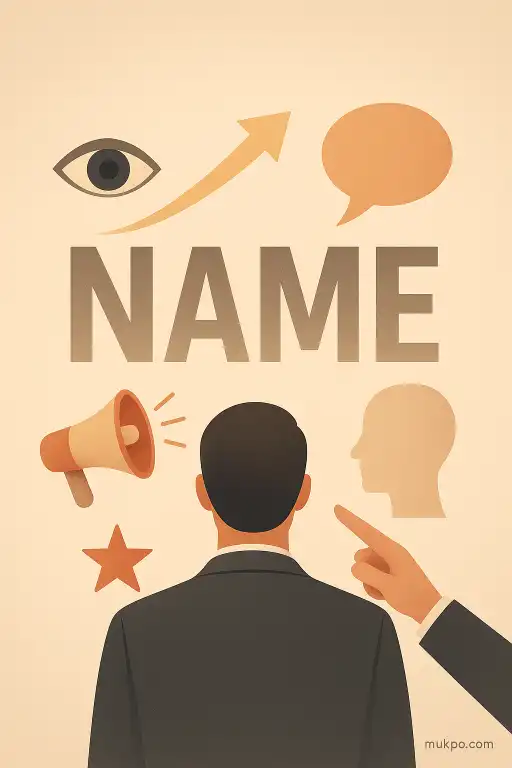
Attention is not a single on/off switch. It’s more like a budget that gets spent. Most of it goes to whatever you’re doing, but a small portion stays on patrol. That patrol is not looking for every word equally. It’s biased toward things that have mattered repeatedly: your name, a baby crying, a sudden loud bang, certain alarms. Your name is special because it has been paired with “this message is for you” thousands of times, starting early in life. So the sound pattern becomes a strong cue for relevance, even before you consciously register the sentence it came from.
This is why the effect can happen even when you can’t repeat what the other person just said. The system that flags “that’s your name” can run ahead of the system that builds a full, reportable understanding of the conversation. It’s also why it’s not flawless. If the room is too loud, or if you’re deeply absorbed, the scan can miss it. The threshold shifts with fatigue, stress, alcohol, and how demanding the main task is.
Familiar sounds are processed differently than other words
Your name is not just meaningful. It’s also extremely familiar in a very specific way. You know its exact rhythm, likely pronunciations, and common lead-ins (“Hey, …”; “Excuse me, …”). That makes it easier to pick out from partial information. You don’t need a clean signal. A few phonetic fragments can be enough for your brain to make a confident guess. Other words usually need more context to lock in, especially in noise.
A detail people often overlook is that this isn’t only about volume. It’s about timing and contrast. If your name lands in a brief gap between claps of laughter, or right after a sentence ends, it has a better chance of being detected than a louder word spoken over a burst of overlapping chatter. The auditory system uses those micro-pauses to separate streams. In a room with many talkers, those gaps are constantly opening and closing.
It competes with other “personal” cues
Your name isn’t the only thing that can break through. People also react to words tied to identity and goals: a child’s name, a workplace term, a sports team, a medical condition, a nickname no one else uses. That helps explain why different people in the same room notice different fragments of the same background conversation. What counts as “important enough” is tuned by learning and current concerns, not by the dictionary meaning of the word.
It also helps explain why the effect can feel inconsistent. Someone might not react to their name when it’s said by a stranger across the room, but react instantly when the same name is said by a familiar voice nearby. Voices carry identity cues, and familiarity with a voice can make the signal easier to segregate from the crowd. In real rooms, “who said it” is part of the sound, not separate from it.
Sometimes it’s not your name at all
Misfires happen. People turn their head because they heard something name-like, not because their name was actually spoken. Many names share sound shapes with other words, and noise fills in missing bits. If the first syllable matches, or the stress pattern fits, the brain can momentarily tag it as relevant and only correct later. That quick “Did someone say—?” feeling is the detection system working with incomplete evidence.
The social setting matters too. At a work mixer, a name is often followed by a request, a question, or a social obligation. In a family gathering, it might signal attention, praise, or trouble. Those repeated pairings give the sound extra weight. So when it cuts through a crowded room, it’s not just recognition. It’s your mind preparing for the kind of interaction that usually follows.

Related reads
- How brief goodbye routines steady anxious minds
- The beach that sings when you walk on it
- The 1835 newspaper hoax that convinced readers the moon teemed with strange creatures
- The hill where cars mysteriously roll uphill
- The secret assay that kept monarchs honest: the Trial of the Pyx in Tudor England
- A bridge that hummed a different tune as the temperature dropped