
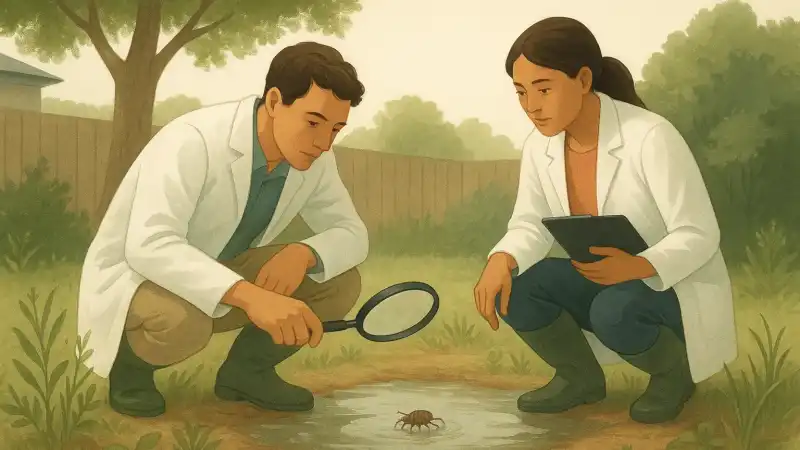
After a rain, a backyard puddle looks like nothing. But to a biologist with a hand lens, it can be a tiny lake with its own food web. There isn’t one single famous puddle story that fits every case. New species from small, temporary pools have turned up in lots of places, from suburban gardens in the UK to vernal pools in the US, and roadside ditches across parts of Europe. The core mechanism is simple: someone samples a small patch of water, finds an animal that doesn’t match known descriptions, and then proves it’s distinct by comparing anatomy (and often DNA) against museum collections and published records.
Why a puddle can be “new habitat”
Puddles feel temporary to humans, but many microscopic animals are built for temporary water. Water mites are a good example. They’re arachnids, related to spiders and ticks, and a lot of them live in freshwater. Some can survive dry spells as eggs or dormant stages tucked into damp soil, leaf litter, or moss right beside where the water will return.
The overlooked detail is how sharp the boundaries are. A puddle can be only a few meters wide, but it’s still its own chemical mix. Slight differences in acidity, leaf tannins, algae, or even the kind of gravel underneath can sort species into different puddles like separate neighborhoods.
What scientists actually do with a puddle sample
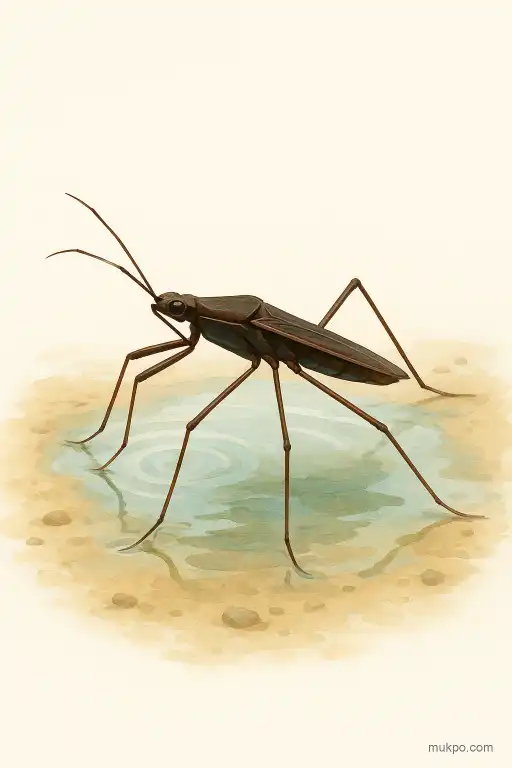
The field part is usually plain. A researcher (or sometimes a student or naturalist) scoops water and debris into a container, then pours it through a fine mesh. What’s caught in the mesh goes into a vial, typically with ethanol if it’s headed for DNA work, or another preservative for morphology. The “mud” matters as much as the water, because mites cling to plant fragments and grains of sediment.
Back in the lab, water mites are picked out under a dissecting microscope. That’s slow. They’re often just a millimeter or two long, and their colors can fade after preservation. The first big sorting step is simply: does this look like anything already known from this region and habitat type?
How a water mite becomes a “new species”
Finding something unfamiliar is not enough. Taxonomists compare the specimen against published species descriptions and reference material in collections. For water mites, the decisive traits can be tiny: the shape of body plates, the arrangement and length of specific setae (bristles), the claws on the legs, and especially the structure of the genital field. Those details can sound fussy, but in mites they’re often more reliable than color or overall size, which can vary with age and nutrition.
DNA is now common as a second line of evidence, usually a barcode gene such as COI, but it’s not always possible or definitive on its own. A clean “new” genetic signal still has to be tied to a physical specimen. That specimen becomes the type specimen, stored in a museum or research collection so other scientists can re-check the claim later.
Why backyard finds happen more often than people expect
It’s not that backyards are magical. It’s that a lot of small-water habitats are under-sampled. Rivers, lakes, and wetlands get attention. A puddle that dries in three days usually doesn’t. So the discovery is often about effort, not rarity: someone finally looked carefully, at the right time, with the right tools.
There’s also a timing effect. Temporary pools can suddenly become crowded with fast life cycles—algae blooms, insect larvae, tiny crustaceans—and water mites can track that boom. If a sampling trip lands in the short window when adults are present, the chance of noticing an odd species jumps. Miss that window and the same spot can look empty.
What “new” can mean in taxonomy
“New species” can mean a species that truly hasn’t been described anywhere, but sometimes it means something else: a known species that had been lumped together with a lookalike and only later split apart. Water mites have many cryptic species—animals that look almost identical until you measure specific structures or compare DNA. In those cases, the puddle didn’t create novelty. It revealed that the old categories were too broad.
And sometimes the uncertainty goes the other way. A specimen can look different because it’s juvenile, damaged, or unusually shaped due to the local conditions. That’s why formal descriptions usually rely on multiple adults, often of both sexes, from more than one sample. A single backyard puddle can start the story, but it rarely finishes it on its own.
Related reads
- How subterranean rivers hollow out caves through chemical weathering
- Why your mouth moves when you read silently
- A garden that sprouts coins instead of flowers every spring
- Why rushing makes tiny problems feel catastrophic
- How leafcutter ants cultivate fungal gardens that never touch sunlight
- The neighbor who returns lost keys with a typed note of thanks