
A simple question behind the gimmick
Why pay an orchestra when you can pay a machine once? In Paris under Napoleon III, that question didn’t stay hypothetical. It showed up in theaters and cafés-concerts as a sales pitch, and sometimes as a threat. The basic mechanism was straightforward: a keyboard, pinned cylinder, or perforated medium drove valves and levers, which drove sound. In some venues, it wasn’t even pretending to be subtle. A mechanical instrument would be put where a small ensemble usually sat, and the manager would argue the audience got “the same” music with fewer wages, fewer rehearsals, and fewer personalities to manage.
What “clockwork musicians” were in practice
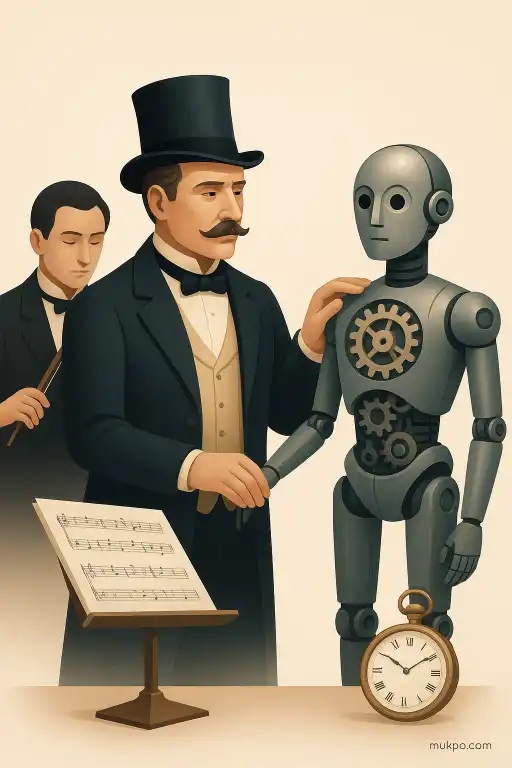
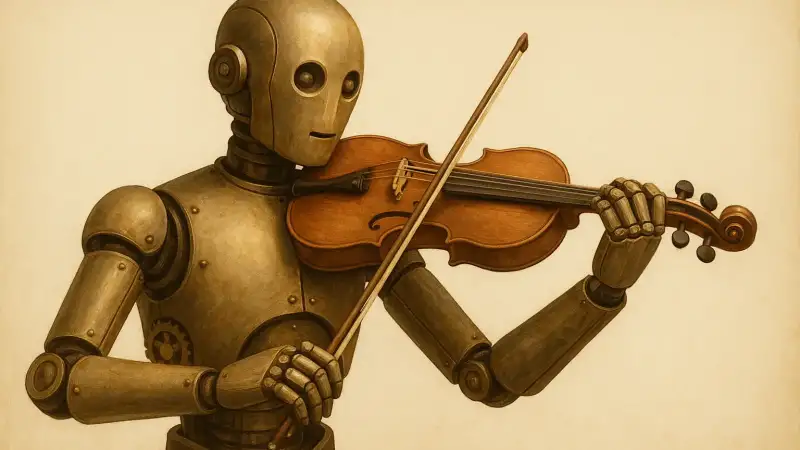
Most of the time, the “automaton” wasn’t a lifelike metal violinist bowing away. It was an instrument that automated the performance. Think barrel organs on the street, mechanical pianos in private rooms, orchestrions built to imitate a small band, and self-playing harmoniums used for dance tunes. The impresario’s trick was to present that mechanism as a replacement for people rather than as a novelty. The audience saw one box. Behind it was a lot of hidden labor: arranging, pinning, cutting, tuning, and constant repairs.
One detail people usually overlook is how physical these systems were. Temperature and humidity changed the way wooden parts expanded, leather valves sealed, and reeds spoke. A mechanism that sounded crisp in rehearsal could wheeze in a packed hall full of warm bodies. That’s part of why these devices often needed a minder on site. Not a violinist, but still a worker, listening for the moment a register stuck or a bellows lost pressure.
How an impresario could use them against musicians
Replacing players wasn’t only about the ticket price. It was about control. A machine doesn’t arrive late, doesn’t demand a benefit night, and can’t walk out mid-season. For a manager trying to run a tight schedule, that mattered. So did censorship and taste. A programmable instrument could be kept on approved repertoire, and it could repeat the same “safe” selections every night without improvising anything risky. In the Second Empire’s entertainment world, where venues were competing hard and policing could be unpredictable, predictability had value.
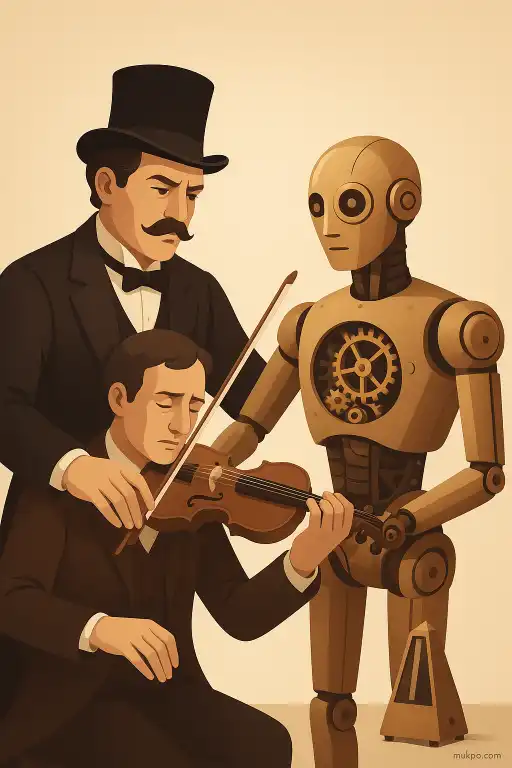
There’s also a basic bargaining tactic here. Even if a full replacement was unrealistic, the presence of a working machine changed negotiations. A manager could point to the device and imply that a strike or a wage demand had consequences. That pressure landed most heavily on the least famous players. Star singers still drew crowds. A pit violinist or a cornet player was easier to threaten, because the audience wasn’t buying a ticket with that name in mind.
Why the machines rarely matched the job people expected
Automated instruments were good at being consistent, but live entertainment isn’t only consistency. A real ensemble follows a dancer who speeds up, stretches a phrase for a singer who needs breath, or covers a mistake without announcing it. Mechanical music had trouble with that kind of flexibility. Tempo changes were possible on some systems, but they were limited and often clumsy. Dynamics were another issue. Getting a convincing swell or a sudden hush out of a mechanism is harder than it sounds, because the “hands” are bellows pressure, valve timing, and how hard a hammer strikes, all of which have mechanical limits.
And then there was maintenance. In a busy venue, a machine was worked hard, night after night, in dusty rooms. Leather dries. Springs fatigue. Pins loosen. Reeds go out of tune. A human musician practices and adapts. A machine degrades until someone stops the show and opens the case. That reality made some impresarios treat “no musicians” as an aspiration rather than an achievable operating model.
What audiences tended to notice, and what they didn’t
Audiences often noticed the novelty first. They looked for the hidden trick. They listened for the uncanny sameness between nights. In the right setting, that could be a selling point. A popular tune reproduced cleanly, with a lot of volume, could satisfy a crowd that came to drink and talk as much as to listen. In a more attentive room, the sameness could read as lifeless. Not because machines can’t be loud or accurate, but because the tiny irregularities that signal “a person is reacting right now” weren’t there.
What many people didn’t notice was how the repertoire itself got reshaped to fit the mechanism. A machine liked certain keys, certain textures, and certain kinds of repetition. Complex rubato, quick back-and-forth between solo and accompaniment, and spontaneous encores were awkward. So the device didn’t just “replace musicians.” It quietly pushed the whole evening toward music that could be pinned, punched, or programmed, and away from music that needed minds in the moment.
Related reads
- How a vaudeville theater’s curtains seem to remember the names whispered into them
- Why people confidently defend choices they never made
- The Topkapi trial that pitted palace officials over a vanished sacred banner
- How sight changes what we hear: the McGurk illusion explained
- Why your brain needs extra time to wake up fully after sleep
- How backyard bird feeders reshape which songbirds visit your neighborhood