
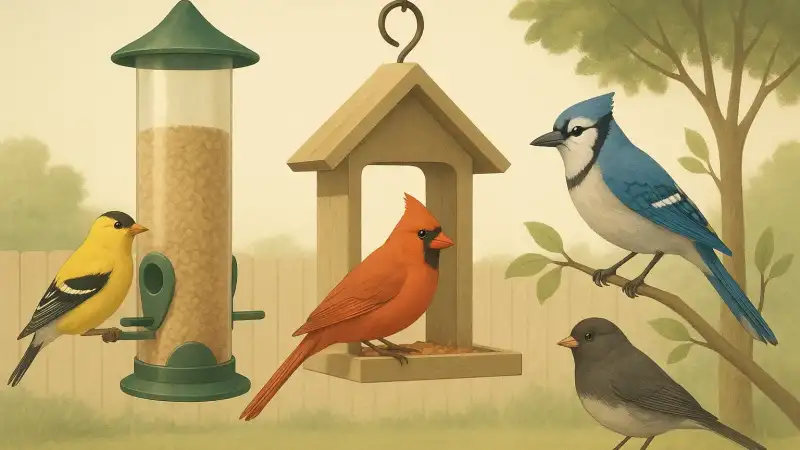
If you put out a feeder, the cast of birds around your street can change fast. It isn’t one single “neighborhood story,” either. It plays out differently in places like suburban Minnesota, coastal California, and the UK’s garden-heavy towns, because the local species pool is different. The basic mechanism is simple, though. A feeder adds a predictable food patch that wasn’t there before. That reliability shifts who spends time nearby, who sings from the closest trees, and who gets crowded out. The surprising part is how quickly those small decisions—made bird by bird—add up into a different soundscape.
A feeder creates a new kind of habitat
Birds don’t treat a feeder like a “bonus.” Many treat it like part of the daily route, especially in cold snaps or during late winter when natural seeds are harder to find. Once a predictable food point exists, nearby cover becomes more valuable. A hedge, a dense shrub, a small stand of conifers, even a patch of ivy can turn into a waiting room. That pulls certain birds closer to houses than they would otherwise spend time.
The overlooked detail is that feeders don’t just add calories. They concentrate time. Birds that might have spread out across yards and alley trees end up repeatedly converging on the same few perches, rails, and branches. That changes how often they cross paths. It also changes where they choose to sing from, because singing tends to happen near the places they’re already spending their morning.
Predictable food favors some species over others
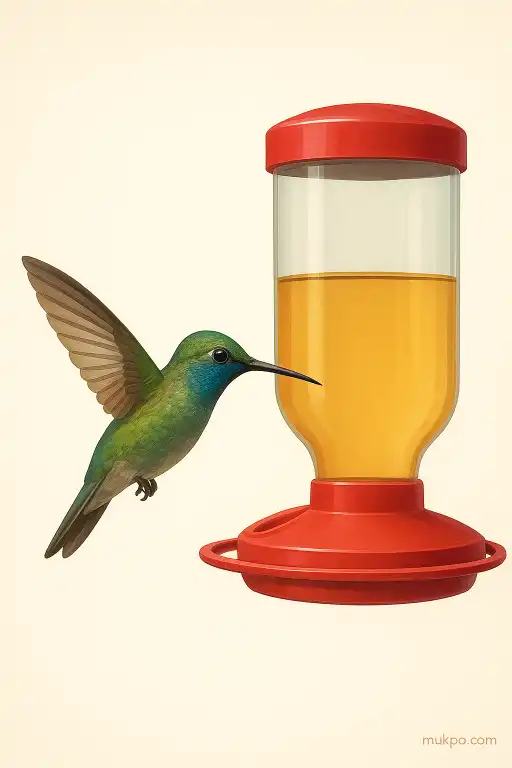
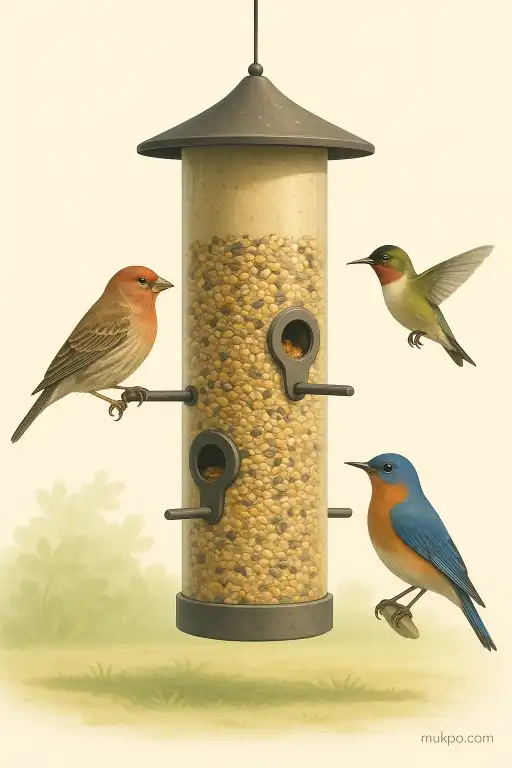
Different birds are built for different kinds of meals and different ways of feeding. A tube feeder full of small seeds is easy for some finches and chickadee-type birds to use quickly. A big platform with mixed seed and crumbs can suit larger, less delicate feeders, including birds that are comfortable feeding on the ground right below. The result is that a specific feeder setup acts like a filter. It selects for birds that can exploit it efficiently and safely.
That filter matters because time spent at feeders is time not spent elsewhere. A species that can get most of its needs from a feeder may spend more of the day in the immediate area. A species that can’t use the feeder well may not benefit, even if it lives nearby. So the local lineup shifts, not because birds “move in” like tenants, but because some are now more visible and vocal in the same small radius.
Crowding and pecking order change who sticks around
Feeders compress birds into close quarters, and that raises the importance of social dominance. Larger, bolder species can claim the best positions. Smaller species may still use the feeder, but in shorter bursts, or only when the dominant birds are absent. That changes the pattern of visits across the day. It can also change how long a bird lingers in the yard, which affects how often people hear it.
A concrete example is the “chase loop” many people notice: one assertive bird lands, several others flush into nearby branches, then the feeder suddenly goes quiet for a minute. That isn’t just drama. It changes feeding efficiency and stress levels, and those costs can be different species to species. Over time, the yard can feel “taken over” by the birds that win those small contests.
Feeders can pull birds across boundaries
Because the food is reliable, birds may cross spaces they would usually avoid. A strip of open lawn, a driveway, or a busy street can be a real barrier for a small songbird. A dependable feeder on the other side can make that crossing worthwhile. That’s one reason a single yard sometimes seems to affect birds beyond the fence line. It can function like a stepping-stone that connects pockets of cover.
This is also where local context matters. In a neighborhood with scattered trees and lots of open ground, a feeder near shrubs can act like an anchor point. In a heavily wooded area, the same feeder might not change movement patterns much, because there are already many safe foraging options. So the “reshaping” is often strongest where natural food patches are limited or fragmented.
Season, weather, and disease risk shift the mix again
The feeder effect is not constant through the year. During breeding season, many songbirds focus on insects and nestling protein, and some feeder-regulars become less interested in seed. In winter, the same feeder can become central. Weather can sharpen this. After a storm, visits can spike, and species that were barely noticeable can suddenly appear, simply because the energy math changes.
One more thing people often miss is that crowding increases contact rates, which can increase the chance of pathogens spreading. That can alter which birds are present, not just day to day, but across weeks if an illness hits a local population. When that happens, the shift can sound like a quieting of one familiar singer and the sudden prominence of another, even if nothing obvious changed in the yard itself.
Related reads
- A subway tile with a fossil trapped inside it since the station was built
- The Victorian coroner whose seaside inquest revealed a chemist’s lethal whitening brew
- Why a song suddenly gives you chills and goosebumps
- How bioluminescent plankton make whole waves glow at night
- A park bench packed with thousands of folded notes left by strangers
- How pitcher plants use slippery surfaces and fluid flow to drown prey