
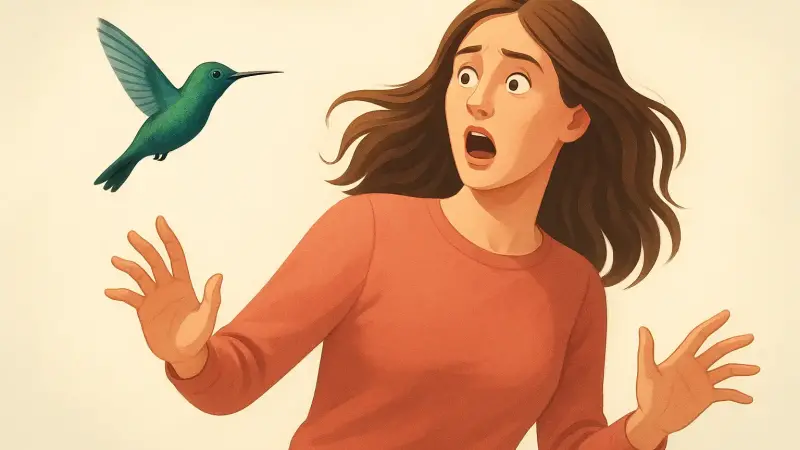
A familiar moment that doesn’t fit the clock
It’s not one single famous incident. People report it after all kinds of sudden scares, from a near-miss at a crosswalk in New York City to a car skidding on black ice in Minnesota to an unexpected loud bang in a quiet apartment. For a few seconds, the world feels stretched. A falling object seems to drift. A shout sounds longer than it should. The core mechanism isn’t that time changes. It’s that the brain flips into an emergency mode that changes attention, memory, and the way the moment gets recorded.
One overlooked detail is where the “slow motion” feeling shows up. It often isn’t strongest while the event is unfolding. It can appear right after, when the brain tries to replay what happened and finds an unusually dense, vivid record.
The alarm system that hijacks attention
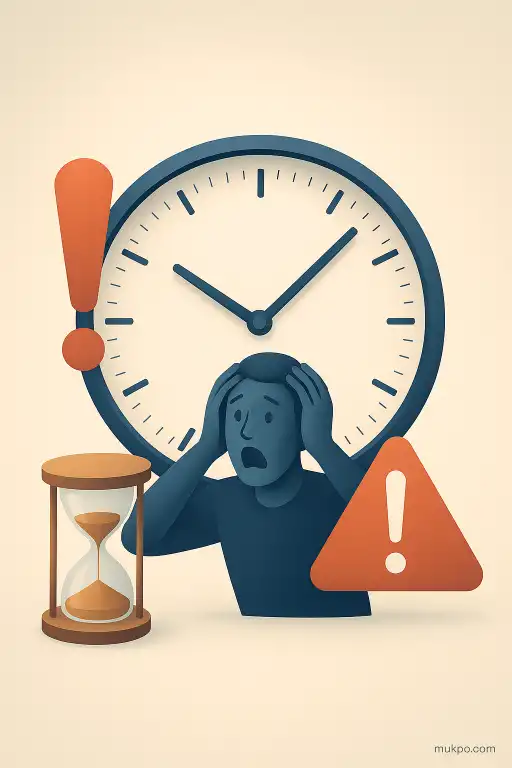
A sudden scare triggers fast threat-detection circuits. The amygdala helps flag danger. Stress chemicals like adrenaline and noradrenaline rise quickly. Heart rate jumps. Breathing changes. These reactions narrow attention toward whatever seems most relevant for survival, and they push the brain to prioritize incoming sensory details over everything else.
That narrowing has a strange side effect. When attention locks tightly onto a few cues—an oncoming bumper, the edge of a stair, the face of a barking dog—those cues can feel unusually clear and “high resolution.” Meanwhile, background information drops away. The moment feels different not because more time exists, but because more mental resources are being aimed at a small slice of the scene.
Why memory density can feel like slower time
After a scare, people often describe a detailed replay: the angle of a wheel, the pattern on the pavement, the exact pitch of a sound. That can happen because stress hormones influence how strongly memories are encoded, especially for emotionally charged events. When the brain stores more fragments from a short window, the replay later contains more “frames.”
When someone looks back and finds a lot packed into what the clock says was a second or two, it’s natural to infer that the second must have been longer. This is one reason the effect can feel stronger in hindsight. The lived experience and the later reconstruction get blended, and the reconstruction can be unusually rich.
Perception, prediction, and the sense of “now”
The brain is always predicting what will happen next. Under normal conditions, it can lean on those predictions and gloss over small timing details. A sudden scare breaks that flow. Predictions fail. The brain starts sampling and updating faster because the cost of being wrong just went up.
This can change how the “present” feels. The sense of now is not a stopwatch tick. It’s a constructed window that depends on attention and how much the brain needs to update its model of the world. When updates feel urgent and continuous, the moment can feel expanded, even if objective time is not.
Why it varies so much from person to person
Not everyone gets the same slow-time effect, and it’s unclear exactly how consistent it is across situations. Training, expectations, and familiarity matter. A paramedic or firefighter might still feel a jolt, but repeated exposure can change what gets attention and how the event is encoded. Someone already anxious or sleep-deprived may have a different baseline, and the same startle can land harder.
Even the type of scare matters. A near car crash often produces a tight tunnel of attention and a detailed visual snapshot. A sudden sound in the dark can push the brain to hunt for missing information, which changes what gets remembered. That’s why two people in the same event can agree on the outcome but disagree on how long it seemed to last, or which instant felt like it “slowed.”
Related reads
- How lichens mine rock faces with living acids
- The cliffside that coughs up bottles after every high tide
- Why the perfect word finally pops into your head hours later
- How whale carcasses create island ecosystems on the seafloor
- The law that once listed house cats as livestock
- How background chatter quietly drains your focus