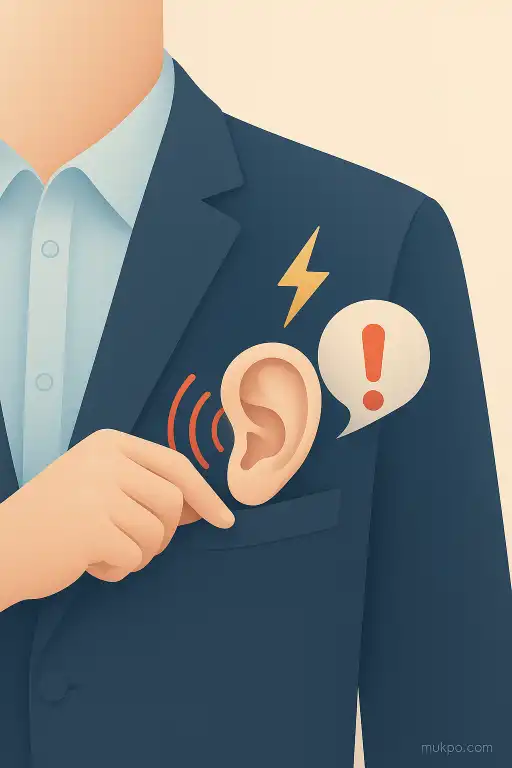
That buzz that isn’t there
You’re walking through a grocery store line and feel your phone vibrate in your pocket. You reach for it. Nothing. No notification. No missed call. People describe it in lots of places, not one single town or incident: you’ll hear it from commuters in New York, students in London, and office workers in Seoul. It’s often called the phantom pocket buzz, and it tends to show up when the brain is primed to expect a signal. Expectation doesn’t just change what people notice. It can change what they feel.
Why it feels so real

The body is full of tiny, constant sensations: fabric shifting, muscles stabilizing, skin catching a draft, a pulse in the thigh when you’ve been standing still. Most of it gets filtered out. When someone is waiting for a message, the brain has a “template” ready for a vibration-like sensation, so small inputs that normally get ignored can match that template well enough to be tagged as a buzz.
A detail people overlook is how much the phone’s position matters. The edge of a case, a seam in jeans, or a belt clip can press on a small patch of skin. When posture changes, that pressure changes quickly. The shift can feel like a short pulse, especially if the phone sits against an area with lots of sensory nerve endings.
Expectation as a sensory setting
Expectation works like a setting the nervous system can turn up or down. If someone is anticipating a call, monitoring sensations becomes more active. The brain is not passively waiting for perfect data. It is constantly predicting what should happen next and checking incoming signals against that prediction. When the prediction is strong, less evidence is needed before a sensation is treated as “real enough” to react to.
This isn’t unique to phones. People “hear” their name in crowd noise. They “feel” a tap that turns out to be a sleeve brushing their arm. These are the same ingredients: ambiguous input plus a mind that’s on alert for a specific pattern.
Common triggers people don’t connect
The phantom buzz tends to cluster around certain situations. Waiting is a big one: standing at a bus stop, sitting through a meeting, watching an upload bar creep forward. Social stakes matter too. A delayed reply, a job callback, a family update. The more important the possible message feels, the more the body-checking loop stays active in the background.
There are also plain physical triggers that get misread. A notification sound from someone else’s phone can prompt a quick internal scan: “Was that mine?” That scan makes people notice sensations they would have missed. Even small muscle twitches in the thigh can feel phone-like when the brain is already searching for that specific signal.
Why it’s a vibration, not a flash
People rarely report “phantom screen flashes” with the same frequency, and the difference is telling. Vision gives a lot of crisp information, and a phone screen is either lit or it isn’t. Touch is noisier. A vibration is also designed to be detectable through clothing and distraction, so the brain treats it as an important kind of cue. That makes it a good candidate for false alarms.
There’s also a memory component. If someone’s phone has a distinctive vibration pattern, the body can learn it. Later, a similar rhythm from footsteps, a train rumble, or the movement of fabric can borrow that learned “signature” for a moment. It’s brief, convincing, and then gone as soon as attention checks the pocket.