

Seeing it happen
Stand on a street at noon and you expect the usual hard-edged silhouettes: a lamp post cut onto the sidewalk, a person’s shadow tucked under their shoes. But there isn’t one single “shadowless street.” It happens in a few very specific setups. One is geographic: near the equator, the sun can pass almost directly overhead, so vertical objects cast almost no sideways shadow. Places like Quito, Ecuador and Singapore can get that look on certain days. Another is architectural: tall buildings can flood the street with reflected light at the same time the sun is high, so the shadows are there but hard to see. The core mechanism is simple geometry mixed with how bright the surrounding surfaces are.
When the sun is straight up
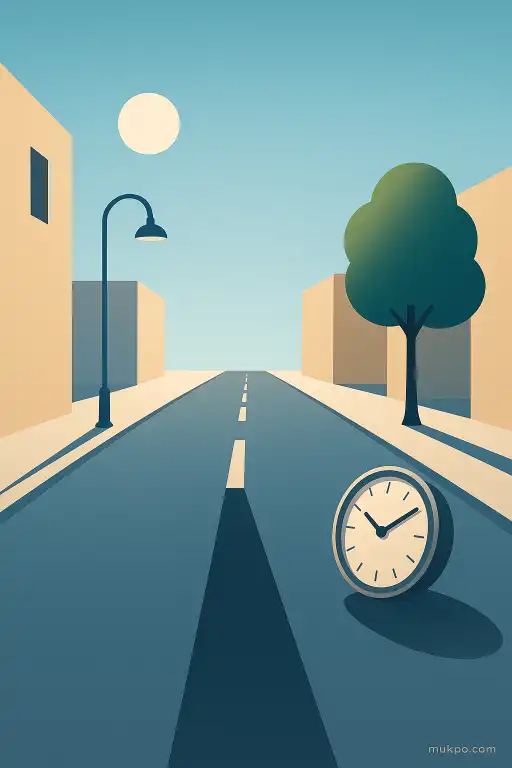
The cleanest version is at the equinoxes in places close to the equator. In Quito, for example, people talk about the “no shadow” moment around midday because the sun’s path can line up almost perfectly with vertical objects. If the sun is directly overhead, a pole’s shadow drops underneath it. On flat pavement it can disappear from your point of view because it’s hidden by the object itself.
This doesn’t happen everywhere, and it doesn’t happen every day. The exact date and clock time vary with latitude, the season, and even the difference between “solar noon” and what the clock says. Solar noon is when the sun is highest where you are, and it often isn’t 12:00. Time zones, daylight saving time, and longitude within a time zone all shift it.
Why shadows can still seem to vanish in a city
A different kind of “vanishing” happens on streets lined with glass, pale concrete, or metal. At midday, the sun’s light is intense and arrives from above, but it also bounces. Bright façades and light-colored pavement act like big reflectors, filling in what would normally be a dark shadow with extra light from the sides. The shadow hasn’t stopped existing. The contrast just collapses, so your eye stops reading it as a shadow.
The overlooked detail is how much the ground matters. A dark asphalt street keeps shadows crisp because it doesn’t reflect much light back up. A pale stone plaza or a sun-bleached concrete road can do the opposite. On the same day, a person can look shadowless on a bright sidewalk and sharply outlined one step later on a darker patch of road.
The role of height, orientation, and small imperfections
Even near the equator, “no shadow” is usually “no obvious shadow.” Any tilt brings it back. Most poles aren’t perfectly vertical. Most streets aren’t perfectly level. A slight lean, a curb slope, or a cambered road surface gives the sun just enough angle to cast a thin line that slides off to one side.
Orientation changes what you notice, too. A narrow street canyon can hide shadows at midday because the light comes mostly from above and reflects off both walls evenly. But turn onto a street that runs a different direction, and the same sun angle can suddenly rake across one sidewalk and carve out high-contrast shapes again. The “shadowless” effect can feel like it belongs to one block because that block happens to line up with the sun and the surrounding surfaces.
What people often misread as shadowless
Cameras exaggerate this. Phone HDR and automatic exposure tend to brighten dark areas and protect highlights. That makes midday shadows look lighter than they felt in person. Add a slightly hazy sky, and the sun’s light is scattered into a soft dome, which further fills shadows in. The scene can look flat, even though there’s still a measurable difference in light.
There’s also a simple perspective trick: when a shadow falls directly under an object, it’s easiest to miss from standing height. A short post can look like it has no shadow because you’re looking at the top of the dark patch, not the patch itself. Step closer and it’s suddenly visible as a tight ring at the base, especially if there’s dust, texture, or a seam in the pavement to give it an edge.
Related reads
- The fungal networks that shuttle nutrients between trees
- The phantom pocket buzz and how expectation creates sensation
- The café that only brews coffee with rainwater
- How pigeons navigate through urban steel and glass
- A bench that gives you cold coins on hot days
- Why our brains insist a lyric says something it doesn’t