
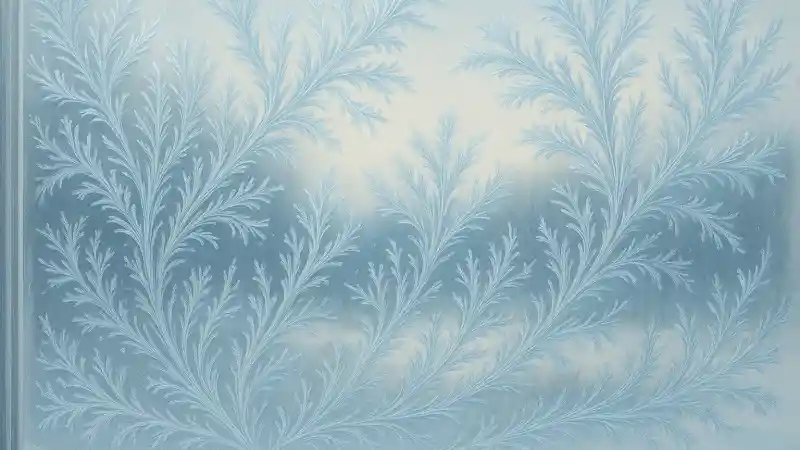
Seeing it on the glass
On some winter mornings, a window doesn’t just look “frosty.” It looks drawn on. Thin white lines branch, split, and branch again, like a sketch that spread while you slept. This isn’t tied to one famous place or event. You can see it in Winnipeg, Hokkaido, or a drafty flat in Glasgow—anywhere the glass gets cold enough while the indoor air still holds moisture. The core mechanism is simple: water vapor turns into ice on the window, and the way that ice grows makes the branching pattern. The pattern is the record of how heat and water moved across that surface, second by second.
Why the window is a perfect stage for ice
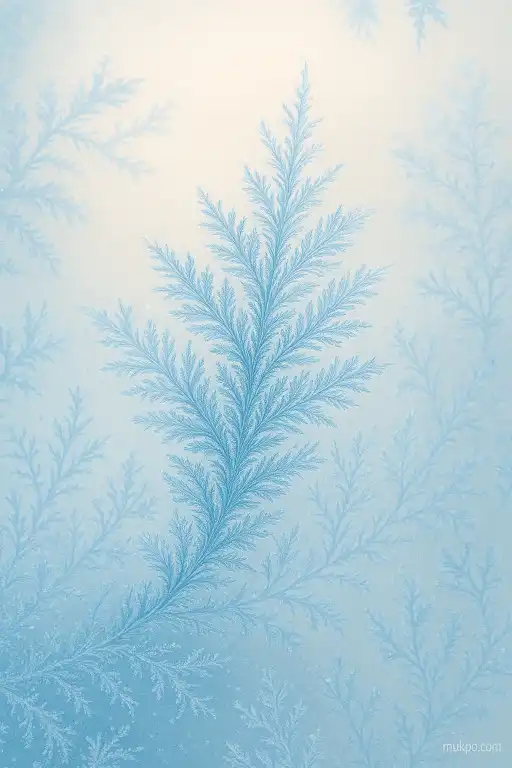
A window is usually the coldest “solid” surface in a room. Glass conducts heat well compared to wood or plaster, and it radiates heat to the cold outdoors. So the inner surface of the pane can drop below the frost point of the indoor air. When that happens, water vapor doesn’t have to become liquid first. It can go straight from gas to solid ice, a process called deposition.
The overlooked detail is that the temperature is not uniform across the pane. The edges near the frame are often colder than the center, because the frame acts like a heat leak to outside. Tiny temperature differences like that decide where the first stable ice forms, and those early spots can steer everything that grows after.
The first crystals set the rules
Frost patterns start from nucleation sites. Sometimes it’s a speck of dust, a scratch, or a microscopic pit in the glass. Sometimes it’s residue left by a cleaner, smoke film, or skin oils near a latch where people touch. Those spots help the first ice embryo survive long enough to grow, instead of evaporating back into vapor.
Once a crystal gets going, its orientation matters. Ice has a lattice that grows more easily in some directions than others. That built-in directional preference can encourage sharp, angular branching, especially when the surface is cold and the supply of water vapor is limited. The crystal isn’t choosing a “pretty” shape. It’s following the easiest paths for molecules to lock into place.
Branching comes from diffusion and heat flow
The branching, fractal-like look comes from a feedback loop. Water vapor has to diffuse through air to reach the ice front. Points and tips stick out into the air a little more than flat areas, so they intercept more vapor molecules. That makes the tips grow faster, which makes them stick out even more. Meanwhile, every molecule that freezes releases latent heat, warming the immediate area and slightly slowing growth right next to it.
This combination—vapor arriving unevenly, and heat being released where freezing happens—creates instability at the growth edge. Small bumps become big branches. Side branches appear when local conditions briefly favor growth away from the main direction, such as a tiny draft along the glass or a patch where the pane is a fraction of a degree colder.
Why the same room doesn’t make the same pattern twice
Two mornings in the same house can produce completely different frost drawings because the starting conditions change. Indoor humidity varies with cooking, showers, or how many people were breathing in the room overnight. Outdoor temperature and wind affect how quickly the pane cools. Even the gap between curtains and glass can matter, because it changes the stillness of the air layer right next to the window.
The glass itself also matters. Modern double-pane windows often don’t get cold enough on the inside surface for dramatic patterns, while older single-pane glass does. And a thin film you can’t see—cleaner residue, salt from winter roads tracked indoors, or smoke particles—can shift where nucleation happens, so the entire branching network starts from different seeds each time.

Related reads
- How male seahorses carry and birth dozens of babies
- How mangrove roots breathe in muddy water
- An intersection that fills with hundreds of paper boats after every downpour
- How a Victorian inventor smuggled a steam carriage into a London fair
- The Victorian surgeon whose public anatomy demonstration ignited a London street riot
- A supermarket aisle that keeps smelling like citrus, year after year