
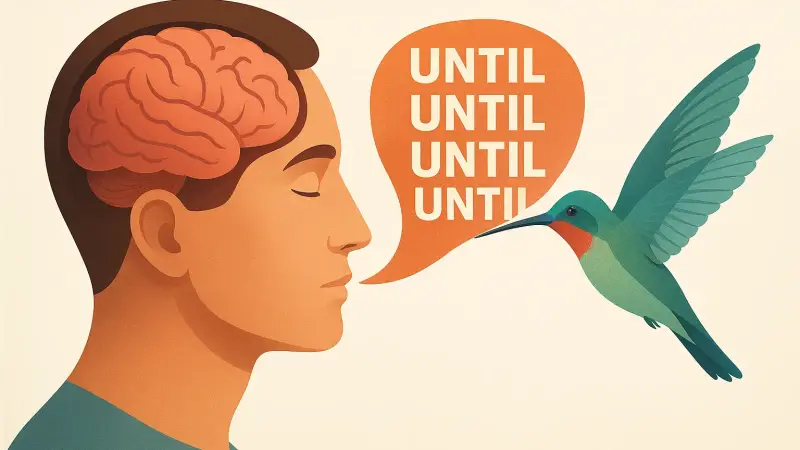
That odd moment when a word turns into noise
Say “door” a few times under your breath and it stays a normal word. Keep going and something flips. The sound starts to feel rubbery and fake, like it belongs to a different language. This isn’t tied to one famous place or event. People report it everywhere, whether they’re repeating “the” while proofreading in the U.S., a short word during language practice in Japan, or a nickname while texting in the U.K. The core mechanism is that the brain stops treating the sound as a meaningful symbol and starts treating it as raw audio. The meaning doesn’t vanish from the world. It just stops landing for a moment.
Semantic satiation: the label and what it describes
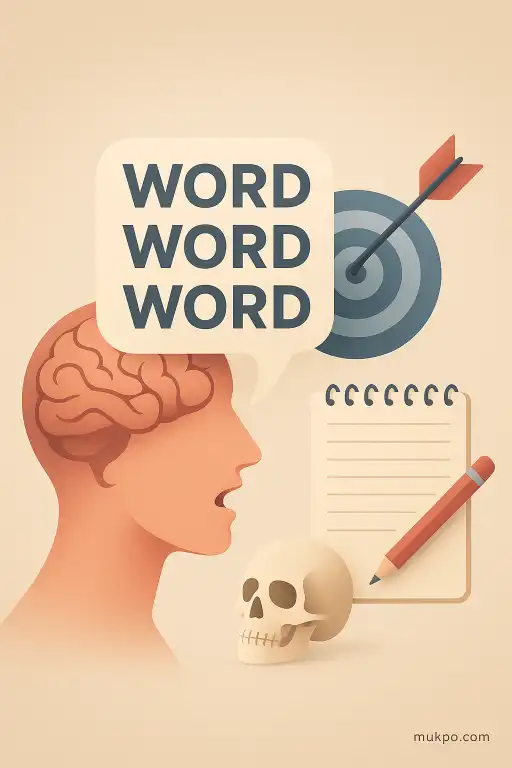
Psychologists usually call this semantic satiation. The basic observation is simple: repeated exposure to the same word can make it temporarily harder to access its meaning. It tends to show up fastest with short, common words and with words you’re repeating rapidly, out loud or in your head. People often assume it’s “the word losing meaning,” but it’s closer to “your access route getting tired.” You can still recognize the word as familiar. You just get a brief delay in the feeling of sense.
A small detail people overlook is that the weirdness isn’t only semantic. The sound itself can start to feel wrong. After enough repeats, the syllables stop chunking cleanly. You notice the consonants and vowels as separate bits of mouth movement. That shift in attention matters, because it changes what your brain is prioritizing.
What repetition does to the brain’s pattern detectors
Brains are built to spot changes. When a signal stays the same, neural responses often shrink. That’s a general effect called adaptation or habituation. With a repeated word, the auditory pattern becomes predictable. So the brain spends less energy on it. The “meaning” part relies on an active chain: sound → recognized word form → linked concept. If the early parts of that chain get less responsive, the later parts get a weaker push.
At the same time, repetition can cause a kind of traffic jam. The word form is being activated again and again, and related meanings can start competing or blurring at the edges. That’s why it can feel like the word is both familiar and strangely untrustworthy. The system is still working, but it’s working in a noisy, overused mode.
Why it feels unsettling, even though nothing is wrong
The discomfort comes from a mismatch. A word is supposed to be a stable bridge between sound and meaning. When the bridge wobbles, the mind flags it as odd. People often describe a split-second sense that the word is “made up” or that they’ve forgotten their language. But this is usually a temporary processing quirk, not a memory failure. The stored knowledge is still there. Access is just briefly slowed or diverted.
It can also nudge a mild dissociation-like feeling because language is tied to identity and control. When a basic label stops behaving, the brain notices the loss of automaticity. That’s easy to misread as something deeper. In most everyday situations, it passes as soon as attention shifts or the repetition stops.
A concrete example: staring at a sign until it stops being a word
Picture someone waiting at baggage claim at Heathrow, fixating on a bright “EXIT” sign. At first it’s just information. After a minute of staring, the letters can detach from the meaning. “E-X-I-T” becomes shapes. The overlooked detail here is eye behavior: tiny involuntary movements keep refreshing what the retina sees, but if you hold your gaze unusually steady, perception can start to fade or distort. That interacts with language. The visual system adapts, and the reading system gets less clean input.
The same thing happens with spoken repetition, just through the ear and speech system instead of the eyes. A repeated word becomes a stable, low-surprise pattern. The brain’s normal “this is a useful label” response quiets down. For a moment, the sound is still there, but the sense of meaning doesn’t automatically snap into place.
Related reads
- The hotel room guests say rearranges itself at night
- Why background conversation wrecks your concentration when reading
- The lake that appears overnight and vanishes by morning
- The market where vendors haggle using a click language
- The road that sings only when you drive at the speed limit
- The village where people speak in whistles across the gorge