
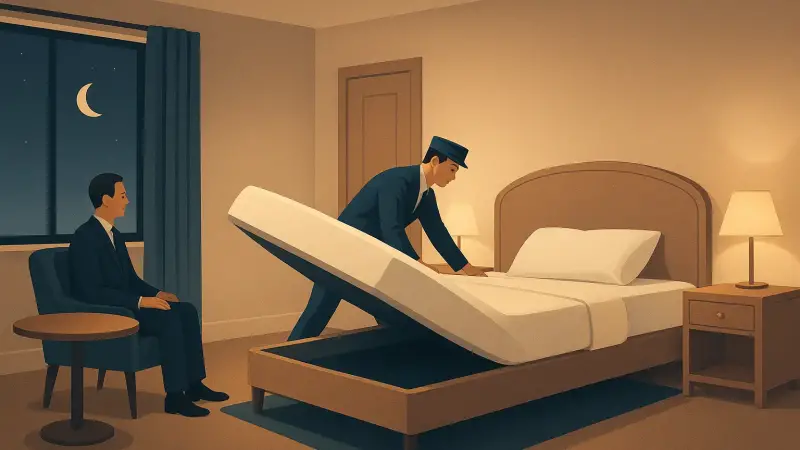
A room that looks different in the morning
Some hotel stories aren’t about noises in the hallway or a bad mattress. They’re about objects that seem to migrate overnight. Guests describe waking up to a chair turned toward the window, the suitcase no longer where it was left, or a lamp angled the wrong way. It’s not one single place, and the reports are scattered. You’ll hear versions tied to older buildings in places like New Orleans, Edinburgh, or Tokyo, but the details vary and the “same room” claim is often hard to verify. The core mechanism people argue over is simple: either someone entered and moved things, or the room itself makes movement easier than it looks.
What people actually report changing
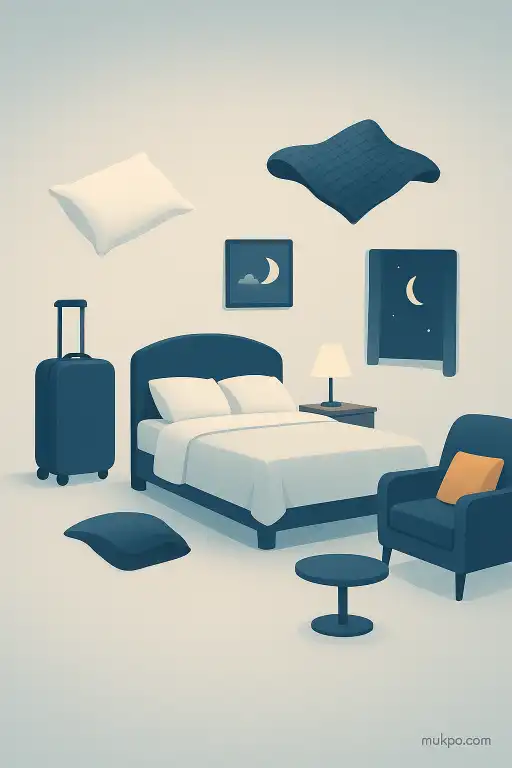
The changes are usually small and practical, not dramatic. A bedside table is a few inches off. A curtain that was fully open is now drawn. The TV remote ends up under a pillow. Sometimes it’s a mirror that’s been nudged so it no longer faces the bed. The overlooked detail is consistency: people tend to remember the “weird” move, but they don’t write down the starting positions. Most rooms also have furniture that already sits slightly off-square, because housekeeping pushes it quickly, outlets dictate where lamps go, and carpet patterns trick the eye about straight lines.
When a guest swears the whole layout changed, it often turns out to be one anchor object that was relocated: a chair, an ottoman, a luggage rack. Move one piece and the room feels reconfigured. Hotels also swap items without thinking of it as “moving your stuff.” A broken lamp might get replaced during the day. A stained throw pillow gets removed. If a guest uses “Do Not Disturb” inconsistently, staff may enter once, then not again, which makes the timing feel uncanny.
How a room can move things without anyone trying
Hotels are full of tiny forces that don’t look like forces. HVAC vibration can walk light objects across smooth surfaces, especially if the fan cycles on and off all night. Mini-fridges and ice machines can add low rumble through the structure. On polished desks, a phone charger cable can slowly tug a remote or a paperback as it relaxes. Heavy doors can create pressure changes that pull curtains and shift loose papers when they slam. If the building is old or the floor is uneven, a chair can “creep” when someone sits down and stands up, then it settles farther away than expected.
There’s also the way hotel furniture is built. Many bedside tables and dressers have felt pads or plastic glides designed to protect floors, which also makes them surprisingly easy to slide. A suitcase on a luggage rack can shift if one strap is twisted or if the rack isn’t fully locked open. People rarely check the rack hinges. A half-collapsed rack can drop a bag a few inches in the night if it gets bumped earlier, and that’s enough to make someone feel like the room “did something” while they slept.
The human side: memory, attention, and jet lag
Hotel rooms are information-poor spaces. They’re meant to be generic, and that makes them hard to encode in memory. After a long day, people place items down without a clear snapshot of where they put them. Then they wake up disoriented, often in a different time zone, and the brain fills gaps with certainty. This is especially strong with “I always put my keys right here” thinking, because routine is comforting. In a room that isn’t yours, the routine is partly imaginary.
Sleep itself adds confusion. People do get up at night and do things they don’t fully remember, even without classic sleepwalking. Someone can move a chair to reach a charger, open a curtain to check weather, or pull a suitcase closer to the door, then crawl back into bed. In the morning, that action doesn’t feel like theirs. When two people share the room, each person also assumes the other didn’t touch anything, because neither one remembers doing it.
When it’s not the room at all
The most grounded explanation is also the least satisfying: another person entered. That doesn’t require a villain. It can be housekeeping, maintenance, a minibar check, or a supervisor verifying a repair. Access logs exist in many hotels, but guests rarely see them, and not all properties keep detailed keycard records in a way that’s easy to review. Mistakes happen too. A staff member can walk into the wrong room, realize it, and back out, leaving a chair bumped or the curtain disturbed.
One situational example that shows how small errors snowball: a guest leaves a laptop on the desk, the “Make Up Room” sign goes out by accident, and housekeeping comes in to swap towels. They avoid touching the laptop but shift the desk chair to vacuum. The chair ends up turned toward the window because that’s how they push it aside. The guest returns late, doesn’t notice, and by morning the room feels altered. The only “strange” part is that nobody thinks of a chair as evidence, so it’s the first thing people stop questioning.
Related reads
- Why background conversation wrecks your concentration when reading
- The lake that appears overnight and vanishes by morning
- The market where vendors haggle using a click language
- The road that sings only when you drive at the speed limit
- The village where people speak in whistles across the gorge
- Why some beetle shells shimmer without pigment