
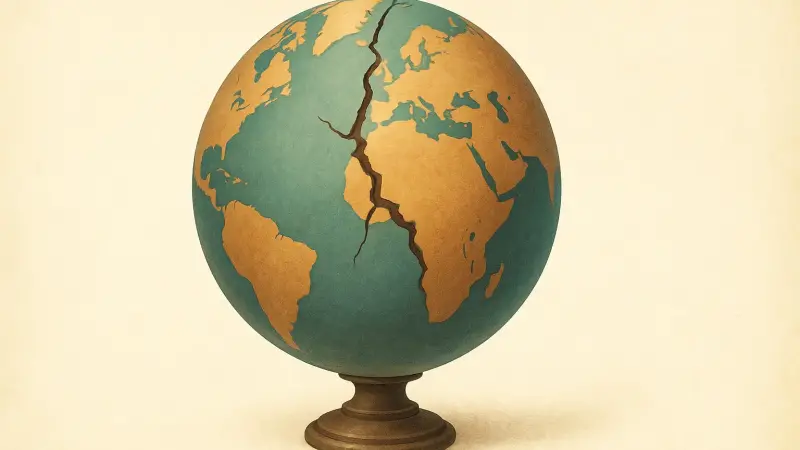
A morning that looked ordinary
It’s easy to forget how much everyday confidence depends on the ground behaving itself. On 1 November 1755, in Lisbon, that confidence failed in public. Churches were full for All Saints’ Day. Then the shaking began, buildings split, and people ran toward the open waterfront—only to meet a tsunami and then fires that burned for days. News traveled fast for the time. Within weeks, letters and printed reports were being argued over in Paris and London. The mechanism was simple and brutal: a disaster that hit the “right” city, on the “right” day, made the Enlightenment’s calm talk about reason, order, and Providence feel suddenly unsafe.
Why salons couldn’t treat it like just another tragedy
Earthquakes were not unknown in Europe, but Lisbon was a major Atlantic capital with diplomats, merchants, and visiting elites who could describe what they saw. That made the event socially “reachable” for people who ran salons and wrote philosophical letters. It was also a catastrophe with multiple stages—quake, wave, fire—so it resisted tidy explanation. One overlooked detail is that the quake struck during a major religious festival. For readers primed to see moral patterns in history, the timing felt like a direct provocation, not a random accident.
Salons were built for controlled disagreement. They could accommodate disputes about taste, politics, and ethics. A mass death event that seemed to punish worshippers while sparing others did something different. It forced the question that polite conversation usually kept at arm’s length: if the world has a rational, benevolent order, why does it behave like this on a random morning?
The panic was philosophical before it was emotional
The Enlightenment had its own internal tension. Many writers wanted a universe governed by regular laws, because laws meant intelligibility. But many also wanted that universe to be morally legible, because morality meant a just God or a just nature. Lisbon pushed those desires into conflict. If earthquakes follow natural laws, then suffering can be unearned. If suffering is earned, then the laws start to look like tools of punishment, aimed with disturbing imprecision.
In practice, this showed up as a sudden urgency around old problems: theodicy (how to reconcile God and evil), optimism (whether the world is arranged for the best), and the status of “natural evil” as opposed to human cruelty. The shock wasn’t that thinkers had never heard the arguments. It was that a fresh, well-documented disaster made the arguments feel like they had consequences. A salon debate could no longer stay abstract when the newspapers were printing body counts and eyewitness accounts.
Voltaire, Rousseau, and the fight over what counts as “natural”
Voltaire used the Lisbon disaster to attack easy optimism and the habit of explaining suffering away. He wrote about it directly, most famously in his poem on the disaster and later in Candide, where optimism becomes a kind of social blindness. The point was not that people shouldn’t search for explanations. It was that certain explanations sounded indecent once the scale of the event was concrete.
Rousseau pushed back in a different direction. He argued that what looks like “nature’s” harm is often intensified by human choices—dense urban living, building practices, and the way people cluster in vulnerable places. That argument didn’t remove the earthquake. It shifted blame and responsibility from Providence to society. Salons could handle “humans did this to themselves” more easily than “God did this,” but that move created its own discomfort. It implied that progress and civilization could turn hazards into catastrophes, which was not the uplifting story many people wanted to tell about modern life.
Lisbon also changed what people thought an explanation should look like
In Lisbon, the response led by Sebastião José de Carvalho e Melo, the Marquis of Pombal, became part of the European conversation. He pushed practical measures and gathered reports, including structured questions sent out to parishes about what people felt and saw. That kind of organized data collection is easy to miss because it sits between philosophy and administration. It also sent a signal: a disaster could be studied, not just interpreted.
That shift didn’t end the moral arguments. It made them more awkward. Once people start treating an earthquake as a physical event with patterns—timings, aftershocks, damage types—the older habit of reading it as a targeted message starts to look less like wisdom and more like guesswork. Salons didn’t stop talking about God, justice, or meaning. They just had to do it while a new kind of explanation, built from observation and reports, was taking up space at the table.
Related reads
- How the 1778 Potato War over Bavarian fields turned Europe’s armies into crop thieves
- How tiny mineral magnets make sand dunes align
- How a distant volcano dimmed sunlight and chilled entire harvests
- A street where every doorstep displays a broken clock set to the same minute
- A bakery that refuses to bake any recipe printed in books
- The squid that flashes in Morse code