

A harbor isn’t supposed to become a parking lot
Most people picture harbors as restless water, even in winter. But some winters, a whole working harbor locks up so thoroughly that boats can’t shove through it. That has happened in places like Boston Harbor during the brutal winter of 2015, and in parts of the Baltic where ports sometimes need icebreakers. It isn’t one single famous incident, and the details vary by location. The core mechanism is simple, though: you need water that can’t mix, can’t bring up warmth from below, and keeps losing heat to cold, dry air. Once the first ice forms, the harbor’s own shape and circulation can help it finish the job.
Why harbors freeze differently than open sea
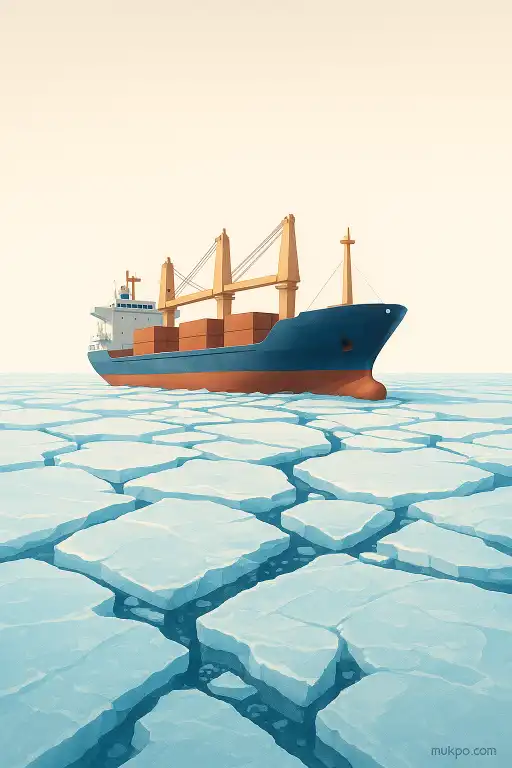
Open ocean usually has waves, currents, and constant mixing. A harbor is semi-enclosed. It is sheltered from wind-driven wave action. It often has shallow flats, dredged channels, and seawalls that block circulation. That matters because mixing is how water shares heat. If the surface cools but deeper water keeps getting stirred up, the surface gets “reheated” and ice struggles to persist.
Harbors also tend to have freshwater inputs. Rivers, storm drains, and snowmelt all push in water that is less salty and therefore less dense. That lighter water rides on top of saltier water, which creates a stable layering. Stable layering is an overlooked detail. It prevents the cold surface water from sinking and prevents slightly warmer deep water from rising to replace it.
The weather pattern that sets the trap
To freeze a large area solid, the cold has to last. A single frigid night is not enough if the next day is mild and windy. The setups that do it are usually persistent high-pressure patterns that deliver repeated cold-air outbreaks, clear skies at night, and dry air. Clear skies matter because they allow strong radiational cooling from the water surface. Dry air matters because it boosts evaporation, and evaporation removes heat fast.
Wind is tricky. Strong wind can slow freezing by mixing the water and breaking new ice apart. But wind can also help in a different way. It can push floating ice into corners, behind breakwaters, and against docks where it thickens. Once a harbor has a rough “skin” of ice, the wind has less direct contact with liquid water, and the cooling can become more efficient.
How salt, slush, and “ice factories” work
Saltwater freezes at a lower temperature than freshwater, and it rarely turns into a perfect, clear sheet. The first stage is often frazil ice: tiny needles and disks that form in supercooled, turbulent water. Those crystals clump into grease ice, then pancake ice, then thicker fields. In harbors, you get lots of places where turbulence and cooling are intense at the same time: narrow channels, tide races, and spots where wind funnels between buildings.
As saltwater freezes, most of the salt is rejected into the water below. That makes the water just under the ice saltier and denser, so it tends to sink. If the harbor is already layered with fresh water on top, that sinking can stay trapped below the surface layer instead of mixing the whole water column. The result is a surface that keeps getting colder while the “heat reservoir” below can’t easily reach it.
What makes “solid” feel solid to people on shore
When people say a harbor froze solid, they often mean it became functionally solid. The surface can be a patchwork of thick sheets, piled ridges, and refrozen slush welded together. Tides still move underneath, sometimes creating cracks that open and close. But for navigation, it can behave like one stubborn mass. In Boston Harbor in 2015, the issue wasn’t just low air temperatures. It was weeks of repeated cold that built and preserved ice, plus protected areas where ice could accumulate instead of being flushed out.
One detail that gets missed is the role of the harbor’s “exit.” If the mouth is narrow, if tidal exchange is weak, or if wind and currents tend to push ice inward, the harbor can trap its own ice. Once trapped, ice reduces wave action, which reduces mixing, which helps more ice form. The water doesn’t need to be perfectly still. It just needs to stop turning itself over.

Related reads
- Why the walking palm appears to relocate and the root mechanics behind it
- The bakery oven that chimes at midnight with an impossible melody
- When uncontrollable laughter spread through Tanganyika schools in 1962
- How a Second Empire impresario tried to replace Parisian musicians with clockwork automatons
- How a vaudeville theater’s curtains seem to remember the names whispered into them
- Why people confidently defend choices they never made