
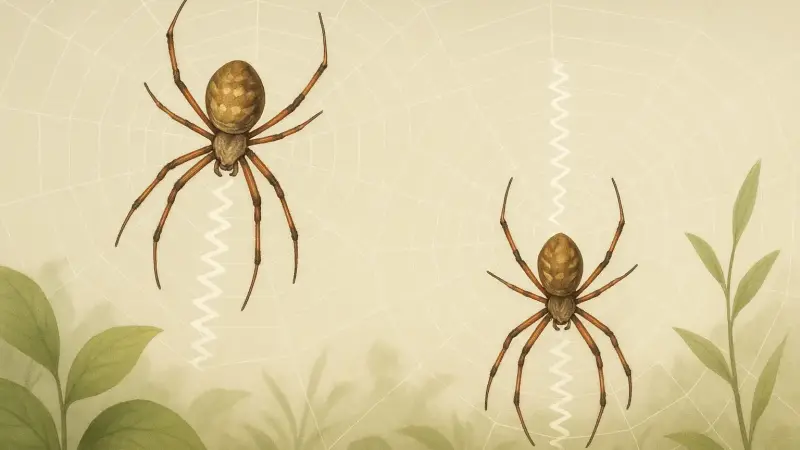
People notice it when they walk past a garden in late summer: a neat orb web with a bright zigzag stitched right through the middle. It isn’t one single “kind of web” tied to one place. You can see these bands on Argiope spiders in backyards in the United States, across southern Europe, and in parts of Australia. The zigzag itself is extra silk laid on top of the normal spiral. Spiders add it after most of the web is already built, and they do it with deliberate back-and-forth movements. What that band is for depends on the species, the spider’s age, and even the light and wind at that moment.
What the zigzag band is made of
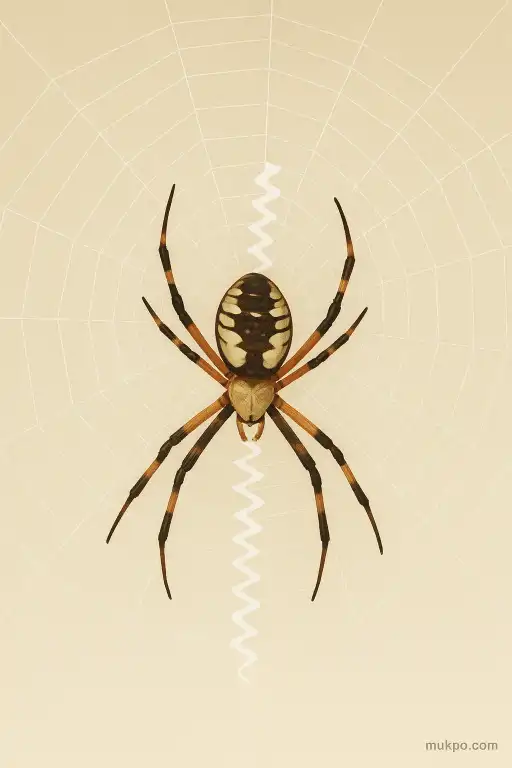
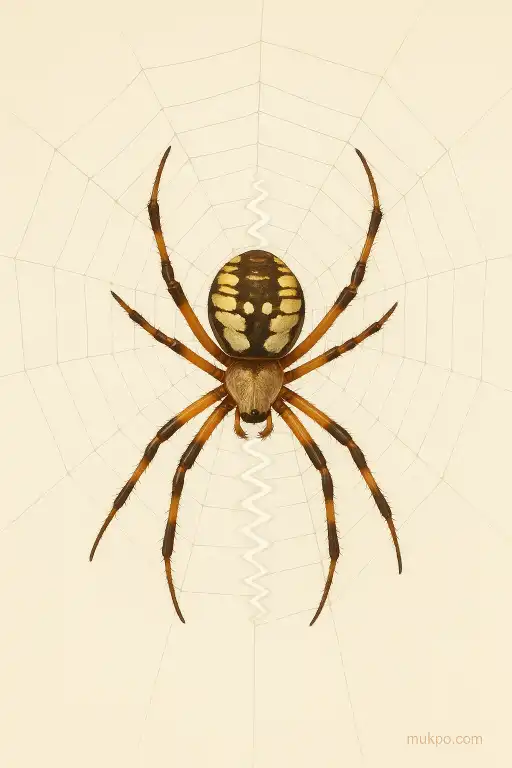
The zigzag is called a stabilimentum. It’s not the sticky capture silk that actually holds prey. It’s typically a denser ribbon of non-sticky silk, laid down in short strokes that overlap. In some orb-weavers it’s a single vertical stripe. In others it forms a cross, an “X,” or several short arms around the hub.
A small detail people miss is that the spider doesn’t always use the same silk glands for every line. Orb webs are mixtures of different silks with different jobs. The stabilimentum tends to be more opaque and reflective than the surrounding threads, which is why it reads as “white stitching” even when the rest of the web is nearly invisible.
A visibility trick that can work two ways
One leading idea is that the bright band changes how the web is seen. Under some light conditions it may make the web more visible to larger animals, like birds, which could reduce accidental damage. That matters for a spider that invests a lot of time in rebuilding. A torn web isn’t just messier. It changes tension and spacing, which affects how vibrations travel.
The catch is that visibility can also attract attention. Some insects orient toward high-contrast or UV-reflecting cues. A stabilimentum that’s obvious to a human eye may look different to a bee or a fly, because many insects see ultraviolet patterns that people can’t. Studies and field observations don’t all agree on whether stabilimenta increase prey capture, decrease it, or do neither, and the results seem to vary by species and setting.
A built-in “I’m here” sign for predators
Another idea is that the zigzag helps protect the spider itself. Many spiders sit at the hub, right where the band is thickest, or they rest aligned with it. If a predator is hunting by sight, a bold stripe could make it harder to pick out the spider’s outline, especially if the spider holds its legs in a paired, tucked posture along the line.
There’s also a more practical angle. The band gives the spider a visual reference point in its own web. Webs move in wind. The hub shifts. A bright marker near the center may help the spider relocate the hub quickly after dodging or dropping away. It’s a small navigation aid in a structure that can look very different after one gust.
Strength, stress, and how the web behaves
The name “stabilimentum” comes from the suggestion that it stabilizes the web. Extra silk near the center can change how forces are distributed when something hits. It may stiffen the hub region or reduce twisting. That matters because the hub is where the spider reads vibrations and decides whether the signal is prey, debris, or a threat.
But the mechanics are not simple. Adding mass and stiffness can also change sensitivity. A web that’s too rigid might transmit less distinct vibration patterns, or it might make certain impacts more likely to tear threads instead of stretching. So even if a stabilimentum affects strength, it may be a trade-off rather than a straightforward upgrade.
Why the same spider may add it one day and skip it the next
Spiders don’t always build the band. Juveniles in some species seem to make stabilimenta more often than adults, and hungry spiders may behave differently from well-fed ones. Silk is a limited resource. Producing it costs energy, and spinning extra decoration can be a real expense if the web is rebuilt frequently.
A concrete scene makes the trade-offs easier to picture. An Argiope orb web in an open yard, strung between two shrubs, gets full sun and strong afternoon gusts. On a bright day, a thick zigzag may help prevent a bird from blundering through. On a shaded day near a porch light, that same bright band might make the web stand out in a way that changes what insects approach. The spider’s choice isn’t fixed, and some of the reasons are still unclear.
Related reads
- Why confident speakers change our beliefs even without evidence
- How repeating a word until it sounds meaningless tricks your brain
- The hotel room guests say rearranges itself at night
- Why background conversation wrecks your concentration when reading
- The lake that appears overnight and vanishes by morning
- The market where vendors haggle using a click language