

A nap can make you feel worse for a while
You wake up from a nap and the room feels slightly wrong. Your phone screen is too bright. A simple email takes forever. This isn’t one single local story or one famous incident. It shows up everywhere people nap and then have to function fast, like hospital on-call rooms, long-haul truck rest stops in the U.S., and office “nap pods” in Japan. The slowdown has a name: sleep inertia. It’s the brain’s groggy transition period after waking, when parts of the mind are still running in “sleep mode” even though your eyes are open.
The brain doesn’t wake up all at once
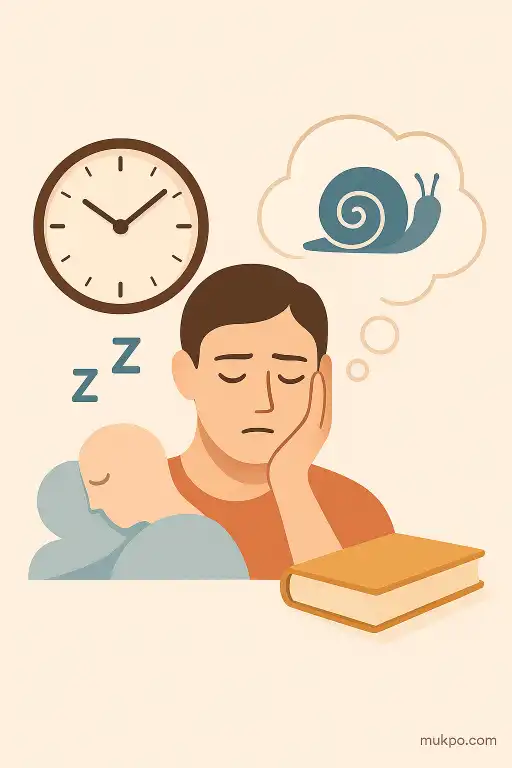
Sleep inertia is basically a timing mismatch. You regain basic wakefulness quickly, but the mental systems used for planning, attention, working memory, and self-control ramp up more slowly. Researchers often describe this as different networks “coming online” at different rates. The result is a very specific kind of slowness: reaction time lags, decisions feel heavier, and you can understand information without being able to act on it efficiently.
One overlooked detail is that people often feel awake before their performance is back. Subjective alertness can improve faster than objective measures like vigilance tests. That gap is why someone can insist they’re fine and still miss an obvious step in a routine task. It’s not just sleepiness. It’s temporary impairment in the brain’s ability to coordinate and prioritize.
Deep sleep makes the fog thicker
Naps vary, so the after-effects vary too. If a nap is short and ends before deeper stages, the grogginess may be mild. If a nap runs longer and the person wakes from deep non-REM sleep (often called slow-wave sleep), sleep inertia tends to feel stronger and last longer. It’s not always predictable because sleep stages don’t follow a strict schedule for every person or every day, but deeper sleep is the usual culprit when a nap leaves someone feeling “stuck.”
A concrete situation where this matters is an on-call clinician waking to a pager in the middle of a planned rest break. The clinician may be standing, talking, and moving within seconds, but the part of the brain that handles fast, high-stakes reasoning may still be catching up. In that window, tasks that require holding several details in mind at once—medication doses, times, names, recent labs—can feel strangely slippery.
It’s not just “tired”—chemistry and circulation are shifting
During sleep, the brain’s chemistry shifts toward sleep-promoting signals and away from the mix that supports sustained alertness. When waking is abrupt, those systems don’t instantly flip. Adenosine, a molecule linked with sleep pressure, can still be high. Arousal-related systems that use neurotransmitters like norepinephrine and acetylcholine don’t necessarily surge to full daytime levels right away. That combination can make thinking feel slow and effortful even when the body is already moving.
There’s also a physical side people rarely notice: the brain’s blood flow patterns change across sleep and wake. When waking, circulation and metabolic activity don’t normalize everywhere at the same speed. Areas involved in executive control—often associated with frontal regions—can lag behind regions that handle simpler sensory and motor functions. That uneven restart helps explain the odd feeling of being able to see and hear clearly while still struggling to organize a sentence or sequence steps.
Why it can hit harder at the worst times
Sleep inertia tends to be stronger when someone wakes during their biological night, even if the clock says it’s early morning. Circadian timing affects alertness systems, body temperature rhythms, and hormone patterns, so waking at the “wrong” circadian phase can deepen the mental drag. That’s part of why a nap at 3 p.m. can feel very different from being jolted awake at 3 a.m., even if both naps were the same length.
It also shows up differently depending on the task. Simple actions can look fine: walking, talking, checking a message. But tasks that need quick error-checking are where it hides. Someone might read a sentence and understand each word, yet miss an obvious contradiction, mis-key a number, or forget what they just opened a document to do. Sleep inertia isn’t a single switch from asleep to awake. It’s a brief period where the mind is awake enough to start, but not fully awake enough to run smoothly.
Related reads
- Storms that have actually dropped fish from the sky
- How biological soil crusts glue desert sand into living mats
- Why spinning ice slabs can flip and launch during a thaw
- Why speaking feelings out loud can calm the body
- Why sidewalk puddles vanish faster under leafy trees
- The rainforest fungus that secretes tiny antibiotic molecules