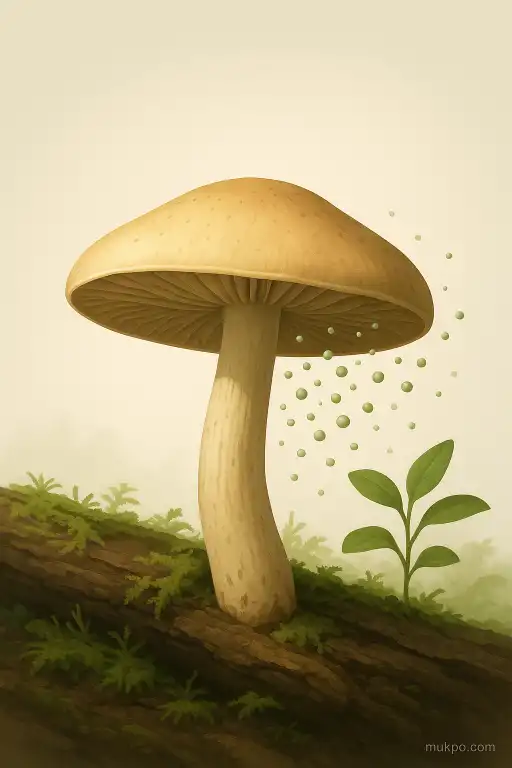
Not one fungus, but a pattern you can stumble into
People walk through a rainforest and notice the big stuff. Leaves, vines, insects, the heat. The odd part is that a lot of the real chemical action is happening in films so thin you don’t see them at all. This isn’t one single famous organism with one agreed name. It’s a repeating behavior found across many rainforest fungi, from the Amazon Basin to Borneo to the Congo Basin. They secrete tiny molecules into their immediate surroundings, and some of those molecules can kill or stall bacteria. That “secretion” piece matters. The antibiotics aren’t locked inside the fungus. They leak outward into the exact place where microbes are trying to move in.
A concrete situation helps. Picture a fallen branch on the forest floor after heavy rain. Within hours it’s wet, scratched up, and already being colonized. Fungal threads spread through it. Bacteria arrive too. If the fungus can push out small antibacterial compounds into that wet boundary layer, it buys time. It keeps the bacteria from digesting the same food first.
How fungi make “tiny” antibiotics
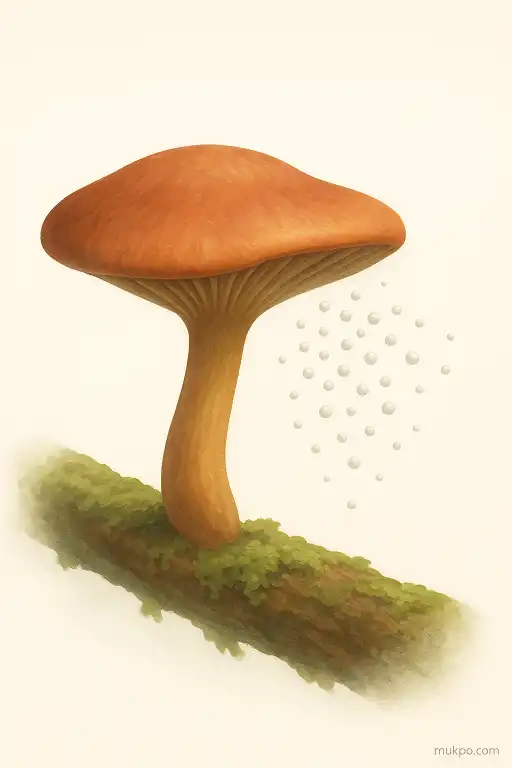
These molecules tend to be small because they have to move. Water films in rainforest litter are patchy and short-lived. A big protein toxin is harder to diffuse and more likely to get chopped up. Many fungal antibiotics are “secondary metabolites.” They aren’t required for basic growth like sugars or amino acids. They’re optional chemistry, switched on when competition is high, nutrients are limited, or the fungus senses certain neighbors. That switching is why lab cultures sometimes fail to show the same compounds that appear in the wild.
There are a few common chemical families fungi use. Polyketides and non‑ribosomal peptides show up a lot in fungal natural products research. They’re built by large enzyme assembly lines that can mix and match building blocks, which is one reason fungi can generate so many different small molecules. The “tiny” scale is also why these substances can fit into bacterial enzymes or membranes and jam them up. Small size doesn’t mean gentle. It often means precise.
Why the rainforest makes this arms race so intense
Rainforests are unusually good at forcing microbes into close contact. Warm temperatures speed up metabolism. Constant moisture keeps surfaces active for growth. And there is always fresh organic matter falling down: leaves, fruit, dead insects, woody debris. That creates crowded “microhabitats” where bacteria, fungi, and tiny animals all want the same nutrients. Under those conditions, chemical interference becomes as important as physical growth.
One overlooked detail is that the battlefield is often the millimeter-thin zone right at the surface of a leaf or piece of wood. Microbes don’t live in a uniform soup. They live in clumps, pores, scratches, and wet pockets. A fungus that can secrete antibiotics into those tiny spaces can shape who gets to settle there next. That local effect is easy to miss if you only think in terms of “this species makes a drug.” It’s more like neighborhood control in a very small, very wet city.
What the fungus gets out of it
For the fungus, secreting antibacterial molecules is usually about defending food and territory, not protecting a larger organism. Fungi digest externally. They release enzymes that break complex material into absorbable pieces. Bacteria can freeload on that process. If bacteria multiply right next to the fungal threads, they can steal the simple sugars and amino acids the fungus just paid to unlock. An antibiotic cloud, even a weak one, can tilt that economics back toward the fungus.
These chemicals can also act as signals. At low concentrations, some “antibiotics” don’t kill bacteria outright. They change behavior. They can push bacteria to form biofilms, turn certain genes on or off, or slow growth. That matters because a fungus doesn’t always want sterilization. It often wants a predictable neighborhood: fewer aggressive competitors, more manageable ones, and less chaos around its feeding sites.
Why finding these molecules is harder than it sounds
When researchers look for new antibiotics from fungi, a recurring problem is that the compound is conditional. The fungus may only secrete it when a specific bacterium is nearby, or when nutrients mimic rotting wood instead of rich lab media. That’s why “co-culture” experiments exist: grow the fungus with a bacterial rival and see what chemical weapons appear. Even then, a compound may be produced for a short window and then shut off, which makes detection and purification tricky.
Another complication is that many rainforest fungi are poorly cataloged. Some are hard to isolate. Some won’t grow well once removed from their natural partners. And even when a molecule is found, turning it into a usable antibiotic is a separate hurdle. It has to be stable, non-toxic to human cells, and effective at realistic doses. Still, the rainforest keeps offering new chemical sketches—tiny, secreted molecules shaped by crowded microbial life on wet surfaces—whether or not they become medicines people ever see.