
Seeing it for the first time
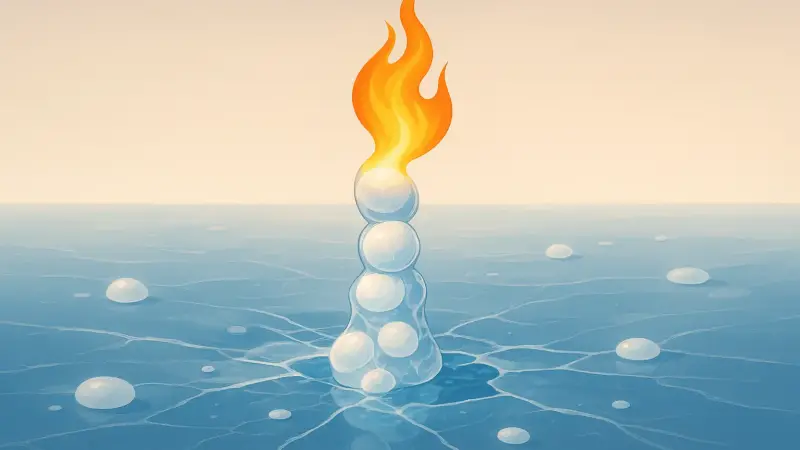
There’s a quiet contradiction you can see on some winter lakes: perfect, glassy ice, and inside it, stacks of white bubbles that look frozen mid-rise. On lakes in Alaska and in Canada’s Northwest Territories, people sometimes drill a small hole and touch a flame to the trapped gas. It can flare for a moment, like a tiny burner under the ice. It isn’t one single famous lake. It’s a pattern that shows up where organic-rich sediments sit under cold, still water. The core mechanism is simple. Methane forms down in the mud, rises as bubbles, and then gets sealed in place when the lake freezes.
Where the methane comes from
Methane is made by microbes that live in oxygen-poor sediment. They feed on dead plant material and other carbon, and methane is one of the end products. The setup is common in shallow lakes with lots of organic matter. That includes thermokarst lakes in permafrost regions, but it also includes some boggy, lowland lakes far from the Arctic.
One overlooked detail is that not all “bubble ice” is methane. Some bubbles are just ordinary air, or carbon dioxide, or a mix. Methane is the one that burns, but a photo of bubble stacks doesn’t prove what gas is inside. What’s in any given bubble can vary by lake, season, and even by location across the same lake.
How bubbles get stacked into the ice
Bubbles rise because they’re buoyant. In open water they would pop at the surface and the gas would escape. When ice forms early in winter, the surface becomes a lid. A rising bubble hits that lid and gets trapped against the underside. As the cold continues, the ice thickens downward. That trapped bubble becomes sealed inside.
This is why the bubbles often appear in layers, like a vertical column of coins. The lake produces gas in pulses. A bubble gets trapped, the ice grows a little thicker, then another bubble comes up and gets trapped under the new underside. Snow cover matters too, because snow insulates. With heavy snow the ice can grow more slowly and the bubble patterns can look different, even if methane production below is similar.
Why it can ignite at all
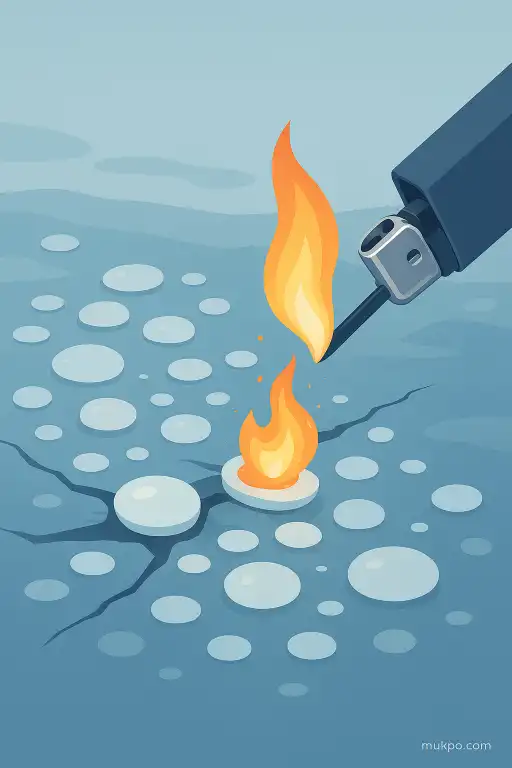
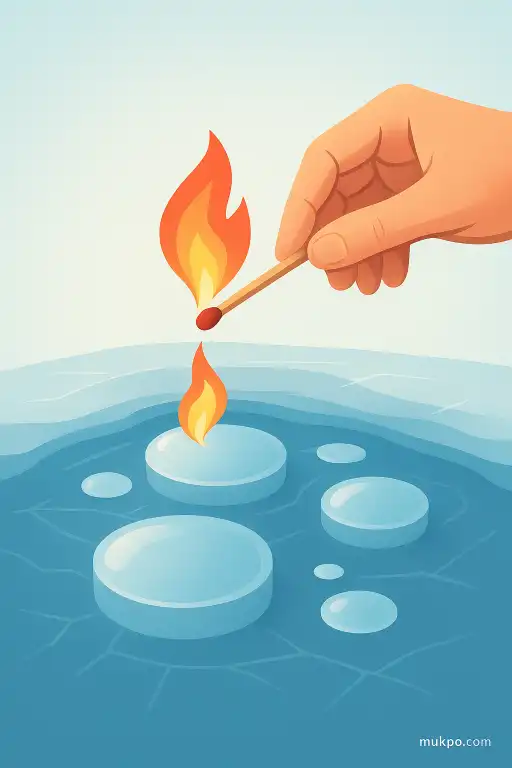
For a flame to catch, methane has to mix with air in the right range. Inside the ice bubble there isn’t oxygen, so nothing burns there. The burning happens above the hole, where methane leaks out and mixes with the surrounding air. The drill hole acts like a temporary vent. A small pocket of gas can flow upward for a few seconds and then fade as the pressure equalizes or the pocket empties.
How dramatic it looks depends on the size of the trapped pocket and whether there’s a connected pathway between multiple bubbles. Some bubbles are isolated, sealed off by clear ice. Others sit along tiny cracks or channels, which can let gas from a broader area feed the same opening. The flame can also sputter if the bubble contains a lot of carbon dioxide, which does not burn and can dilute the mixture.
What researchers pay attention to
Scientists look at these bubbles because methane is a greenhouse gas, and frozen lakes can be an important seasonal source. In permafrost regions, thawing ground can add new organic material to lake bottoms, which can increase methane production, but the amount varies widely from lake to lake. Some lakes release methane mostly as bubbles. Others release more dissolved gas that only escapes during turnover or at the ice edge.
A detail people usually overlook is that the clearest bubble stacks often show up when the ice is very transparent, which tends to happen under calm conditions and limited snowfall early in the season. That makes the phenomenon feel rare or “special,” even if the methane production is fairly routine below. What changes is what the ice lets you see.
Related reads
- The fungus that turns beetles metallic green with a secret pigment
- The poplar at the Korean DMZ that nearly sparked a Cold War firefight
- Why icebergs sing: how trapped air shapes underwater sound
- Why favourite songs suddenly sound different
- Shortwave number stations that still broadcast coded messages
- The 1970 Oregon operation that detonated a beached whale and scattered blubber across the beach