
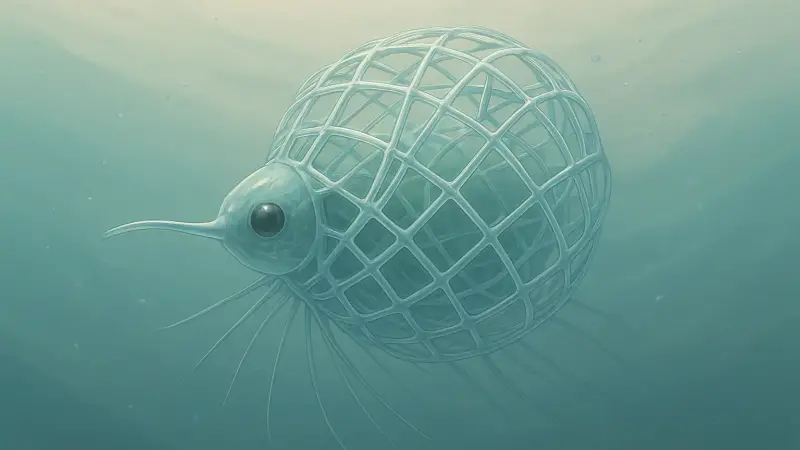
Seeing “glass” where you don’t expect it
If you’ve ever looked at a jar of seawater under a microscope, the surprise isn’t the fish larvae. It’s the hard geometry. Some of the most common plankton, diatoms, build rigid shells from dissolved silica that’s already in seawater. This isn’t one single place or event. It happens everywhere diatoms live, from the North Atlantic to the Southern Ocean to coastal upwelling zones off Peru. The basic trick is chemistry plus cellular control: they pull silicic acid out of the water, concentrate it inside the cell, and then “cast” it into a shell that’s effectively glass.
Who these builders are
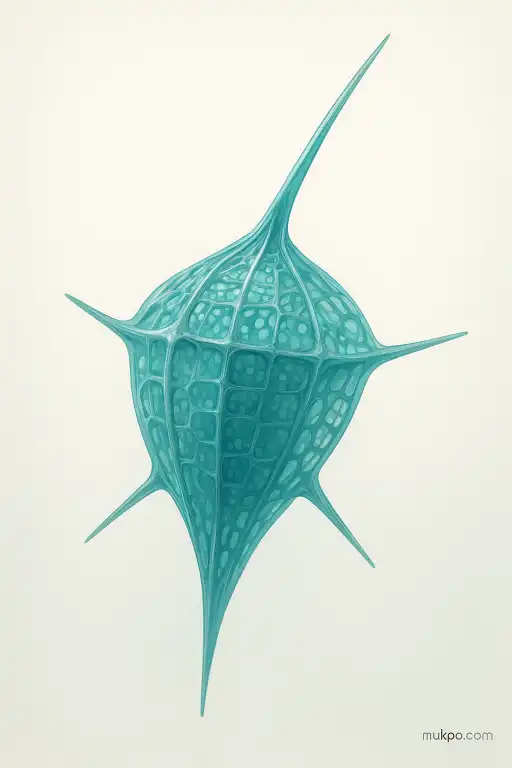
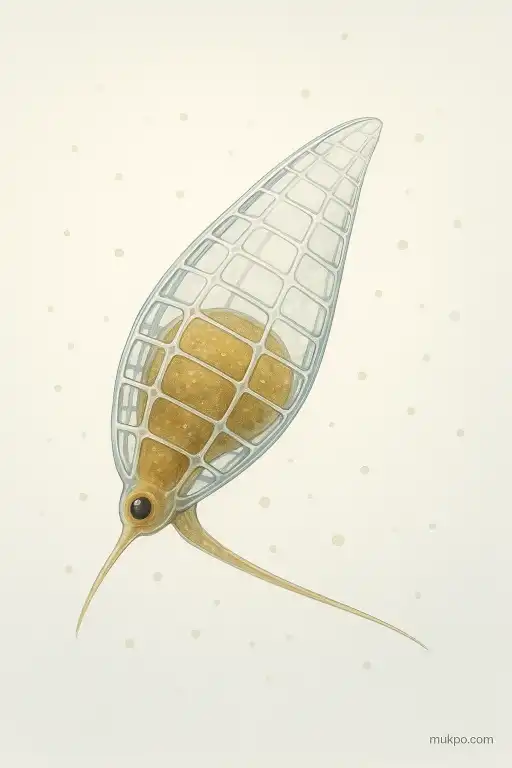
Diatoms are single-celled algae. They drift, they bloom, they get eaten, and they photosynthesize like other phytoplankton. What makes them stand out is the frustule, a two-part shell that fits together like a lid and a base. The patterning can be so regular that it looks machined, but it’s grown. Different species make different designs: disks, needles, chains, and shapes that increase drag or help them link into colonies.
The overlooked detail is that the shell isn’t bare mineral. It’s a composite. The silica is laid down on an organic scaffold that includes proteins and long-chain polyamines, and a thin organic coating remains associated with the finished shell. That matters because it changes how the shell cracks, how it dissolves, and how it interacts with bacteria and grazers.
How seawater silica becomes armor
The raw material in seawater is mostly silicic acid, and its concentration varies a lot by region and season. Diatoms don’t passively wait for it to bump into them. They use dedicated transporter proteins in their cell membranes to bring it in, even when concentrations are low. Inside, they store silica in forms that are still soluble, then route it to a specific compartment where the shell is built.
That compartment is the silica deposition vesicle. It’s like a tiny, controlled workshop. The cell adjusts pH, ions, and organic molecules so silica polymerizes and hardens only where it’s supposed to. The surface patterns come from templating. The cell’s cytoskeleton and membrane-associated structures help define ridges, pores, and ribs, and those microscopic pores control what can pass in and out later.
What the shell does for them
Calling it “armor” is mostly fair, but it’s not invincible. The shell makes many grazers work harder. Small predators often have to break it, dissolve it, or choose easier prey. Some zooplankton are adapted for this and can grind diatoms down anyway, but the shell changes the odds. It also helps with physics. A heavier, more structured cell sinks differently, and that can be good or bad depending on whether a diatom wants to stay in light or get carried into nutrient-rich water.
There’s a tradeoff people miss: making glass is costly. Pulling in enough silica, building the scaffold, and assembling the frustule takes energy and time. When silica runs low, diatoms may build thinner shells, delay division, or lose out to other phytoplankton that don’t need silica at all. That’s why shifts in nutrient supply can change who dominates a bloom.
Where the glass ends up
When a diatom dies or gets eaten, the shell doesn’t vanish immediately. Some frustules dissolve back into silicic acid in surface waters. Others survive long enough to sink. That movement is part of the ocean’s silica cycle, and it’s tied to carbon export too, because sinking particles can carry organic matter downward. In places with big diatom blooms, like seasonal blooms in the North Atlantic, this can be a noticeable part of how material moves through the water column.
Over long timescales, piles of diatom shells can build up as diatomaceous sediment. The shell patterns can persist in those deposits, which is why scientists can identify past species and infer past conditions from tiny fossilized frustules. Even then, it varies. Some shells dissolve before they ever reach the seafloor, and some environments preserve them far better than others.
Related reads
- Why a familiar name sometimes won’t come to mind
- A town that kept a cat as an honorary mayor for decades
- The skin bacterium that converts body odor into floral notes
- Why dreams steal mundane details and make them strange
- Frozen methane bubbles on a lake that can be set alight
- The fungus that turns beetles metallic green with a secret pigment