

A window as a political tool
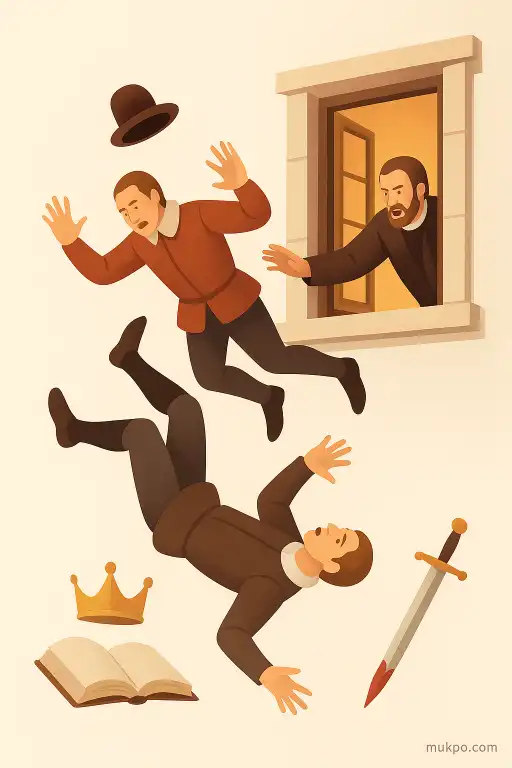
People rarely ask why a window shows up so often in political history. On 23 May 1618, in Prague Castle, a group of Bohemian nobles pushed two imperial regents—Vilém Slavata of Chlum and Jaroslav Bořita of Martinice—out of a chancery window. Their secretary, Philip Fabricius, went with them. It sounds like a tantrum turned violent. It was also a mechanism for forcing a dispute into the open when petitions and meetings had stopped working, and when everyone involved knew the next step might be weapons.
They fell a long way and survived, landing in a steep moat area below the window. The detail people miss is how much the setting mattered: this wasn’t a random street brawl. It happened inside the seat of government, in the room where orders and permissions were supposed to be settled on paper.
Why Bohemian nobles were ready to shove
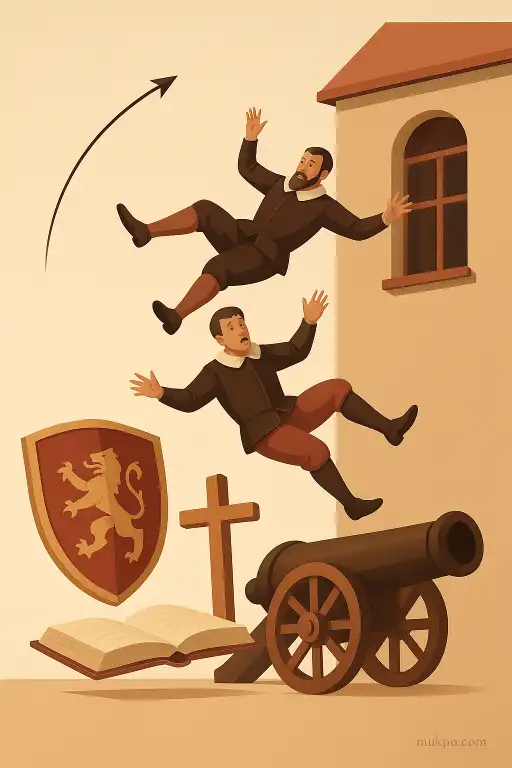
Bohemia in the early 1600s was a kingdom inside the Habsburg world, with a powerful local nobility and a mixed religious landscape. Many nobles were Protestant. The Habsburg dynasty was Catholic and increasingly determined to tighten control. The immediate argument was about religious rights and the limits of royal authority, especially after the Letter of Majesty of 1609 had granted protections that Protestants believed were being chipped away.
The regents thrown from the window weren’t the emperor himself. That’s part of the point. Regents were the working face of imperial power in Prague. If you wanted to claim, “We’re resisting illegal acts, not overthrowing the whole order,” you targeted the officials who signed the orders, enforced closures, and told petitioners no.
The meeting that turned into a tribunal
The nobles didn’t arrive intending to debate politely. They came in a group and treated the encounter like a courtroom, demanding an answer for actions they said violated their rights. That matters because defenestration wasn’t just a burst of violence. It was a form of political theater that produced a clear, irreversible fact. Once bodies have gone out the window, compromise stops being a shared performance and becomes a test of strength.
Survival didn’t calm things down. Catholics later described the survival as providential. Protestants were more likely to talk about the practicalities of the fall and what broke it. Either way, the event hardened everyone’s story about what was happening. One side saw criminal rebellion. The other side saw lawful resistance. The same minutes could be read like an arrest warrant or a declaration.
From Prague’s crisis to a continental war
The thrown regents were the spark, but the fire spread because Bohemia wasn’t isolated. After May 1618, the Bohemian estates moved toward open revolt, set up their own government, and eventually rejected the Habsburg candidate Ferdinand II as king. They offered the crown to Frederick V of the Palatinate, a major Protestant prince in the Holy Roman Empire. That choice pulled in alliances and rivalries that were already waiting for an excuse.
The Thirty Years’ War didn’t start everywhere at once. It grew in phases, with different goals and participants over time. But the Prague incident made it easier for outside powers to claim they were responding to a major breach of order. It also made it harder for moderates inside the empire to pretend the conflict was still just legal wrangling over charters and exemptions.
What people misunderstand about “igniting” a war
It’s tempting to treat the window as the cause, like one shove turned Europe into a battlefield. The overlooked part is the administrative grind behind it: documents, permissions, church property, appointments, and who had the authority to say “this chapel stays open” or “this pastor is removed.” The violence happened because those procedures had become the battlefield already, just in ink instead of steel.
That’s why the location inside Prague Castle matters so much. The act attacked the machinery of rule, not just two men. Once that machinery was publicly defied, everyone had to decide whether the empire’s laws were enforceable by persuasion, by courts, or by armies, and those answers didn’t match.
Related reads
- Why consistent pre sleep behaviors lower nighttime anxiety
- How being ignored for a moment lights up the brain like a physical sting
- The neighborhood that woke up to a constant low hum
- The town that made dying a crime
- How a space rock’s water may have kickstarted Earth’s oceans
- Why time feels shorter as decades pile up