
A law that wasn’t supposed to be enforceable
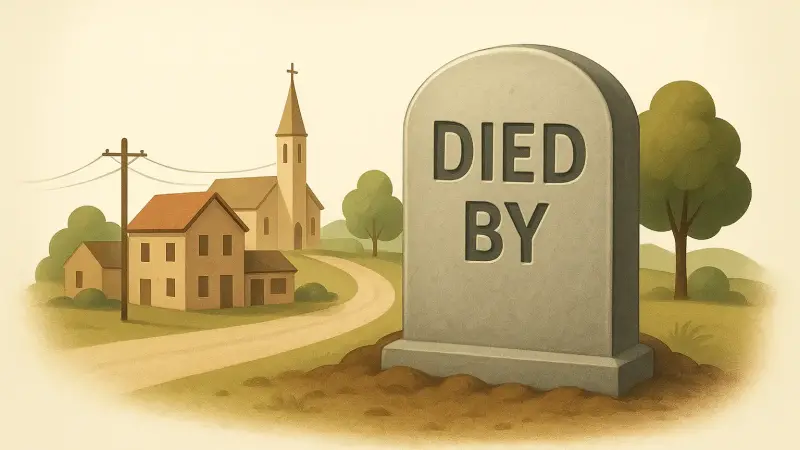
People assume death is the one thing the law can’t touch. But in Longyearbyen, the main settlement on Norway’s Svalbard archipelago, there’s a widely repeated rule that you “can’t die” there. It’s not that dying itself gets you arrested. It’s that the town doesn’t want bodies buried in its ground, and it has built routines and regulations around that. If someone is seriously ill, they’re usually sent to the mainland. If someone dies, the body is typically transported out. The mechanism is practical, not moral, but it can feel like the town has turned death into a violation.
Where the “crime” idea comes from
The “dying is illegal” line is a simplification that travels well on the internet. What’s real is a local burial restriction and a strong expectation that death should not occur there if it can be avoided. Longyearbyen has a small hospital setup, but not the kind of long-term care you’d need for advanced cancer, severe dementia, or prolonged end-of-life treatment. That gap turns into policy. People who become terminally ill are often relocated because the system is built around evacuation, not around keeping a person in place through decline.
The overlooked detail is that this is not just about being remote. It’s also about what happens after burial in a place where the ground stays frozen. A grave isn’t the end of the story if the conditions preserve what’s inside it. That creates public health concerns and long-term maintenance problems that most towns never have to think about.
Permafrost changes what burial means
Svalbard’s permafrost is the key. In a temperate cemetery, burial relies on decomposition to do its quiet work over time. In Longyearbyen, cold soil can slow that process dramatically. The town’s cemetery stopped taking new burials decades ago, and the fact that old graves can remain unusually well preserved is part of why the policy stuck. It isn’t only about the past, either. As Arctic temperatures rise, thawing permafrost can destabilize ground that used to be reliably solid, which is a different kind of problem for a cemetery.
When people talk about the 1918 influenza being “still there” in Arctic graves, they’re usually pointing at how preservation works in frozen ground, not claiming there’s an active outbreak sitting in the soil. The exact risk level is hard to pin down from the outside, and public messaging tends to flatten nuance. What matters for the town is that burial becomes a long-term storage decision, not a simple ritual.
How it shapes everyday life in the settlement
This kind of rule reaches into normal planning. Longyearbyen is a place with rules about carrying firearms outside town because of polar bears, and restrictions on cats because of local wildlife. The death policy sits in that same category: a regulation that sounds strange until you picture the constraints. A concrete example is what tends to happen when an elderly resident’s health starts to fail. They may have built a life in the settlement, but the system is set up so that advanced care and death are handled elsewhere, typically on mainland Norway.
It also changes what “community services” mean. There isn’t the usual web of nursing homes, hospice beds, and funeral infrastructure that quietly supports end-of-life in bigger towns. Instead, there are procedures for medical evacuation and for moving remains. That can make the place feel youthful and temporary, even for people who have lived there for years, because the final stage of life is administratively routed away from the community.
Why the story sticks, even if the wording is wrong
“Illegal to die” is sticky because it flips a basic expectation. Laws punish actions, not biology. But the real policy still produces a social effect that feels like punishment: if you are likely to die soon, you may not be allowed to stay. That’s a hard line in a place where many residents are there for work, research, mining history, or the simple fact that it’s unlike anywhere else. The policy doesn’t need a police officer to feel coercive. It works through housing, healthcare limits, and what the town is willing to manage.
And it creates an unusual kind of “border” around the end of life. Not a fence. Not a checkpoint. Just a set of practical constraints that steer the sick away and push the dead outward, so the settlement can keep operating within the limits of ice, logistics, and a cemetery that can’t behave like most cemeteries do.
Related reads
- How a space rock’s water may have kickstarted Earth’s oceans
- Why time feels shorter as decades pile up
- When an Ottoman sultan shut down Constantinople’s cafés and made coffee a crime
- The mannequin that rearranged the shop window every morning
- How fungi can feast on nuclear radiation
- The piano that hid a century of forgotten letters