
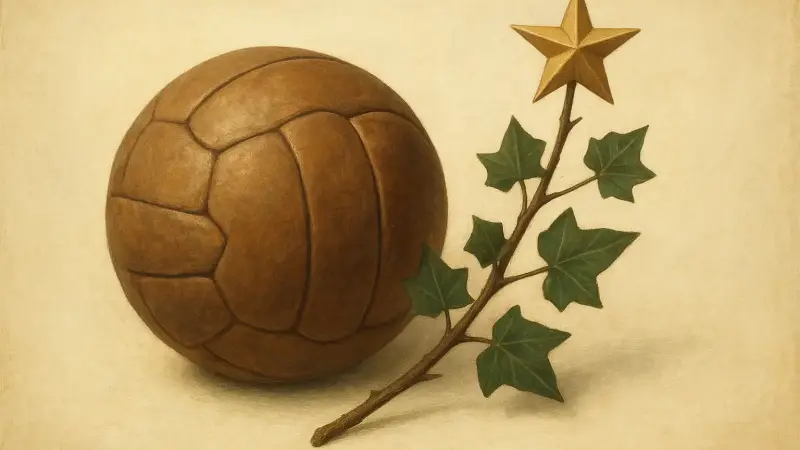
A pause in a war that wasn’t supposed to pause
It’s strange how fast a routine can form, even when the routine is violence. By December 1914 the Western Front had settled into a grim pattern of trenches, sentry duty, and short bursts of chaos. Then Christmas arrived, and in a few stretches of the line the pattern cracked. Near Ypres in Belgium, and in parts of northern France, British and German soldiers sometimes stopped shooting long enough to talk, trade, and in a few places kick a football around. It wasn’t one coordinated event. It happened unevenly, depended on local officers, and often lasted only hours. But the mechanism was simple: both sides were close enough to hear each other, tired enough to hesitate, and temporarily willing to test whether the other side would hold fire.
How a truce starts when nobody is in charge of it
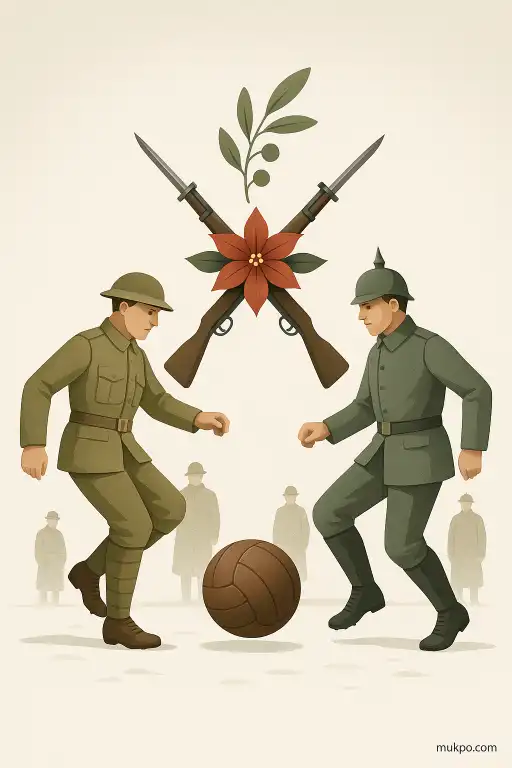
Most truces that week began with small signals, not big speeches. A line goes quiet. Someone shouts a greeting across No Man’s Land. A song carries in the cold air, and the other trench answers. The distance between opposing trenches could be surprisingly short in 1914, sometimes close enough for conversation. That mattered. It made the other side feel less like an abstraction and more like the voice you’ve been listening to every night.
There were also practical pressures. Bodies lay out in the open after earlier fighting, and both sides wanted a chance to recover them. The weather and mud could turn No Man’s Land into a trap. A temporary ceasefire for burials could slide into something more social once men were already out of the trenches and seeing each other up close.
What people mean by the “football match”
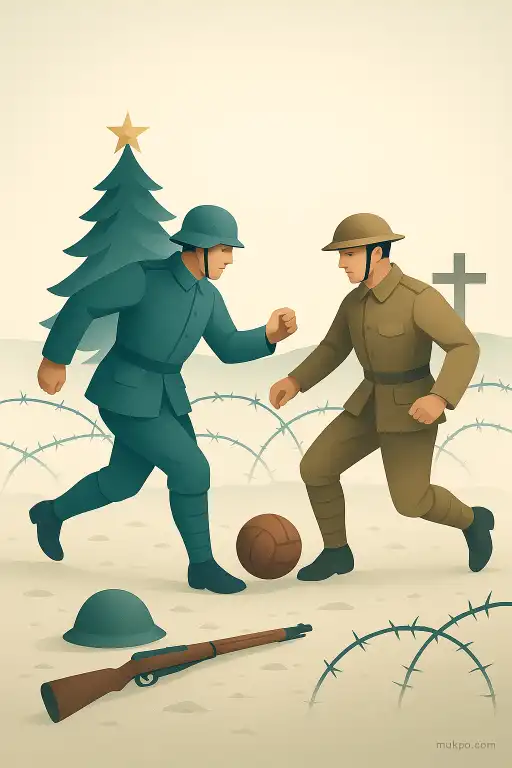
The football story is real in the sense that footballs did appear and men did play. But it’s often described more neatly than it was. Accounts vary by unit and location. Some describe a loose kick-about, some describe something closer to a match, and the exact scores and rules are often unclear. It’s also easy to forget that “football” could mean different styles depending on who was playing. What’s consistent is the setting: uneven ground, winter clothing, and a game happening in a place designed to kill anyone who stood up.
One overlooked detail is the problem of the ball itself. A leather football in wet, freezing conditions gets heavy fast, and the ground between trenches was cratered and littered. So even when men talk about a “match,” the physical reality probably looked more like brief bursts of play than a clean ninety minutes. The point wasn’t sport. It was the shared normality of a familiar game, dropped into a landscape that had none.
Trading, talking, and the awkward business of seeing faces
Alongside football, the most common reports are of swapping small goods. Cigarettes, tobacco, buttons, food, souvenirs. Sometimes men asked for addresses to send letters after the war, or posed for quick photographs. These exchanges sound gentle, but they were also tense. Nobody could be sure a rifle wouldn’t come up. Men often kept weapons close even while shaking hands, and groups tended to cluster where they could retreat quickly.
It also wasn’t universal. Some sectors saw no truce at all. Elsewhere, truces were brief and local. Language barriers mattered less than expected because the script was simple: greetings, gestures, showing items, pointing at family photos. The fact that it worked at all tells you how much communication in trench warfare already depended on interpreting tiny signs from the other side.
Why it didn’t last, and why 1914 was the moment it could happen
Commanders were not thrilled. Senior officers on both sides worried that friendliness would weaken discipline and make it harder to resume killing. Orders went out discouraging fraternization, and in later years the war grew less personal and more industrial. Artillery became heavier, trench systems more elaborate, and rotations more organized. The front still had quiet spells, but the conditions that allowed spontaneous trust were squeezed out.
1914 also had a specific quality: it was early enough that many units were still settling in, and the war hadn’t yet accumulated years of grief inside the same formations. The truce didn’t erase the conflict. Shooting usually resumed quickly, sometimes the very next day. What lingered was the memory that, for a short time near places like Ypres, men crossed into No Man’s Land and acted like the war had briefly forgotten its own rules.
Related reads
- When a 1784 Paris commission exposed Mesmer’s animal magnetism as spectacle rather than science
- The island that vanished from maps and reappeared decades later
- How deep-sea worms cultivate sulfur bacteria on hydrothermal vents
- How the brain completes muffled conversations with confident fake words
- The Prague defenestration of 1618 that hurled regents and ignited the Thirty Years’ War
- Why consistent pre sleep behaviors lower nighttime anxiety