
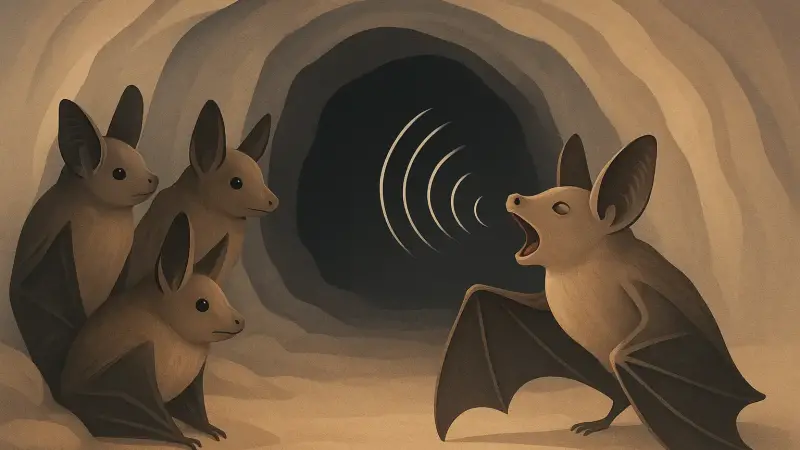
What it means for bats to “change their song”
People tend to picture a bat call as one fixed squeak. But in reality, a bat’s “song” is a moving target. It can shift with the room it’s flying in, the insects it’s chasing, and the other bats nearby. In big roosts, calls also drift because bats don’t want to overlap each other. That’s part of why reports of abrupt call changes inside caves can sound so strange. Calls usually adjust in small steps, not like someone flipped a switch.
It’s also easy to overlook that most bats aren’t “singing” to be pretty. Echolocation is a measuring tool. Many species use social calls too, but the calls most often recorded at cave entrances are the ones tied to navigation and hunting. That matters because a change in echolocation doesn’t automatically mean a change in “language.” It can simply mean the cave stopped behaving the way the bat’s sonar expects.
Why caves can force sudden changes
Caves are not stable spaces. Humidity, temperature, and airflow can change quickly after rain, a seasonal shift, or a blocked opening. Those details alter how sound travels. Even small differences in air density can change how far high-frequency calls carry. A bat that normally uses a higher pitch might suddenly do better with a lower one if the cave air gets damp and “eats” the higher frequencies faster.
The overlooked detail here is background noise. Many caves have constant low rumble from water, wind at the entrance, or insect choruses outside. A bat may shift frequency or timing just to avoid masking. To human ears it can sound like a new “song,” but to the bat it can be a practical workaround for a noisy channel.
What “abruptly” could mean in real recordings
When scientists say the calls changed abruptly, that can mean a few different things depending on the equipment and the way the data was sampled. Ultrasonic recorders often capture short windows. If the recorder only “wakes up” when a sound crosses a threshold, it can miss the quiet lead-in and then suddenly catch a different behavior. A time-stamped plot may show a sharp jump even if the bat transitioned over minutes.
There’s also a common mismatch between what gets recorded and what’s actually happening in the air. A microphone placed near a cave mouth may mostly hear bats approaching head-on, then suddenly hear bats veering away or flying higher. The calls can look like they changed, when really the recorder started sampling a different slice of the flight paths. That’s especially likely if the bats altered their exit route after a disturbance.
Reasons bats might leave a cave that aren’t obvious
Bats abandon roosts for reasons that don’t look dramatic to a person standing at the entrance. A predator can be enough. So can repeated human traffic, even if it’s just a few people. Light matters too. A single new lamp near an entrance can change when bats emerge, and that can cascade into different call patterns because timing affects crowding and competition.
Parasites and disease are another quiet trigger. The best-known example is white-nose syndrome in North America, which has led to massive declines and altered behavior at hibernation sites. Not every “empty cave” is that, and it’s often unclear from a casual report what testing was done. But the mechanism is straightforward: sick bats conserve energy, fly differently, and may stop using a roost that used to be reliable.
Why scientists can end up baffled anyway
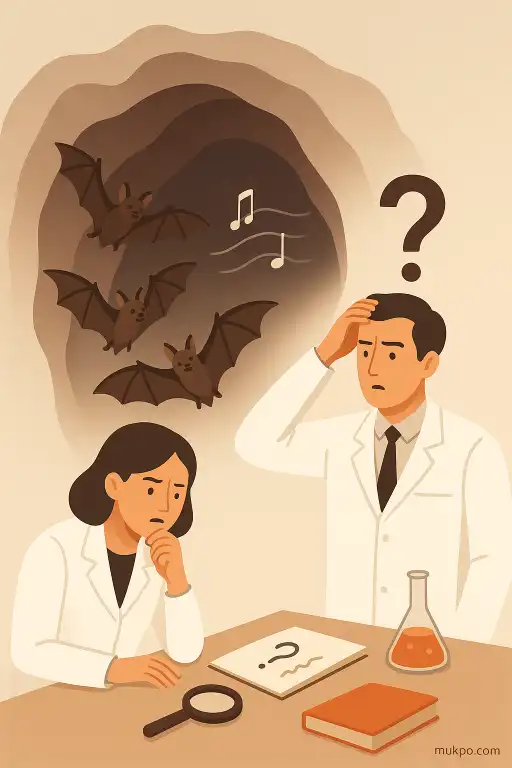
Field biology is messy. A cave can be hard to access, and roosting bats are sensitive. That limits how many sensors can be placed and where. If you only have audio and a headcount, you can describe a change without being able to assign a cause. Did the bats switch species composition? Did one dominant species leave and a rarer one remain? Without visual confirmation or genetic sampling, the “same bats changed their song” can be an assumption.
Even when species ID is solid, bats have individual variation. Age, sex, and body size can nudge call frequency. A cave that was once full of adults can, in another season, be dominated by juveniles practicing flight and echolocation. That can look like a sudden shift in the cave’s acoustic “signature,” especially if the change coincides with a weather event that also influences emergence time.

Related reads
- How Jupiter keeps its Great Red Spot from fading
- Why your stomach growls louder at the worst possible moments
- A mailbox that filled up with letters addressed to fictional people
- Why strong emotions can sharpen some memories and erase others
- How dung beetles steer by the Milky Way across desert nights
- How a brief hesitation can tilt us toward risk or caution without conscious thought