

A sound that waits for silence
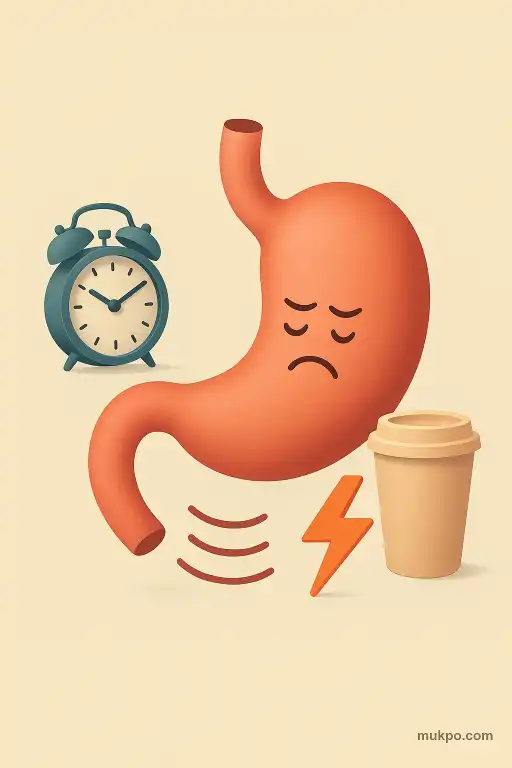
People notice it most in places that feel unfairly quiet. A meeting room during a quarterly update. A lecture hall between slides. A wedding ceremony right after the officiant says, “Let us pray.” It isn’t one single famous incident; it’s a pattern that shows up anywhere the background noise drops and everyone’s attention narrows. The core mechanism is simple: the stomach and intestines are always moving liquid and gas around, and those movements make vibrations. When the room is quiet and your body has been running on empty for a while, those vibrations can turn into a sound that seems amplified, even though your organs aren’t trying to “talk.”
The movements that make the noise

The stomach doesn’t just sit there until food arrives. It contracts in cycles. The small intestine does the same. Between meals, those contractions can become more coordinated and stronger, partly to sweep leftover bits along. That’s why the timing can feel rude: the body has its own rhythm, and it doesn’t care about your calendar.
The sound comes from motion, not from “hunger” as a feeling. Fluid sloshes. Gas bubbles shift. A narrow segment squeezes and something moves through. The stomach wall and the surrounding tissues can transmit that vibration outward. If there’s more air in the stomach than usual, the same movement can be louder, because air changes how sound carries inside a hollow space.
Why “empty” can be louder than “full”
When food is present, it tends to dampen motion. It’s mass that breaks up the quick movement of gas and liquid. When the stomach is emptier, there’s more room for pockets of air and fluid to move and collide. That can make the same muscular squeeze produce a clearer, sharper noise.
A detail people often overlook is that the small intestine contributes a lot of the sound. The belly is one shared acoustic space from the outside. A gurgle that seems like it’s “the stomach” can be happening lower down, where fluid and gas are mixing as they travel. The ear can’t easily locate it, so it feels like it comes from the center of you, even when it doesn’t.
Why it seems louder at the worst moments
Rooms have their own noise floor. Ventilation, traffic outside, people shifting in chairs. When that constant sound drops—like during a pause in a presentation or a quiet exam hall—small noises suddenly have no competition. The stomach sound may be no stronger than it was ten minutes earlier. It’s just no longer masked.
Attention also changes the experience. During a tense moment, people listen harder without meaning to. That makes subtle sounds feel bigger, including internal ones. The timing feels targeted because the environment creates a spotlight. A long silence after someone asks, “Any questions?” is basically perfect conditions for hearing low, wet, irregular noises that would disappear under normal chatter.
What changes the volume from day to day
The loudness varies because the contents vary. Carbonated drinks, swallowing extra air while talking, and chewing gum can increase gas in the upper gut. Hydration level changes how much free fluid is moving around. Even the pace of eating earlier can matter, because the gut may be pushing along a different mix of air, liquid, and partially digested food.
Body position is another quiet factor. Sitting upright, slouching, and leaning forward change how the stomach and intestines hang and compress. That changes where bubbles collect and how easily they shift when a contraction hits. So a person can be fine while walking, then sit down for a meeting and suddenly the same internal motion produces a sound that carries across a table.
Related reads
- A mailbox that filled up with letters addressed to fictional people
- Why strong emotions can sharpen some memories and erase others
- How dung beetles steer by the Milky Way across desert nights
- How a brief hesitation can tilt us toward risk or caution without conscious thought
- Victorian wallpaper woven with human hair
- A clock tower that runs counterclockwise every afternoon