
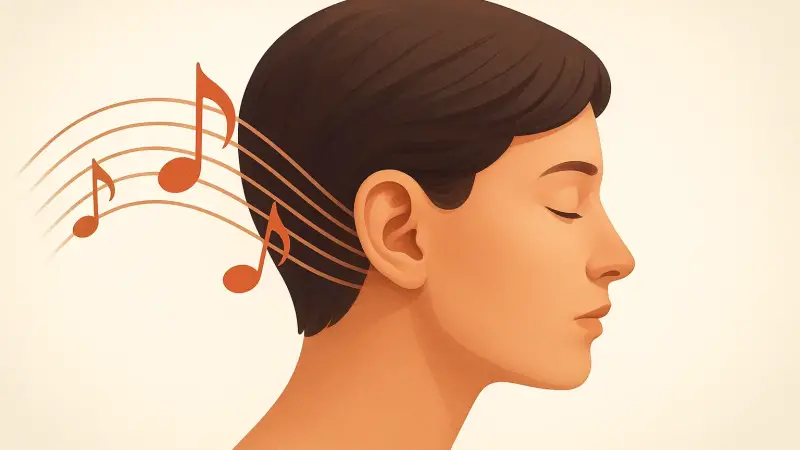
A tune that won’t leave
It can happen in a grocery line or on the bus. A few seconds of melody starts looping, usually the chorus, and it keeps returning even when nothing is playing. There isn’t one single place or event where this happens. It shows up everywhere, from commuters in London to students in Mumbai to people stuck in traffic in Los Angeles. Psychologists often call it an “involuntary musical image.” The basic mechanism is simple: the brain is good at predicting patterns, and a short, catchy pattern can keep reactivating in memory without permission. The loop feels like sound, but it’s closer to rehearsal than to hearing.
Why it’s usually a fragment
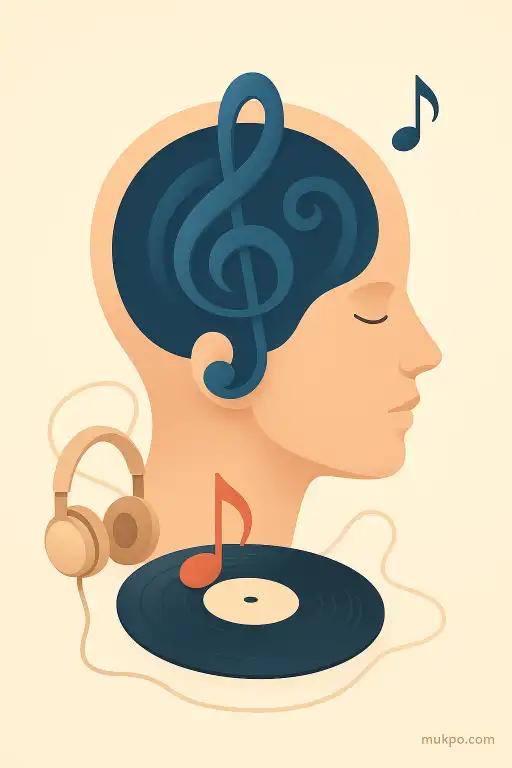
Earworms tend to be small because memory likes chunks. A chorus line, a hook, a rhythm with a clear beat. These parts are repetitive by design, and repetition is easy for the brain to “complete” once it starts. A common overlooked detail is that the loop is often the same length each time, sometimes just 5–15 seconds, as if the brain is replaying a fixed clip rather than the whole track. People also notice that the beginning and end of the clip can feel slightly “wrong,” like it jumps in mid-phrase. That’s a clue that the loop is built from whatever slice was most recently activated, not from a perfect recording.
Attention, prediction, and the stuck loop
One reason a loop persists is that it fits the brain’s prediction machinery. Music is structured expectation: the next note, the next chord, the next beat. When a snippet gets triggered, the brain starts forecasting what comes next, and that forecasting keeps the snippet “alive.” If something interrupts that process, the prediction cycle can restart, bringing the same piece back again. This is why earworms often show up during low-demand moments. The mind has spare bandwidth, so the internal playback keeps getting room to run. It’s not that the song is important. It’s that the pattern is easy to sustain.
How they get triggered in the first place
Triggers are often small and situational. A concrete example: someone hears the three-note “NBC” chimes on TV, and a pop hook with the same contour appears later while they’re making coffee. Another person walks past a gym, catches a muffled bass line through a wall, and the chorus comes back hours afterward in a quiet office. The cue doesn’t need to be the same song. It can be a rhythm, a vowel sound in a phrase, or a similar melodic jump. People usually overlook how much the body contributes, too. A steady walking pace or tapping foot can act like a metronome, making certain tempos easier to re-run internally.
Memory, mood, and why some songs are “stickier”
Not every song becomes an earworm. Simpler melodic shapes, a narrow pitch range, and strong repetition tend to stick. Familiarity matters, but novelty can matter too, especially after recent exposure. Mood and stress also play a role, though the direction varies from person to person and study to study. Some people report more loops when they’re tired, others when they’re understimulated, and some when they’re anxious. The brain is constantly linking sounds to context, so a song tied to a specific time can resurface with that context even when the person isn’t thinking about it directly. That’s why the same short fragment can feel oddly specific, like it arrived from nowhere, even when it was quietly cued by the day’s small sounds.
Related reads
- A cave where bats abruptly changed their songs and left scientists baffled
- How Jupiter keeps its Great Red Spot from fading
- Why your stomach growls louder at the worst possible moments
- A mailbox that filled up with letters addressed to fictional people
- Why strong emotions can sharpen some memories and erase others
- How dung beetles steer by the Milky Way across desert nights