
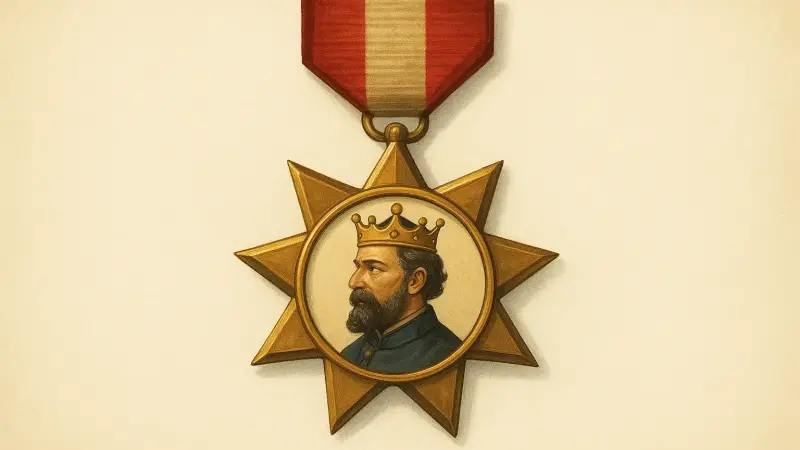
People tend to think you need an army or a ballot to claim power. In San Francisco in 1859, Joshua Norton tried a different mechanism: he used paper, print, and public habit. On September 17, 1859, he walked into newspaper offices and handed over a short declaration announcing himself “Norton I, Emperor of these United States.” There was no secret ceremony. No official recognition. Just a man, a city that ran on notices and headlines, and editors willing to print something odd because it was interesting. Once it was in the papers, it became something people could repeat out loud on the street.
San Francisco was built on announcements
Gold Rush San Francisco moved fast and argued loudly. Businesses opened and vanished. Prices swung. Newspapers were thick with ads, ship arrivals, legal notices, and public letters. If you wanted people to treat a claim as real, you put it in print. A notice could start a partnership, dissolve a marriage, call a meeting, or ruin a reputation.
That mattered for Norton’s move. He didn’t try to convince a court. He aimed at the city’s daily attention. The overlooked detail is how normal the method looked at first glance: a written proclamation delivered to editors, like the hundreds of other items they ran. The content was strange, but the delivery system was familiar.
Joshua Norton had recently fallen hard
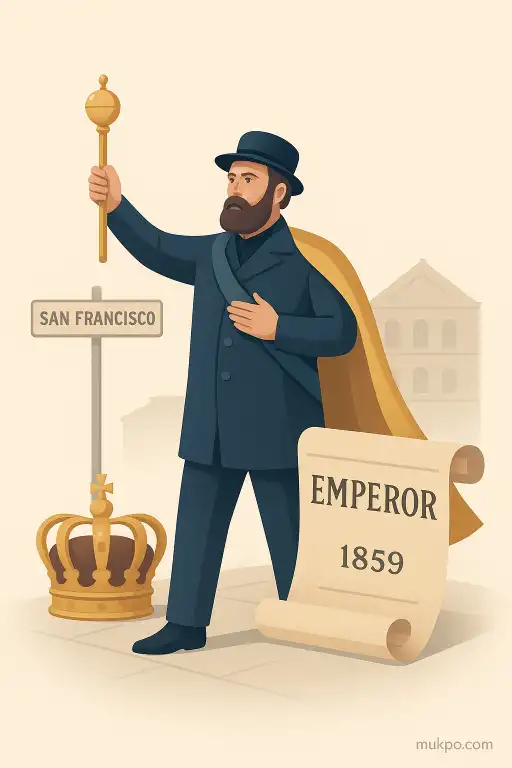
Norton wasn’t a random drifter when he arrived in California. He had been a merchant, and he had money. Then he made a disastrous bet on rice, trying to profit from high prices during a shortage. When shipments arrived and the market shifted, the deal collapsed. He spent years tangled in lawsuits and debt and ended up bankrupt.
By 1859, the public version of Norton was a man who had lost status in a city that cared a lot about status. Declaring himself “Emperor” worked as a sharp reset. It swapped the language of failure—debts, judgments, business mistakes—for the language of spectacle and authority. People didn’t have to believe it in a legal sense to find it usable in conversation.
The declaration worked because it was simple to copy
The proclamation was short and direct. It named him. It named the country. It didn’t waste time proving anything. That made it easy for editors to print and for readers to retell. The city already knew how to treat printed words as public objects, even when they were jokes, hoaxes, or provocations.
Once the first notice ran, Norton could keep producing “imperial” material: decrees, orders, and public statements. Some were pointed at city politics. Some aimed at national issues. The point wasn’t that any office would obey. The point was that the papers could publish them as a recurring feature, and the street could treat them as part of the local texture, like weather or a ferry schedule.
Street performance turned print into a role people recognized
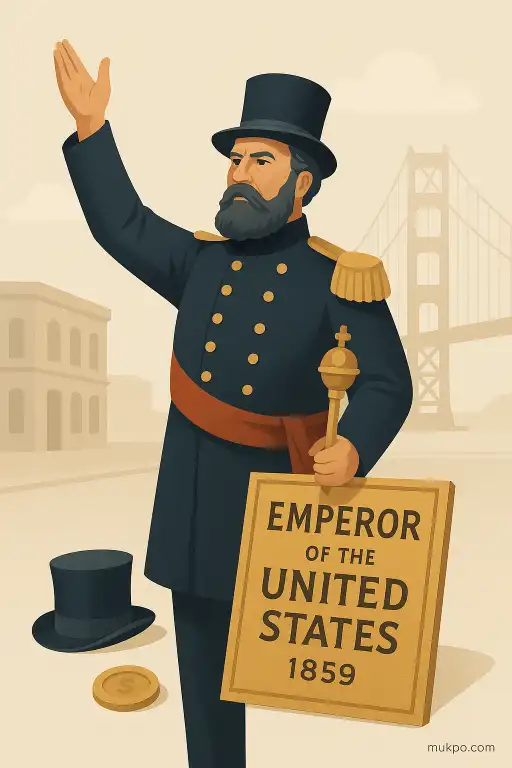
Norton didn’t stay behind the words. He embodied the part in public. Accounts describe him in a uniform-like outfit and a hat, walking the city, showing up at public events, and acting as if he were inspecting his domain. A city with constant parades, rallies, and theater was primed to accept a character who behaved consistently.
There’s a practical reason this helped: strangers could identify him quickly. Recognition is a kind of social permission. If someone looks like a known figure and acts like a known figure, bystanders can play along without having to stop and debate reality. They can nod, make room on the sidewalk, or tell a visitor, “That’s the Emperor,” and keep moving.
The city’s institutions half-indulged him, and that was enough
No one needed to pass a law for Norton’s claim to stick socially. It only needed repeated, low-stakes reinforcement. Newspapers printed his proclamations. Businesses were reported to accept “imperial” notes or treat him with ceremonial politeness; the details vary by source, so it’s hard to pin down how common this was. But even a few well-told examples can create a bigger impression than a hundred quiet refusals.
There’s also the matter of policing. Stories circulated that when Norton got into trouble, officers or officials chose to defuse it rather than crush it, treating him as a harmless local fixture. That kind of restrained response signals to everyone watching that the performance is allowed. In a crowded city, “allowed” can look a lot like “real,” at least for the length of a sidewalk conversation.
Related reads
- An elevator that skips floors if you say a secret word
- Why unfinished tasks cling to your mind
- The town statue that mysteriously appears wearing a different hat every morning
- A phone line that delivers hold music recorded during the 1970s
- The word at the edge of your tongue: why retrieval slips away
- Salt chemistry in Enceladus plumes and what it reveals about hidden oceans