

A strange kind of regular mail
A mailbox is one of those things you stop noticing until it does something wrong. In this kind of story, it does. A house keeps getting postcards signed by someone who disappeared decades ago, and the cards look normal enough to pass for routine travel notes. The setup isn’t tied to one confirmed place or one documented case. It shows up as an urban-legend pattern. You’ll hear versions set in rural U.S. routes like old stretches of Route 66, in U.K. seaside towns, or in small Australian communities where mail still feels personal. The core mechanism is always the same: a vanished traveler, and a postal system that keeps delivering their voice as if nothing happened.
What the postcards usually look like
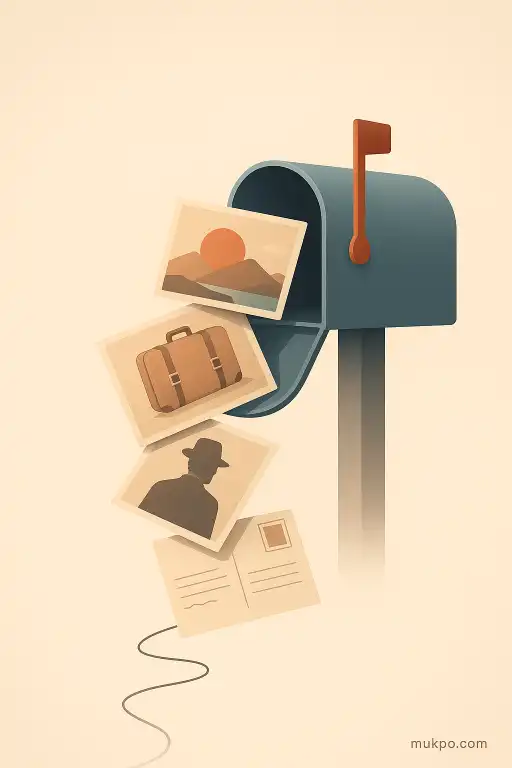
The cards tend to be brief. A place name. A line about weather. A small observation that sounds like the sender has no idea time has moved on. Often the handwriting is the hook, because it matches older letters the family kept. Sometimes the postmark looks contemporary. Sometimes it looks wrong or smeared, which makes people argue about whether it was ever readable.
One detail people overlook is the stamp itself. Not the picture, the cancellation. Postmarks aren’t just ink on paper. They’re applied by specific machines, with specific shapes and quirks. When a postcard supposedly comes from far away, the cancellation can quietly reveal a closer origin, like a regional sorting center rather than an overseas facility. That’s the kind of thing that can be true even if every other part of the card feels uncanny.
How a “vanished traveler” gets built into the story
The traveler is usually someone who left at a clean turning point. After graduation. After a breakup. After a fight with family. They’re described as a person who sent postcards while they were still around, which matters because it establishes a habit. When they vanish, the habit becomes a trail people can’t help reading into.
Decades passing is also part of the mechanism. It creates a gap where records get thin and memories harden into a single version. Even if the disappearance had a mundane explanation, the family’s “last known” details often come from secondhand retellings. That makes it easier for a new postcard to slot in without anyone being able to check the timeline cleanly.
What mail systems can do without anyone “faking” it
Postal systems are reliable in the big picture and messy in the small one. Old mail really does resurface. It can stick behind machinery, slide into the wrong container, or get trapped in an undeliverable bin and reintroduced later when a facility is cleaned out or reorganized. A postcard is thin, stiff, and easy to lose in a way a letter in an envelope isn’t.
Addresses also “work” longer than people assume. Families keep homes. Mail forwarding can create odd loops. And even when the traveler is gone, the name still routes. If the address is correct, the system doesn’t care that the sender is supposed to be dead or missing. It only cares that the destination is deliverable.
When it feels personal, even if it isn’t
If the postcards arrive on meaningful dates, like birthdays or the anniversary of the disappearance, people treat that pattern as intent. But anniversaries are also when families talk about the missing person, pull out old boxes, and notice mail more sharply. A card that might have been tossed on an ordinary Tuesday suddenly gets pinned to a corkboard and remembered forever.
Another common hinge is handwriting recognition. People are better at recognizing a familiar hand than they are at noticing how easily it can be imitated. A postcard gives a forger advantages: short text, casual style, and no expectation of long, consistent phrasing. At the same time, it gives investigators a quiet way to test reality: ink age, pressure marks, the order the strokes were laid down, and whether the pen skips in the same places it used to. Those are tiny, physical details that sit there on the paper, whether the story around it is true or not.
Related reads
- The cocktail party trick: how your name cuts through noise
- How glowing algae pulse in sheltered bays
- Why your gut feeling can be alarmingly persuasive
- The mushroom that wires forests with electricity
- Why rain smells earthy: the bacteria behind petrichor
- Traffic lights that flash seemingly random colors but predict storms