

The buzz that isn’t there
People describe the same little jolt in different places, because this isn’t tied to one incident or one town. It shows up on a subway in New York, in a lecture hall in London, or while waiting at a crossing in Tokyo. A phone “vibrates” in a pocket. A hand moves. The screen is blank. The core mechanism is expectation: the brain is constantly predicting touch, then matching those predictions against noisy signals coming up from the skin. When the prediction is strong enough, it can win for a moment, and the body treats uncertainty like a buzz.
Touch is a prediction, not a report
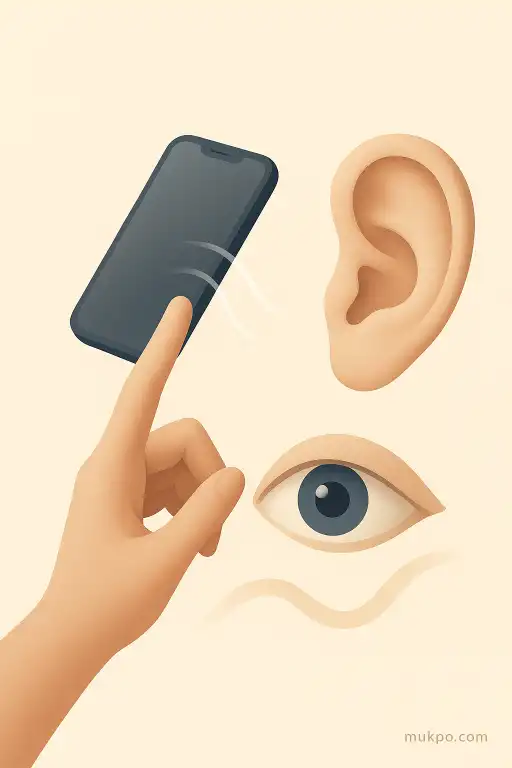
Skin sensors do not send a clean message that says “vibration detected.” They send patterns: pressure, stretch, tiny changes in contact, temperature, and motion across fabric. Those signals are uneven because pockets shift, seams press, and the phone’s weight changes with posture. The brain stitches that into a guess about what is happening right now. If a person is waiting for a message, the “phone buzz” guess becomes a very available interpretation, so small ambiguous signals get sorted into that category.
Timing matters. People often notice phantom buzzes during gaps: standing in line, walking between buildings, riding an elevator. That’s when attention has room to scan the body. The sensory input does not become stronger, but the system checking for it becomes more active. Expectation is not just a thought; it shifts what gets amplified and what gets ignored.
Why pockets and waistbands are such good liars
The sensation is usually reported where the phone normally sits: front pocket, jacket pocket, waistband, sometimes a bag strap. Those spots are mechanically busy. Cloth slides. A belt tightens when a person sits. A pocket edge presses differently as the leg swings. The phone itself can act like a little lever, changing pressure against the skin as the body moves. The nerves there are responding to a shifting mix of pressure and shear, which can resemble the start of a vibration pattern without ever becoming one.
One specific detail people overlook is how much the phone’s orientation changes the feel of ordinary movement. Face-in versus face-out, or phone rotated 90 degrees, changes which corner becomes a pressure point. A rounded edge drifting across the same spot on the thigh can create a brief “pulse” sensation. If the brain is already primed for a notification, that pulse can be promoted into a buzz.
Expectation gets trained by real notifications
The brain learns patterns that predict an incoming interruption. A person might check their phone at the same time every day, or after certain events: leaving a meeting, finishing a workout, hearing someone else’s phone. Even without consciously thinking about it, the body can start to anticipate a vibration when a familiar context appears. That anticipation does not stay in the mind. It changes how incoming touch data is weighted, and it can lower the threshold for calling something “a buzz.”
Sound adds to the effect. Low, muffled environmental rumbles from trains, buses, or building ventilation can create faint vibrations through the body. Those signals are real, but nonspecific. If the “phone vibration” template is already loaded, the brain can match the rumble to the wrong source. The person experiences it as localized to the pocket even when the vibration is coming from the floor or seat.
When the brain fills in touch, it feels normal
A phantom buzz can feel crisp and physical because the brain is not merely guessing; it is constructing perception from both expectation and sensation. That is the same basic logic behind other everyday misreads of touch, like thinking a tap happened when a sleeve brushed the arm, or feeling a “tickle” that turns out to be a shirt tag shifting. The system is built to decide fast, not to be perfectly literal.
That’s also why people can be confident about it and still be wrong. The experience arrives in the same channel as real touch. It doesn’t come with a label that says “prediction.” For a moment, the body’s best guess is treated as fact, and the hand reaches for a screen that never lit up.
Related reads
- How the Royal Mint’s Trial of the Pyx exposed coiners in Georgian London
- The piano whose ivory keys rearranged themselves while caretakers slept
- Bronze statue that seems to sweat during heat waves and spooks tourists
- Why the word sits on the tip of your tongue and won’t come out
- The phantom call: why you sometimes swear someone called your name
- Why you unconsciously mimic strangers’ gestures