
What people notice first
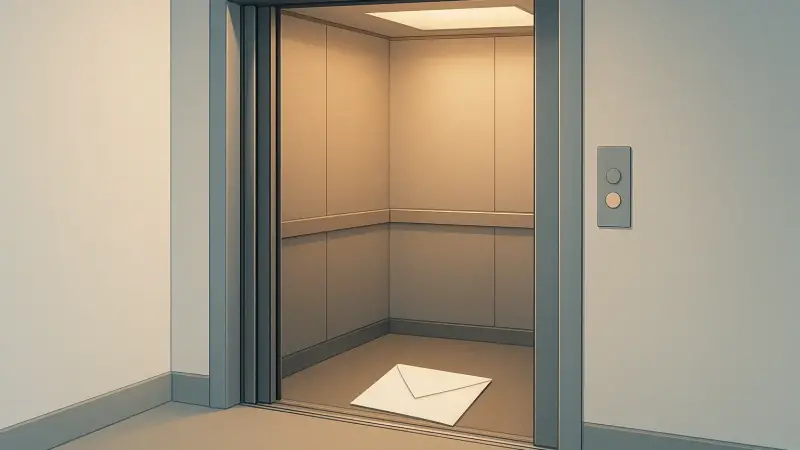
Elevators aren’t supposed to arrive for nobody. But in lots of buildings, they do. It isn’t one single place or one famous incident. You hear versions of it in office towers in Manhattan, in condo buildings in Toronto, and in hotels in Tokyo. The sequence is simple. A car shows up at a floor where no one pressed the button. The doors part. There’s no passenger. Just a single folded note on the floor, usually near the seam where the doors meet. The oddest part is that it feels staged, even when the hallway camera shows nothing unusual.
Why an elevator can stop without a call
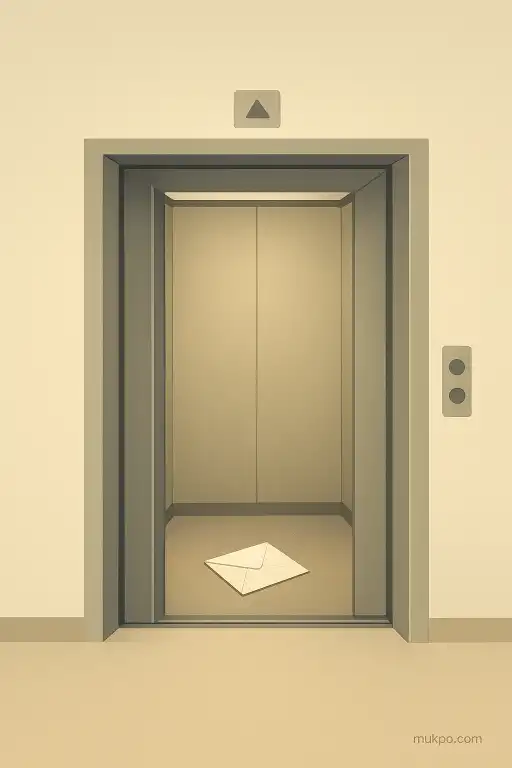
From the outside it looks like the elevator “chose” that floor. Inside the system it can be routine. Modern controllers reshuffle stops all the time. They park cars to balance demand. They answer hall calls from other banks through destination dispatch. They also make non-passenger trips for service logic, like returning to a home floor at off-hours or moving away from a door that failed to close cleanly.
There’s also a set of safety behaviors that can read like intent. A door edge sensor can see a brief obstruction and command a reopen. A leveling sensor can prompt a micro-move and re-open cycle. A “nudge” feature can change timing in a way that makes the arrival look deliberate. None of these require a human pressing anything at that floor in that moment.
How a note ends up on the floor
The folded note is the part that makes people stop talking and start whispering. Most notes don’t enter an elevator as “a note for later.” They enter as paper in someone’s hand, pocket, bag, or on top of a delivery cart. A slip falls, gets stepped on, and stays behind because it’s thin. Then airflow does the rest. Elevator shafts behave like chimneys. Pressure changes when the car moves. That draft can tug light paper toward gaps and then back out when the doors open at another floor.
A detail people overlook is the threshold itself. That metal sill is a little landscape of grooves, brushes, and small recesses. Paper can catch there without being visible from the hall. When the doors cycle and the car levels, a corner can work loose and slide into view. So the note can look freshly placed even if it’s been trapped for hours.
What building systems can and can’t explain
If the elevator consistently appears at the same floor and opens, that pattern usually comes from programming, not personality. Some buildings set a “lobby return” or a “parking floor” schedule. Some enable independent service modes during cleaning. Fire service and recall modes can also move cars to specific floors, and staff may not realize a test was run. Even a stuck hall button can register intermittent calls if its contacts are failing.
What the system can’t easily explain is timing that matches human expectations. People assume the elevator arrived “for the note,” because the note is the only visible reason. But controllers don’t see paper. They see doors, load readings, call queues, and faults. The coincidence is what gives it weight, especially when the car arrives quietly and the hallway is empty.
Why it feels personal anyway
A single folded note reads as a message, even before anyone unfolds it. And most people don’t actually know how busy an elevator is when they aren’t watching. A car can make dozens of trips that leave no trace in the hallway. So when you catch the one trip that reveals something small and human, it grabs the whole story. If the note is folded tightly, it also looks intentional, because accidental paper often lands flat or crumpled. In reality, a note that fell from a pocket can stay folded for a long time.
Sometimes the note is blank. Sometimes it’s a receipt, a sticky note with a phone number, a torn corner of a shipping label. Those are the most common kinds of paper to travel through a building. They’re light, they’re handled in motion, and they’re easy to miss until an empty car opens like it’s presenting evidence.
Related reads
- The microbes living on commuter shoes
- A shoemaker who found a child’s drawing hand-stitched inside a pair of century old boots
- How micrometeorites alter planetary atmospheres
- How quantum coherence helps plants harvest light
- The Tambora eruption that turned 1816 into a year without a summer and sparked food riots across Europe
- A lost photograph that appeared framed in different homes with a new person’s face each week