

Walking past the same smell every week
Some stores seem to have one aisle that always smells faintly like orange or lemon, even when the actual citrus is nowhere nearby. This isn’t one single location or one famous incident. People mention it in big chains and small independents across the U.S., the U.K., and Australia, and it can stick around for years in the same spot. The core reason is usually simple: volatile citrus compounds get into surfaces and airflow, then keep reappearing. It’s a smell that travels well, clings to plastics, and gets refreshed by small, repeated sources that shoppers don’t notice.
Why citrus is so good at lingering
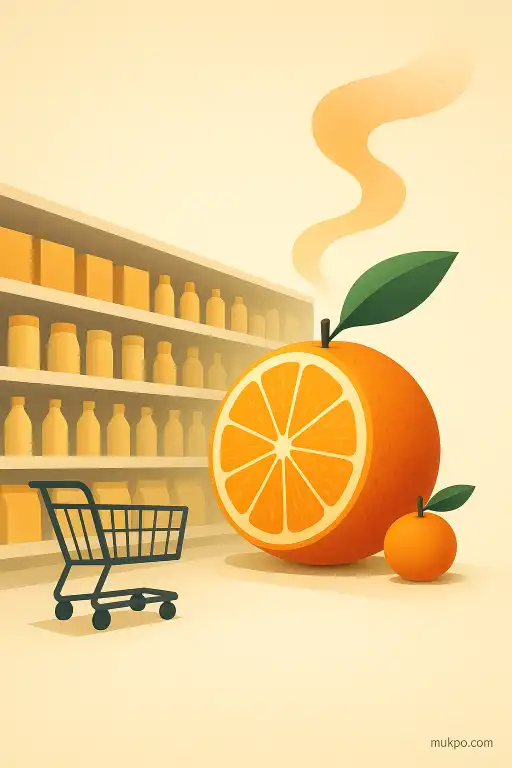
Citrus smells “bright” because the molecules are very volatile. Limonene is the famous one, and it’s in orange and lemon peels, but it also shows up all over a supermarket: cleaners, degreasers, air fresheners, dish soaps, floor products, even some packaging inks and adhesives. The result is that an aisle can keep getting tiny doses from different directions. Even if the source changes, the nose reads it as the same thing.
A detail people usually overlook is where the smell sits. It’s often lower than you expect. Those compounds absorb into vinyl floor, rubber baseboards, mop heads, and the underside of shelves. Air currents can carry the scent, but the “reservoir” is frequently the floor line, not the products at eye level.
The aisle layout can trap and replay it
Airflow inside stores is not uniform. Supply vents, return grilles, refrigerated cases, and even doorways create steady patterns that don’t change much year to year. A spot that’s downwind of a bakery vent one season and downwind of a cleaning closet another season can still smell similar if the compounds are alike. Refrigerated cases matter too, because their fans move a lot of air and can create a “lane” that carries odors along a run of shelving.
One concrete situation that fits what people describe: an aisle near produce that also sits beside a back-of-house door. Crates of citrus are rolled through, peel oils get on pallet wood and cart handles, and the door area keeps a slight draft. The aisle becomes the place where that scent repeatedly passes through, so it feels like the aisle itself is scented.
Small repeat sources that don’t look like citrus
Stores often use citrus-scented products for practical reasons. Limonene cuts grease well, and “lemon” reads as clean to customers. If a cleaning routine is consistent—same floor product, same degreaser, same timing—the smell can become a weekly or daily layer that never fully disappears. It can seem “mysterious” because it’s not tied to a visible object, and because the cleaning happens early, long before most shoppers arrive.
Another quiet source is damaged goods. A single leaky bottle of lemon dish soap, a cracked cleaner jug, or a torn air freshener pack can wick into cardboard and shelf liners. Cardboard is especially good at holding onto fragrance oils. Even after the spill is removed, the box dust and shelf surface can keep releasing odor when humidity rises or the heat kicks on.
Why it can last for years in the same place
Once citrus oils soak into porous or semi-porous materials, they don’t behave like a one-time smell. They off-gas slowly, and the process speeds up and slows down with temperature, sunlight near front windows, and seasonal humidity. That’s why the scent can “come back” after seeming gone for a while. It’s also why the same aisle can smell strongest in summer or during a busy weekend, when warmer air and higher foot traffic stir up whatever’s sitting in the floor finish and shelf edges.
The other reason it persists is continuity. Stores remodel less often than people think. Aisles get remerchandised, but the same fixtures, the same mop sink area, the same vent locations, and the same overnight cleaning products can stay in place for a decade. The smell becomes part of that little micro-environment, and every small reintroduction keeps it from ever fully resetting.

Related reads
- How a Florentine guild in the 14th century outlawed laughter on market days
- The speeding years illusion: how perception compresses with age
- When a solar storm painted auroras across low latitudes
- How squid see and signal with polarized light
- Smell triggers that pull up entire childhood scenes instantly
- Tiny rituals that calm panic and feel oddly effective