

What a tree ring is actually recording
People tend to think of tree rings as a simple birthday count. But with bristlecone pines, the rings behave more like a slow, physical logbook of water stress. This isn’t tied to one single place. It shows up across the high, dry mountains of the American West, including the White Mountains of California, the Great Basin, and parts of Colorado. In places like California’s Ancient Bristlecone Pine Forest, a single growing season can leave a ring that is thick, thin, or barely there, depending on how much moisture the tree could actually use.
The core mechanism is blunt: when water is available during the short growing season, the tree can build more wood. When it’s dry, growth slows. The cambium layer under the bark makes smaller, denser cells, and the ring narrows. In extreme drought years, the ring can become so thin that it’s hard to see without magnification, and in some cases the tree barely adds wood at all.
Why bristlecones keep such long records
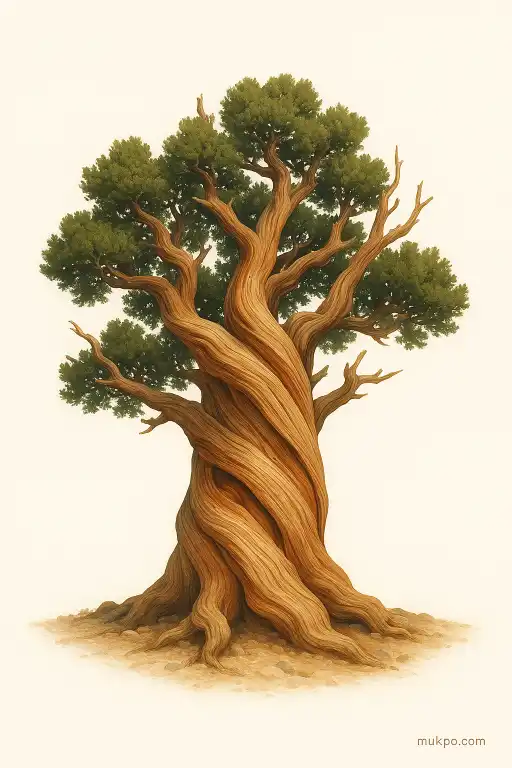
Bristlecone pines can live for thousands of years, and part of the reason is that they’re conservative with resources. They grow slowly, often on cold, rocky, nutrient-poor slopes where pests and decay fungi tend to be less aggressive. Dead wood can persist for a very long time in these settings. That matters because the drought story isn’t just in living trees. It continues in long-dead trunks and fallen logs that haven’t rotted away.
A detail people overlook is that the tree doesn’t have to be “healthy” in the way people picture a healthy tree. Bristlecones can survive with large sections of dead tissue. A strip of living bark might feed only a narrow band of wood, year after year. That can create rings that vary around the trunk, which is why researchers often take more than one sample or choose specific parts of the tree when they want a clean timeline.
How drought ends up in a ring pattern
Within each annual ring, there can be earlywood and latewood. Earlywood forms when growth starts, and it usually has larger cells. Latewood forms later, and it tends to be denser. In dry years, the transition can be abrupt or the latewood can be reduced. These patterns matter because drought isn’t only about total rainfall. Timing matters. A wet winter followed by a dry summer can leave a different signature than steady but modest moisture.
Rings are also sensitive to temperature and length of the growing season, especially near treeline. That’s one reason bristlecone records are often interpreted with care. A narrow ring can reflect drought, cold, or both. Scientists typically compare many trees from the same region and cross-date them ring-by-ring so they can separate a local oddity from a regional signal. When a thin ring shows up in many trees at the same calendar year, it’s more likely tied to broad conditions like a severe dry spell.
What resin contributes that wood can’t
Wood shows growth. Resin and related compounds can also preserve a chemical history of stress and defense. Bristlecones produce resin to seal wounds and deter insects and microbes. Some of that resin becomes part of the wood and can remain stable for long periods in dry, cold environments. Researchers can sometimes analyze preserved compounds to infer aspects of physiology that rings alone don’t show, like shifts in how the tree responded internally to stress.
The resin angle is also practical. Resin-rich wood can resist decay, which helps keep old material intact long enough to be sampled. That’s one reason dead bristlecone wood can stay readable for centuries or longer on exposed slopes. It’s not that resin perfectly “labels” a drought year by itself. It’s that resin helps keep the archive from being erased, and in some cases provides extra lines of evidence alongside ring width and density.
How millennia get stitched together from living and dead trees
A single tree can only cover its own lifespan, even if that’s very long. The multi-thousand-year drought archive comes from overlapping sequences. A living tree’s oldest rings overlap with rings from dead wood nearby, and those dead pieces can overlap with even older dead material. By matching the same pattern of wide and narrow rings across many samples, researchers build a continuous timeline. This is why bristlecone sites with lots of preserved deadwood are so valuable.
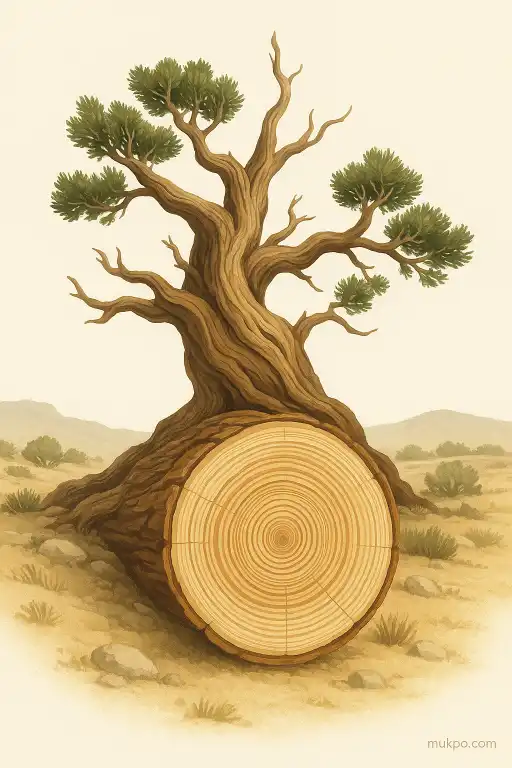
A concrete situational example looks plain: a scientist in the White Mountains uses an increment borer to take a thin core from a living trunk, then later compares it to a sanded cross-section from a long-dead log found upslope. The overlooked part is the matching process itself. It isn’t done by “counting rings.” It relies on distinctive sequences, including unusual marker years where growth was extremely suppressed across the whole region, which helps lock the calendar into place without guessing.
Related reads
- How Joshua Norton declared himself Emperor on 1859 San Francisco streets
- An elevator that skips floors if you say a secret word
- Why unfinished tasks cling to your mind
- The town statue that mysteriously appears wearing a different hat every morning
- A phone line that delivers hold music recorded during the 1970s
- The word at the edge of your tongue: why retrieval slips away