
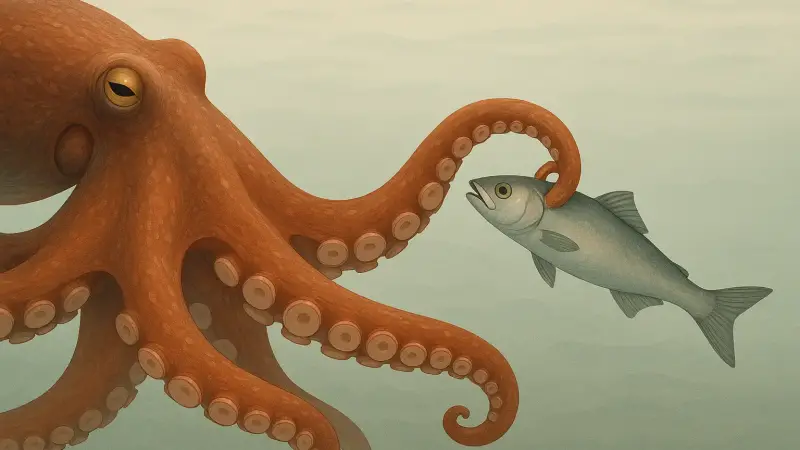
Watching an octopus handle a crab, it can look like the arms are just grabbing and holding on. But the suckers are doing something else at the same time. They “taste” the surface they touch, almost like fingers and tongue combined. This isn’t one single story tied to one place or event. It’s a general feature seen across many octopus species, from the Mediterranean to the Pacific and in lab studies and aquariums. The core mechanism is chemoreception in the suckers: chemical sensors pick up cues from the water-thin film on a shell, a fish’s skin, or a rock. That information helps steer what gets investigated, held, or dropped.
What “tasting with suckers” actually means
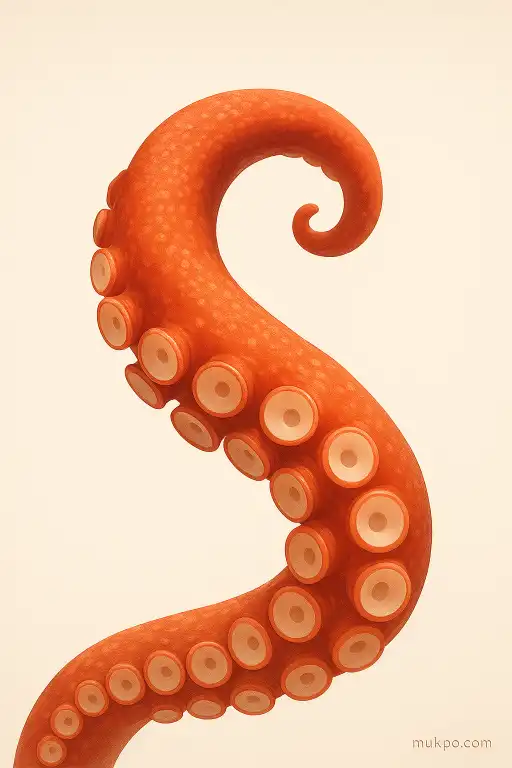
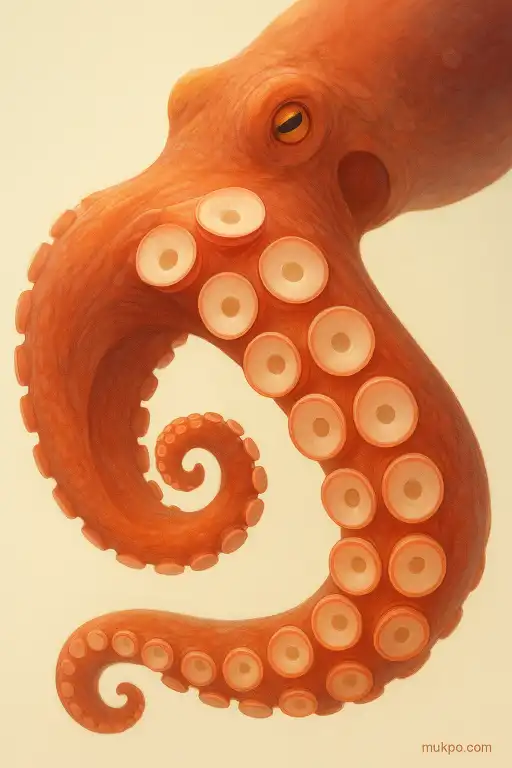
Each sucker has nerves and sensory cells that respond to chemicals. When a sucker seals, it traps a tiny pocket of water against the surface. That matters, because dissolved molecules get concentrated right where the receptors are. The octopus doesn’t need to bring food to its mouth to sample it. The sampling happens wherever the arm lands.
People often overlook that the suckers aren’t just a ring. The rim and inner surface can be loaded with receptors, and they’re arranged across hundreds of suckers per arm. So “tasting” isn’t a single test. It’s a moving map of chemical hints being updated as the arms crawl over an object.
The cues an octopus is looking for
Prey leaves chemical signatures. Fish skin mucus, the proteins and amino acids leaking from a damaged crab joint, and the biofilm coating a shell can all carry information. Some cues are about “is this food,” and others are about “is this alive, or safe to handle.” If the surface chemistry doesn’t match what an octopus associates with prey, it may still explore, but it often won’t commit to a full capture.
This is also why the same object can get different treatment depending on context. A recently molted crab can have a different chemical and tactile profile than a hard-shelled one. A dead fish and a live fish can smell different at the surface, not just in the water. The sucker sensors are positioned to catch those differences at contact range.
How taste and touch get combined during a grab
An octopus doesn’t separate “feeling” and “tasting” the way humans do. The arms are constantly measuring texture, stiffness, and movement while also sampling chemistry. That combination helps it decide where to place more suckers and how much force to use. Hard, spiny, or strongly struggling prey tends to trigger a different grip pattern than soft prey.
A concrete example: when an octopus handles a crab, it often runs suckers along the carapace and legs before it settles on a control point. The animal may shift its hold several times. That looks like fumbling, but it’s also information gathering. Small chemical differences around joints and softer membranes can guide where the arms concentrate, because those spots can be easier to immobilize or access.
Decision-making can happen in the arms, not just the brain
Octopus arms have a lot of local neural processing. That means the suckers can trigger reflex-like actions without waiting for a central “command” for every step. If a sucker contacts something with the right chemical profile, the arm may tighten and recruit neighboring suckers. If the chemistry reads as wrong or risky, the grip can loosen quickly.
This local control is useful because an octopus can be handling multiple things at once. One arm can keep tasting and holding a potential meal while another arm explores a crevice. The animal’s overall behavior still integrates in the brain, but a lot of the moment-to-moment sorting happens at the level of the arm.
Why this matters for choosing prey in the real ocean
Underwater, vision can be limited by murky water, low light, or cluttered reefs. Contact chemoreception lets an octopus make choices up close, where the signal is strongest. It can probe a rock and quickly decide whether it’s just algae and sand, or whether there’s a living crab tucked into a crack. That same close-range sampling helps with scavenging too, because “edible” chemicals can be detected on a surface even before a bite.
It also explains a small but telling detail: octopuses often keep their suckers busy even when they seem “still.” The arms may be quietly repositioning and resealing. Each seal is another chance to sample the thin chemical layer on whatever they’re touching, and that steady stream of contact taste can be enough to tip a decision from investigating to committing.
Related reads
- A waterfall with a natural flame burning behind it
- The habit of replaying past conversations
- Why kitchen lemons grow tiny roots when left in jars
- The town that heard a mysterious low hum no engineer could trace
- Why people stick to familiar routes even when a shortcut is obvious
- How sleep inertia turns you into a slow thinker after naps