

How fast it happens
People often think they “wait for the facts,” but moral judgments can arrive before a person has even finished a sentence. There isn’t one single event this is tied to. You can see it in jury selection in the United States, in street interactions filmed on phones in the UK, or in public reactions to viral videos in India. The core mechanism is speed: the brain makes a quick read of danger, intent, and social meaning, then tags it as acceptable or unacceptable. Later thoughts can change the judgment, but the first tag can already steer attention and emotion.
The brain’s “good or bad” shortcut
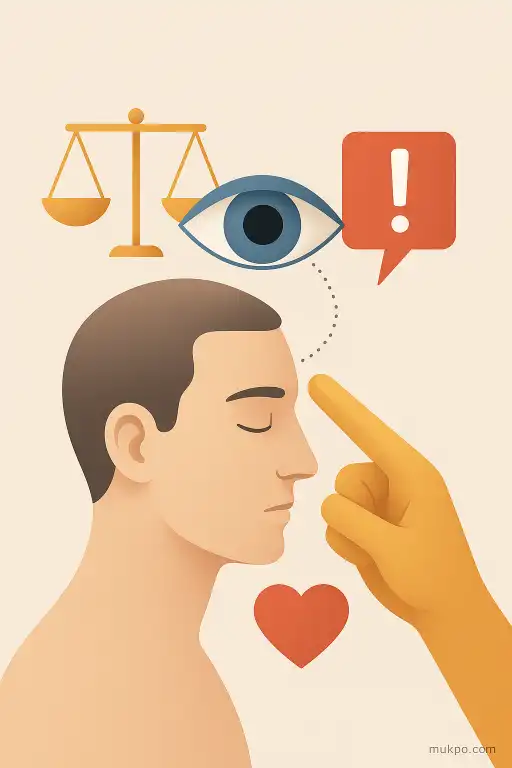
A snap moral judgment usually starts as a fast, low-detail appraisal. It leans on pattern matching, not careful reasoning. The mind grabs a few cues—tone of voice, facial tension, how close someone stands, whether a movement looks purposeful—and treats them like the whole story. That first pass is efficient. It’s also prone to overconfidence because it feels like perception, not inference.
One overlooked detail is timing. A judgment can form before the “action” is fully understood because the brain is predicting what will happen next. If a hand moves quickly toward a pocket, the prediction can feel like evidence. The moral label (“threatening,” “rude,” “wrong”) can land while the viewer is still filling in missing pieces.
Why intent gets filled in so quickly
Moral judgment depends heavily on perceived intent, and intent is mostly invisible. So observers substitute. They use whatever is easiest to interpret: the person’s expression, their group identity, or the setting. A shove in a crowded subway can be read as aggression in one moment and as imbalance in another, depending on what the observer expects in that environment.
This is why the same behavior can be judged differently when the roles switch. If someone seems “like the kind of person who would do that,” intent gets assigned with less scrutiny. The brain is not just judging an act. It’s also judging a story about a person, built out of thin slices of information.
Emotion does the steering
Disgust, fear, and anger can function like moral accelerators. If a scene triggers disgust—say, food handling that looks unsanitary—people often jump straight to condemnation even when actual harm is unclear. Fear does something similar with perceived threat. Anger narrows attention and makes punishment feel more appropriate, even before details are verified.
These emotions aren’t random. They’re tied to older protective systems: avoid contamination, avoid danger, stop exploitation. The problem is that modern situations are messy. A loud argument in a parking lot may trigger fear in a bystander, and fear can quietly rewrite neutral details into “menacing” ones.
How context edits what you think you saw
Context can flip a snap moral judgment without changing the behavior itself. Camera angle, lighting, and audio clarity matter, which is why viral clips can produce intense certainty from very little information. A missing ten seconds of footage can remove the provocation. Background noise can hide a threat. Even captions can pre-load the interpretation, so the viewer “sees” an insult or a refusal that was never audible.
A concrete example is a short phone video of a confrontation on public transport. If the clip begins after someone has been harassed, the loud response looks unprovoked. If it begins earlier, the same response can look defensive. People usually overlook how much their judgment depends on what the recording did not capture, especially the lead-up and the social cues happening off-camera.
When fast judgments harden into “obvious” truth
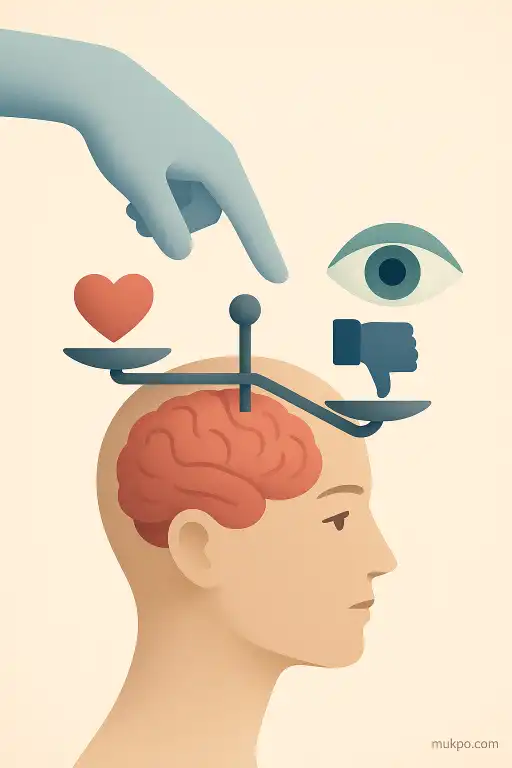
After the first moral label lands, the mind tends to protect it. Attention shifts toward confirming details and away from contradictions. This can make later information feel like a technicality rather than a correction. It also changes memory: people often remember the version that fits the initial judgment, not the version that matches what was actually shown.
Social agreement locks it in faster. If other people react with outrage or approval, the judgment feels safer and more factual. A comment section that piles on can make uncertainty feel illegitimate, even when key details are still unclear or vary between accounts.
Related reads
- When the Great Stink halted Victorian Parliament
- The silent chemistry that paints autumn leaves in reds and golds
- What makes lightning behave differently over oceans and mountains
- The desert dunes that sing when you walk on them
- Why songs get stuck in your head
- How termite mounds regulate temperature with clever architecture