
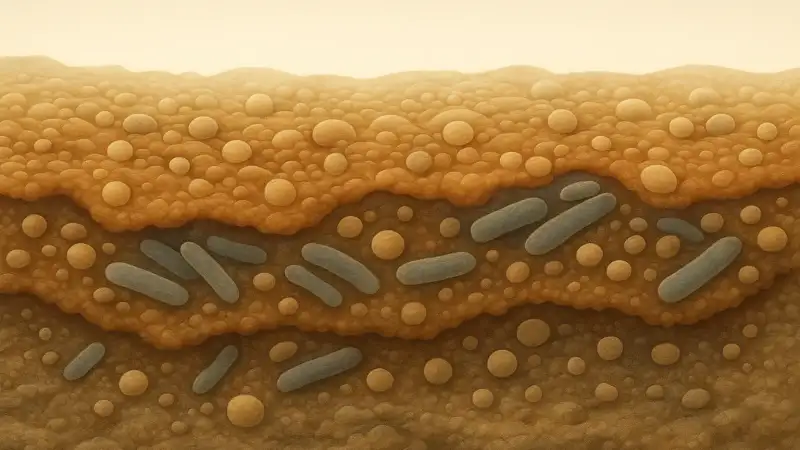
A pond can look like a pond, even when it’s quietly making greenhouse gas. That’s the odd part about thawing ground in the Arctic. As permafrost softens, old plant material breaks down and methane can bubble up through shallow water. But not all of that methane makes it to the air. Tiny microbes in the water and the pond bottom can use methane as food, converting it into carbon dioxide and biomass instead. This isn’t one single place or event. It shows up across regions like Alaska, Siberia, and northern Canada, wherever thaw creates small, dark ponds and soggy edges that stay wet through the summer.
Where the methane in thaw ponds comes from
When permafrost thaws, it exposes organic matter that was frozen for decades to millennia. In waterlogged pond sediments, oxygen gets used up fast. That pushes decomposition toward pathways that make methane. The methane can dissolve in the water, seep slowly through mud, or escape as visible bubbles that pop at the surface.
A detail people tend to overlook is that the same pond can have several methane “routes” at once. The slow dissolved route behaves differently from big bubbles. Bubbles can bypass a lot of the water column, which matters because the water column is where many of the methane-eating microbes live. Two ponds a short walk apart can release very different amounts for that reason alone.
The microbes that eat methane, and what they need

The best-known methane eaters in these ponds are aerobic methanotrophs. They use oxygen to oxidize methane, turning it mostly into carbon dioxide and building cell material along the way. That means they thrive at boundaries: where oxygen from the air or plants meets methane coming up from anoxic sediment. The thin zone near the sediment surface and the upper few centimeters of water can be especially active.
There are also microbes linked to “anaerobic oxidation of methane,” where methane is consumed without oxygen, coupled to other chemicals. How common that is in small Arctic thaw ponds varies by site and chemistry, and it is still an active research area. Either way, the key point is that microbes don’t remove methane uniformly. They remove it where the right pairing of methane and an electron acceptor happens to line up.
Why some ponds leak a lot anyway
Microbes can only work on methane they can “reach.” If methane is released as fast ebullition, those bubbles can shoot through the water too quickly for oxidation. Temperature also sets the pace. Warmer water speeds up microbial metabolism, but it also speeds up methane production in the sediments, and it can reduce oxygen solubility in the water. The balance can swing either way depending on depth, wind mixing, and how much fresh organic matter is available.
Light matters too, but not in a simple way. In some ponds, algae and aquatic plants add oxygen during daylight, which can expand the zone where aerobic methanotrophs operate. At night, that oxygen can drop sharply. So a pond can “filter” methane better at noon than at midnight, even if the methane production below stays steady.
A concrete pond-edge example
Imagine a shallow thaw pond in northern Alaska with a soft, mucky margin and a slightly deeper center. Along the edge, sedges and mosses can leak oxygen into the sediment through their roots. Methane moving up through that root zone is more likely to be oxidized before it escapes. In the deeper middle, the water can be darker and more stratified on calm days. Oxygen may not reach the bottom as easily, and methane can build up below.
The overlooked situational detail here is the role of the “skin” between pond and air. A very thin surface layer can slow gas exchange when the water is calm. That gives microbes more time to consume dissolved methane near the top. A windy day can erase that layer quickly, changing emissions without any change in the pond’s biology.
How scientists tell filtering from leakage
Field teams often separate methane pathways by measuring both dissolved methane in the water and bubble flux from the sediments. They may use floating chambers to capture gases leaving the surface, and bubble traps to quantify ebullition. To connect the gas numbers to microbes, they look for methanotroph DNA, measure oxidation rates in incubations, and sometimes track isotopic fingerprints that shift when methane is consumed.
Even with careful measurements, it can be unclear how representative a short sampling window is. Emissions can spike during sudden pressure drops, after storms, or during rapid warming. Microbial communities also shift over the season. The same pond can act like a stronger methane filter in early summer and a weaker one later, depending on oxygen, nutrients, and how the thawed sediments change under the water.
Related reads
- Why deep-sea squid flash lopsided bioluminescence to disappear from predators
- How bristlecone pines archive millennia of drought in rings and resin
- How Joshua Norton declared himself Emperor on 1859 San Francisco streets
- An elevator that skips floors if you say a secret word
- Why unfinished tasks cling to your mind
- The town statue that mysteriously appears wearing a different hat every morning