
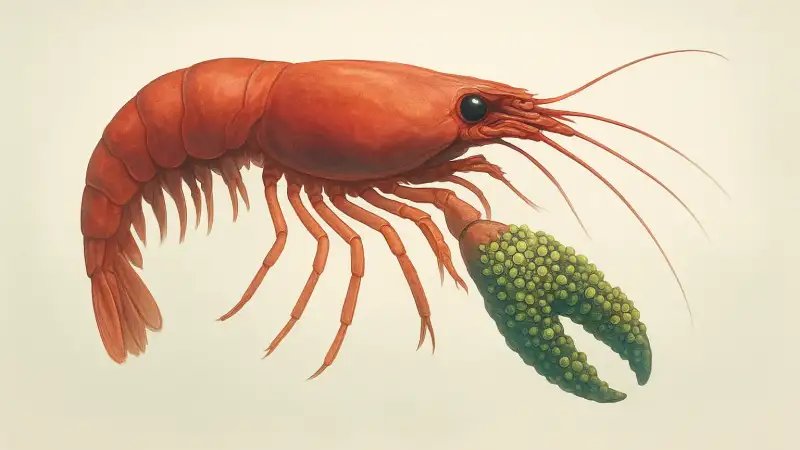
A shrimp with “hairy” claws
It’s easy to assume a crustacean’s claws are just tools for grabbing food. Then you see photos from hydrothermal vents on the Mid-Atlantic Ridge and notice something odd: a deep-sea shrimp with forearms that look fuzzy, almost like they’re wearing mittens. That “fur” isn’t the shrimp’s tissue. It’s a thick growth of bacteria living on dense bristles that cover its claws and parts of its body. The shrimp keeps the microbes alive and in the right place, and the microbes turn vent chemicals into edible biomass. It’s farming, but in the dark, with hot, mineral-rich water as the fertilizer.
Where it lives, and why vents change the rules
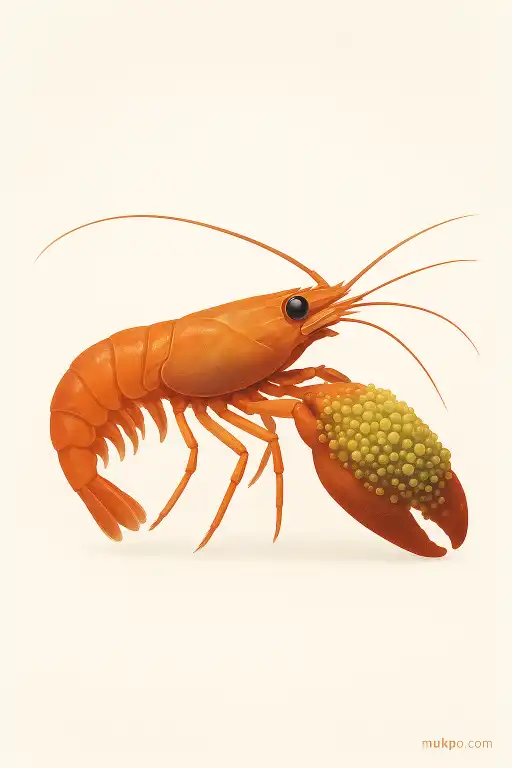
This isn’t tied to one single vent field; related observations come from multiple hydrothermal vent regions in the Atlantic, including the Mid-Atlantic Ridge. The best-known example is the shrimp Rimicaris exoculata, which piles up in dense crowds right next to active chimneys. That location matters because vents create a buffet of chemicals like hydrogen sulfide, hydrogen, methane, and iron compounds. Sunlight-based food webs don’t reach these depths, so chemical energy becomes the starting point instead of photosynthesis.
The situational detail that’s easy to miss is just how tight the shrimp’s “comfort zone” is. It often sits where vent fluid and cold seawater mix, not in the hottest jet. That boundary layer can shift minute to minute as currents move. The shrimp has to keep close enough for its bacteria to get fuel, but not so close that heat and toxins overwhelm everything.
The bacterial garden and the chemicals it runs on
The bacteria coating the bristles are chemosynthetic. Instead of using light, they use chemical reactions to build organic matter. Many are thought to oxidize sulfide or hydrogen, using oxygen from seawater as the other half of the reaction. The shrimp benefits because the bacteria turn an otherwise useless chemical soup into something like food paste spread across its own body.
Those bristles are not random fuzz. They increase surface area, which is everything in a place where fuel and oxygen arrive in thin, shifting streams. A lot of people focus on the vent’s heat, but the overlooked part is the mixing. The garden needs both a reducing chemical from the vent and oxygen from seawater. The shrimp’s body becomes the platform where those meet reliably.
How the shrimp tends its crop
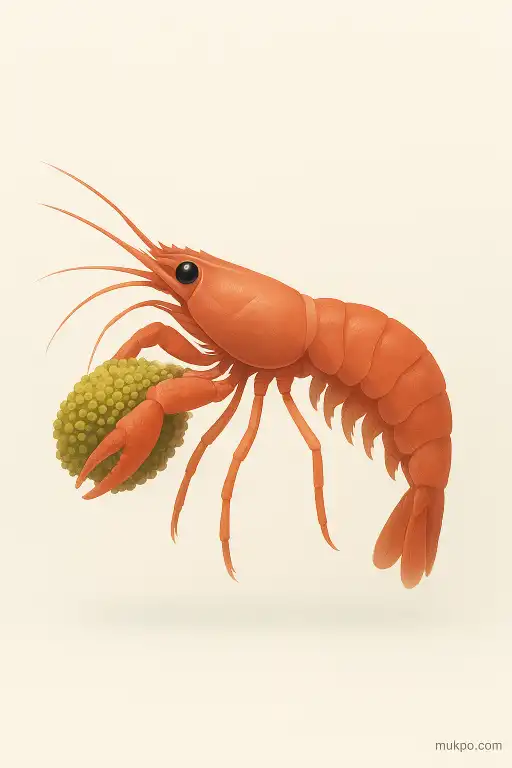
These shrimp aren’t passive hosts. They position themselves and move their claw “fans” in ways that seem to manage flow over the bacterial patches. That matters because too much vent fluid can be low in oxygen and loaded with metals, while too much seawater can starve the bacteria of chemical fuel. Holding a steady posture in a turbulent mixing zone is a form of control, even without fine precision.
Feeding is surprisingly direct. The shrimp can graze on the bacteria growing on its own bristles, scraping and picking with its mouthparts. It can also pick up free-living microbes and particles, but the attached growth is a dependable supply when the vent chemistry is right. Over time, the “garden” has to regrow, which means the shrimp’s day-to-day life is tied to keeping that bacterial film productive.
A body built for a partnership
The classic overlooked feature in these vent shrimp is their eyes. In Rimicaris exoculata, the eyes are reduced and adapted for dim conditions, and the shrimp relies heavily on other senses and the vent environment itself. It also has enlarged internal spaces in the head region associated with hosting microbial communities, not just on the outside. The result is an animal whose anatomy makes more sense when you treat it as a mobile habitat for bacteria.
Even the idea of “clean” versus “dirty” flips down there. On most animals, a thick microbial coat would sound like a problem. At vents, it’s an engine. The shrimp’s survival depends on letting bacteria grow where other creatures would try to scrub them off, and on staying in a narrow band of water where that living layer can keep converting vent chemistry into lunch.
Related reads
- Why certain smells unlock exact moments from your past
- A postcard that arrived nearly a century after it was mailed
- How micrometeorite impacts forge glass beads in lunar soil
- Why you freeze during public speaking
- Why glacial flour turns alpine lakes brilliant turquoise
- Why ordinary coincidences feel like meaningful signs