
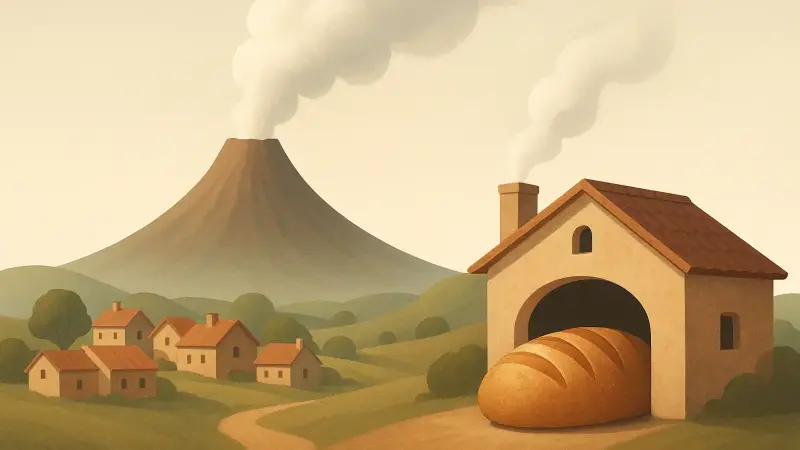
You can stand next to a patch of ground that looks ordinary and feel heat rising out of it like a vent. In some volcanic areas, that heat is steady enough to cook with. Iceland has a well-known example near Laugarvatn, where “hverabrauð” (hot-spring bread) is baked by burying dough in the warm earth. The core mechanism is simple: groundwater is heated by geothermal activity, turning into hot water or steam that transfers heat into soil, stones, or a sealed pot. It isn’t always one single “steam bakery village,” though. Similar cooking shows up in places like the Azores (Furnas on São Miguel) and parts of Japan with active hot springs.
Where the heat comes from
Volcanic regions often have shallow heat. Rain and snowmelt seep down through cracks, meet hot rock, and come back up as hot water or steam. Sometimes it vents as a fumarole. Sometimes it just warms the ground. For bread, the useful situations are the ones that stay hot for hours, not the dramatic bursts. That steady heat is why geothermal cooking tends to happen in places with established hot spring fields, not right next to fresh lava.
Steam matters because it carries a lot of heat and it’s self-limiting in a way. If you’re heating something with near-boiling water or steam, the cooking environment often sits around the boiling point unless pressure builds. That makes it less likely to scorch compared with direct flame, but it also means timing is longer and the loaf can come out dense if the heat is too gentle.
What “baked in the ground” usually looks like
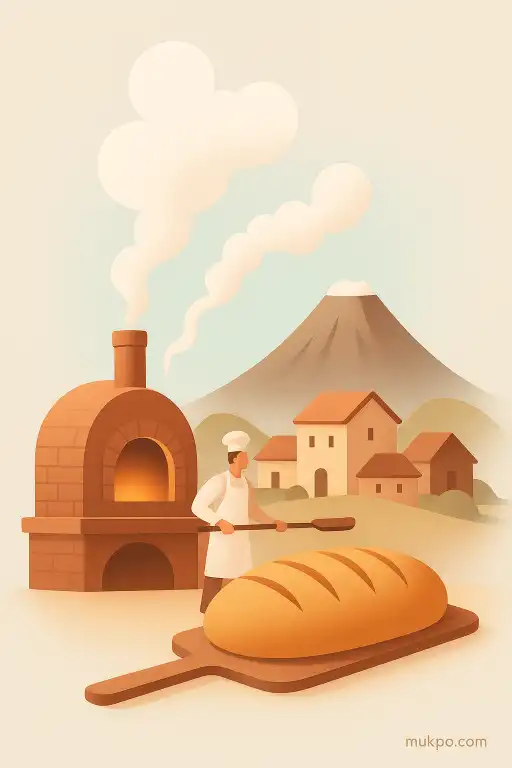
The common setup is not an open hole with steam blasting into dough. It’s usually a sealed container or tightly wrapped dough placed into a geothermal spot. In Iceland, loaves are traditionally put into a pot or wrapped and buried in warm ground for hours. In Furnas in the Azores, the famous geothermal dish is often “cozido,” lowered into hot soil in covered pots near fumaroles; the same field can be used for other slow-cooked foods when conditions are right.
The detail people overlook is how much of this is about managing water, not just heat. Bread dough needs moisture in the early phase, then it needs to set. Underground, the environment can be very wet. People often rely on the container and its lid to control condensation, because steam dripping back onto a loaf can keep the surface gummy even when the inside is cooked.
How the temperature is controlled without knobs
There usually isn’t a thermostat. The “settings” are the spot, the depth, the container, and the time. A small change in where something is buried can matter a lot, because geothermal fields have hot veins and cooler patches a few steps apart. Depth matters too. Deeper soil can be more stable and evenly warm, while the surface can swing with weather.
People also adjust by using thermal mass. Stones, thick pots, and soil all buffer temperature changes. That’s part of why these breads are often slow. The heat has to soak in. If a vent is too hot and too direct, the outside can overcook before the center sets, so cooks avoid the most aggressive steam outlets for bread.
What it does to the bread
Geothermal bread often ends up less like a crusty bakery loaf and more like a steamed, gently baked bread. In Icelandic hverabrauð, the long, low bake encourages sugars to develop, and the crumb can be tight and moist. The crust tends to be thin. That’s not a flaw. It’s a signature of cooking in a humid, enclosed heat source rather than dry oven air.
Flavor is mostly about fermentation and grain, not “volcano taste.” When people describe a mineral note, it’s usually about the local water or the environment around the cooking site. If the bread is sealed properly, it shouldn’t absorb sulfur smells from the steam. If it isn’t sealed well, it can pick up those aromas fast, especially near active fumaroles.
Why villages keep doing it
In places with reliable geothermal heat, it’s an energy source you don’t have to import. Historically, that can matter in remote areas where fuel is scarce or expensive. It also fits into routines. Dough can be prepared, buried, and retrieved on a predictable schedule, which is why these methods often show up alongside hot spring bathing and communal cooking areas.
It’s also fragile as a practice. Geothermal fields change. Rainfall shifts ground saturation. Small earthquakes can redirect vents. Some sites are managed today for safety and conservation, which can limit where cooking is allowed. So the exact “village that bakes with steam” can be less a fixed place and more a tradition that moves a few meters at a time, following the heat as it wanders.
