
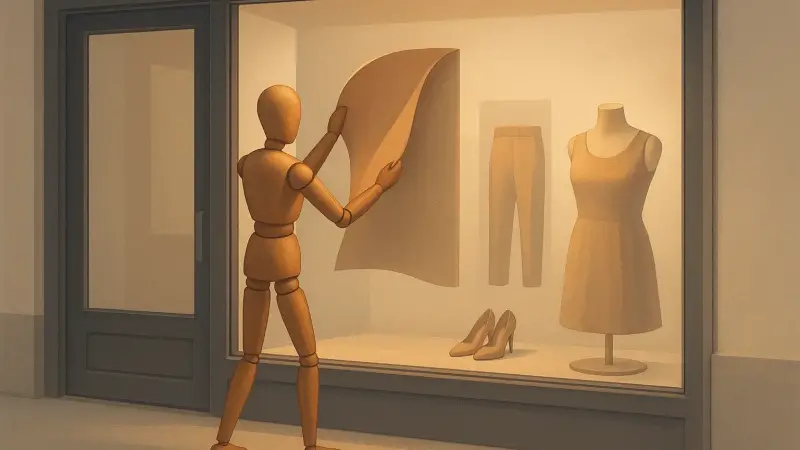
A window that looks different every day
People notice when a shop window changes overnight, because it feels like work happened while the street was asleep. There isn’t one single famous, documented “rearranging mannequin” story that everyone agrees on. It shows up as a recurring retail oddity, the kind you hear about from different places and different decades. You get versions in department stores in London, small boutiques in New York, and old shopfronts in Tokyo, depending on who’s telling it. The core mechanism is always the same: a display figure that seems to have shifted pose, swapped outfits, or moved position between closing time and morning opening, with no clear record of anyone doing it.
How windows actually get changed
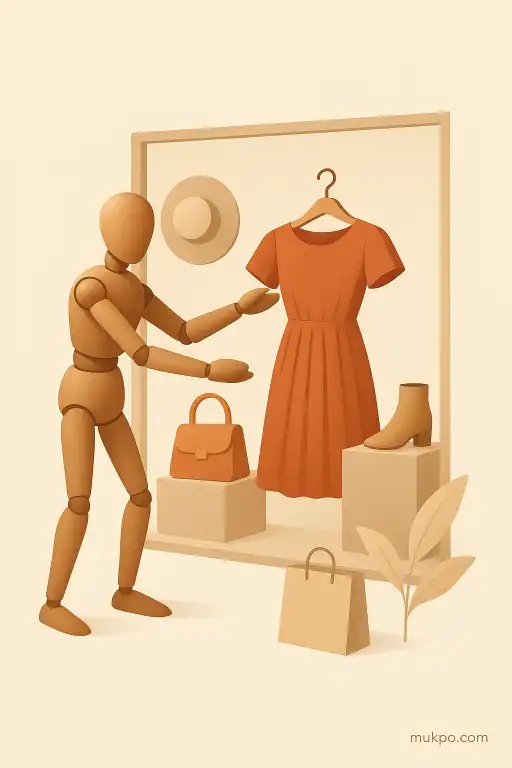
Shop windows don’t reset themselves, but they also aren’t as sealed as they look from the sidewalk. Visual merchandisers come in early. Cleaners come in late. Security may patrol and enter. Managers sometimes tweak a hemline, straighten a jacket lapel, or fix a fallen prop without thinking of it as “changing the display.” If more than one person has keys, a small adjustment can happen and then vanish into the blur of routine. The stranger versions usually start when nobody wants to be the person who admits they touched the mannequin.
One overlooked detail is how little it takes for a display to read as “rearranged.” A wrist turned a few degrees can make a whole pose look new from the street. Rotating a mannequin half an inch on a slick base can change the silhouette under the glass. Even moving a single spotlight can shift the shadows across the face and make it seem like the head is angled differently. People remember the “new pose,” not the light that made it look that way.
Small forces that cause real movement
Mannequins are built to be posed, which means they’re also built to slip if they’re not locked down perfectly. Many have removable hands, feet, or heads that seat onto pegs. Those connections loosen with handling and temperature changes. A warm shop cooling down overnight can make some materials contract just enough to pop a joint slightly, especially if clothing is pulling on it. High-traffic streets add vibration. Heavy trucks passing by can rattle a window platform in a way you don’t feel inside a building.
Then there’s airflow. Some windows have vents for humidity control or to keep glass from fogging. If a door to the back room is left open, a pressure change can puff a curtain, tug a scarf, or shift a lightweight prop. Long coats and wide sleeves act like sails. That can drag an arm or rotate a torso if the mannequin’s stance isn’t planted. From outside, it reads like intention. Inside, it’s friction, fabric, and a little torque.
The human side: memory, angles, and assumptions
Most people see a window display in passing. They catch it from one angle, at one speed, under one set of reflections. The next morning they approach from the other direction, or the sun is on the glass, or the street is wet and reflective. Their brain stitches a “same window” label onto a different visual input. That’s why mannequins are such good targets for these stories. They’re nearly-human, so we read meaning into tiny changes, but they’re also generic enough that we don’t have a precise memory of them.
Staff can get pulled into it, too. Once someone says, “It moved,” the display stops being background. People start checking it like a clock. They notice differences they would normally ignore, like a necklace clasp turning or a skirt pleat falling flatter. A store can also have multiple mannequins that look similar, and swapping them during a quick reset can be mistaken for “the same one” changing position. Under retail lighting, a glossy face can hide its exact angle, so yesterday’s pose becomes a guess.
Why the story sticks in a shop
A window is a public stage, but it’s also a private workspace. When something seems off, it’s hard to prove either way, because the evidence resets every day. Security cameras often don’t cover the window floor directly, or the angle is blocked by signage. Some systems record over footage quickly. If there is footage, it can still be unsatisfying: a cleaner stepping in front of the lens for ten seconds is enough to hide a small adjustment, and nobody can swear what they did at 9:47 p.m. after a long shift.
That gap between “I think I saw it different” and “I can show you what happened” is where the mannequin becomes a character. It’s a harmless one. It doesn’t demand a culprit, and it doesn’t accuse a coworker directly. It also fits the rhythm of retail, where every morning is a reset and every night is a close-down. The window looks back at the street the same way each day, and it never explains itself.
Related reads
- How fungi can feast on nuclear radiation
- The piano that hid a century of forgotten letters
- What makes a chorus loop in your head long after the song ends
- Why years start to fly: the perception trick that shrinks long stretches
- The San Juan pig whose shooting nearly sparked a war between Britain and America in 1859
- A hoard of century old coins uncovered beneath a town square