
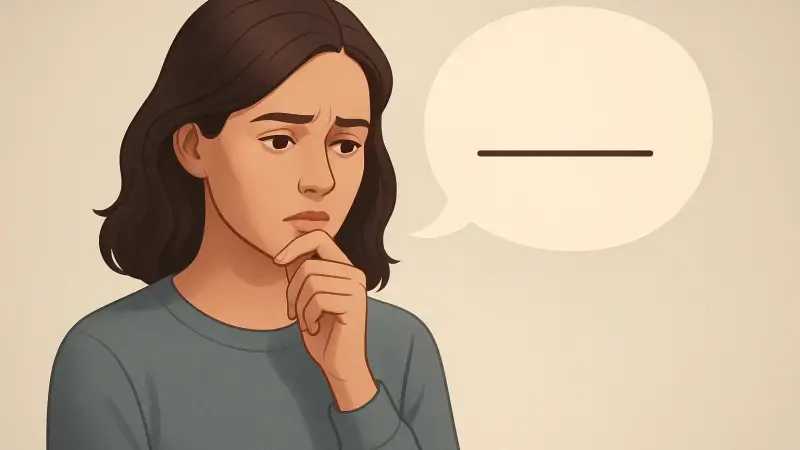
That blank spot where a normal word should be
You’re mid-sentence and suddenly a common word won’t show up. You can describe it. You can picture the object. You might even feel the shape of the word in your mouth. Then nothing. This isn’t one famous incident tied to a single place or year. It happens in classrooms in the U.S., offices in the U.K., and family kitchens in India, and it can happen to anyone. The basic mechanism is that the meaning is available, but the brain fails to retrieve the word form quickly enough. It’s a normal hiccup in the system that links concepts to sounds, especially when attention is split and speech is moving fast.
It’s called a tip-of-the-tongue state
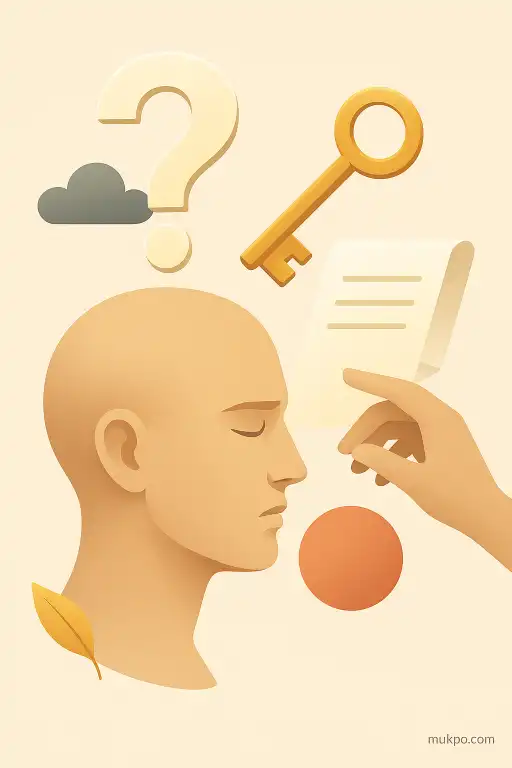
Psychologists have a name for this: the tip-of-the-tongue state. It’s not the same as forgetting the concept. People can often give accurate details about the missing word and still be unable to say it. A common overlooked detail is that fragments often come through: the first letter, the number of syllables, or a word with a similar sound. That partial access is a clue about where the snag is happening.
Speech production is usually described as steps that overlap. First the idea is selected, then an appropriate word is chosen, then its sound pattern is assembled, then the mouth plans the movements. A tip-of-the-tongue moment tends to happen late in that chain. The “which word do I mean” part can be fine, while the “how do I say it” part fails to fully activate in time.
Why it feels so close, but still unreachable
Words are stored in networks. When a word is needed, related items light up too: similar meanings, similar sounds, recent topics. That’s helpful most of the time, but it can create interference. A near-neighbor word can become a strong competitor, especially if it shares sounds. That’s why someone might blurt “thermometer” when they meant “barometer,” then get stuck because the wrong one keeps reappearing.
Proper names are especially vulnerable. A person can recall a job title, a movie they acted in, or where they met them, yet the name itself won’t come. Names often have weaker semantic hooks than ordinary nouns. “Baker” connects to bread and ovens. “Priya” or “Michael” doesn’t reliably connect to a single meaning, so the system has fewer handles to grab when retrieval stutters.
What changes the odds in the moment
The brain has limited bandwidth for language planning. When speech is rushed, when a sentence is long, or when the speaker is monitoring how they sound, retrieval gets harder. It’s easy to miss how much silent work happens before a word is spoken: selecting among alternatives, fitting grammar, and maintaining the thread of the sentence. Add background noise or an audience and the competition among words tends to get louder.
Fatigue and stress can also shift the balance. Not because words are “gone,” but because control systems that help pick the target and suppress competitors become less sharp. Bilingual speakers often notice another twist: the intended word in one language can be crowded by a similar, recently used word in the other language. The meaning arrives on time, but the sound form that wins the race can be the wrong one—or none at all for a few seconds.
What a familiar scene looks like up close
Picture a meeting where someone says, “Can you send me the… the…,” then gestures toward a file. They can describe it: “the shared document with the numbers.” The missing word might be “spreadsheet.” In that moment, they’re not searching the world. They’re searching a crowded internal index where “document,” “attachment,” “sheet,” “slide deck,” and “report” are all active. The pressure to keep the sentence moving makes the failure feel bigger than it is.
What’s striking is how quickly it can resolve without effort. A few beats later, the word pops up when attention shifts or the sentence ends. That timing fits the idea that the sound form was weakly activated, not erased. The network keeps working in the background, and once the competition changes—even slightly—the familiar word can finally cross the threshold into speech.
Related reads
- The village that changes its postal codes as a superstition
- An office building whose plants only thrive when given live music
- How the 1755 Lisbon earthquake sent Enlightenment salons into philosophical panic
- How the 1778 Potato War over Bavarian fields turned Europe’s armies into crop thieves
- How tiny mineral magnets make sand dunes align
- How a distant volcano dimmed sunlight and chilled entire harvests