
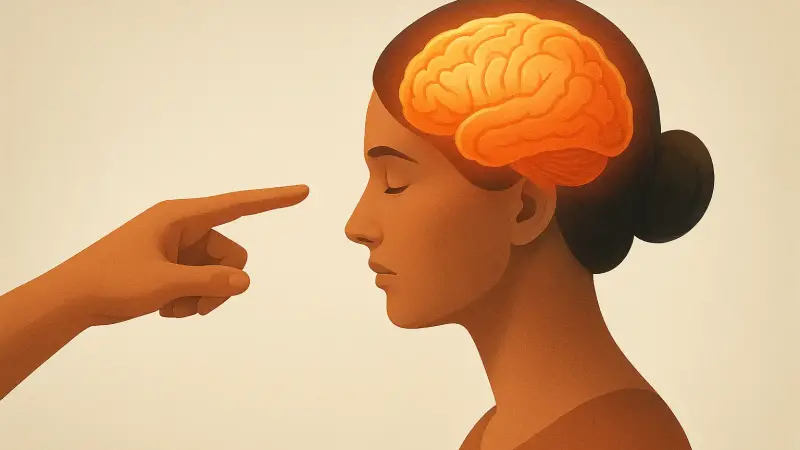
A moment of being left out
It can happen in a group chat, in a meeting, or at a café table. You say something. Someone looks straight past you. For a few seconds you’re not included, and your body reacts fast. This isn’t one single famous incident, so the examples are everyday: a Slack message that gets no reply, a friend group that keeps talking, a date who checks their phone instead of answering. Brain imaging work has linked social exclusion to activity in regions that also respond during physical pain, especially the dorsal anterior cingulate cortex and anterior insula. The overlap isn’t perfect, and researchers debate what it means, but the “sting” feeling has a real neural footprint.
Why the brain treats it like pain
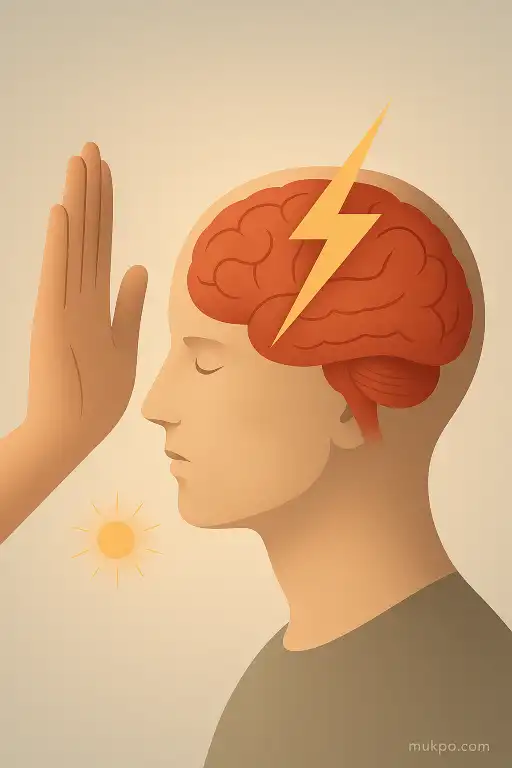
Physical pain is a signal that something needs attention right now. Social exclusion can act like that kind of signal too. For a social species, losing access to a group can affect safety, food, and protection, even if modern life rarely makes that literal. So the brain seems to reuse parts of its alarm system. The dorsal anterior cingulate cortex is often tied to distress and conflict monitoring, and the anterior insula is tied to internal body states like nausea, tightness, and the sense that something is “off.”
That’s one reason the reaction can feel bigger than the situation. The brain isn’t carefully weighing whether the silence is an accident, bad reception, or someone being rude. It’s registering a mismatch between expected connection and what’s happening. That mismatch can produce a quick jolt before any calm interpretation arrives.
The small cues that amplify the sting
A detail people overlook is timing. It’s not just “being ignored.” It’s the pause after a social bid. A bid can be a question, a joke, eye contact, or even a slight lean forward that invites a response. When there’s no return signal in that narrow window, the brain treats it as uncertainty. Uncertainty tends to heighten threat detection, because it’s harder to predict what comes next.
Another overlooked cue is that exclusion is often delivered through neutral faces, not hostile ones. A flat expression, a quick glance away, a delayed “mm-hmm.” Those are low-information signals. They force the observer to fill in the missing meaning, which can make the internal reaction sharper than if someone clearly disagreed. Clear disagreement can be processed as information; blankness is harder.
What experiments actually do to create “ignored”
In lab settings, researchers often use simple social games to produce exclusion without real conflict. One well-known example is Cyberball, a virtual ball-tossing task where the participant suddenly stops receiving the ball. People report feeling rejected even though they know it’s a game and the exclusion is mild. That’s part of what made the paradigm useful. It shows how quickly the brain can generate social pain from a thin situation.
Imaging results vary by study, and not every paper finds the same pattern. Some researchers argue the anterior cingulate findings reflect salience or expectation violation more than “pain” specifically. But the consistent observation is that being left out recruits systems that also respond to bodily threat, and that recruitment tracks with how distressed people say they feel in the moment.
Why it can linger after the moment passes
The immediate sting is only one layer. Afterward, memory and attention can keep the episode active. The brain tends to replay socially ambiguous moments because they contain unresolved information: Was it intentional? Did others notice? Did status change? That replay can keep the body slightly activated, even if the external situation is already normal again.
There’s also a practical reason it sticks. Social pain is often hard to verify. A bruise has edges and a cause. A missed greeting doesn’t. So the brain keeps checking for more cues, scanning faces and tone for confirmation, and the original “ignored” moment can stay vivid longer than it seems like it should.
Related reads
- The neighborhood that woke up to a constant low hum
- The town that made dying a crime
- How a space rock’s water may have kickstarted Earth’s oceans
- Why time feels shorter as decades pile up
- When an Ottoman sultan shut down Constantinople’s cafés and made coffee a crime
- The mannequin that rearranged the shop window every morning