

You can walk into a meeting and feel it in seconds. No one has said anything yet, but the room already has a temperature. It’s not one single famous event, and it isn’t tied to one place. You see it in open-plan offices in the U.S., on a packed London Underground carriage, or at a family table anywhere. The basic mechanism is boring and fast: people continuously read each other’s faces, voices, posture, and timing, then their own nervous system adjusts to match what looks “safe” or “normal” in that group. That adjustment changes what they show on their own face and body. Then the loop continues.
The first signal is usually not the face
Observers tend to think emotion spreads through expressions, because that’s what we notice. Often it starts earlier. A shift in breathing pace, a chair scraping, a phone being gripped too tightly, a head turning toward the door a half-second too fast. Those cues change the way everyone else prepares to speak and move. You can watch a group go quieter without anyone deciding to.
One overlooked detail is timing. Micro-pauses matter. When one person starts leaving tiny gaps before answering, others begin to leave gaps too. The gaps feel like caution, or disapproval, or boredom, depending on context. Even if nobody names the feeling, the changed rhythm pushes people toward the same state.
People copy each other without realizing it
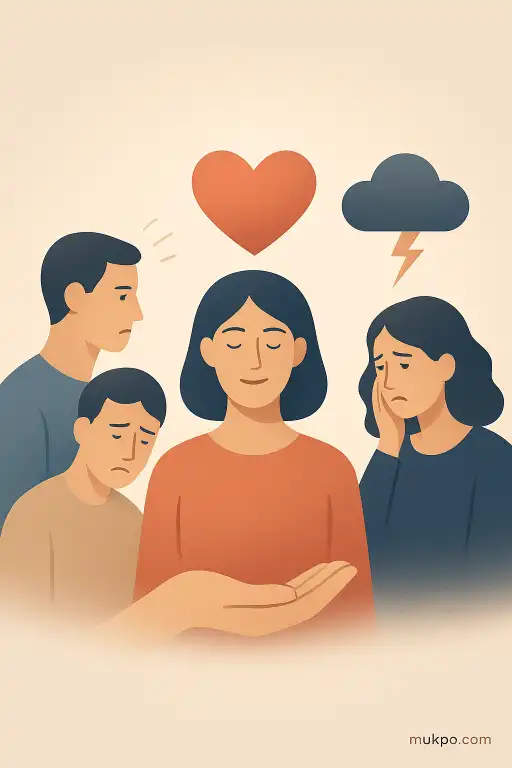
Groups drift into emotional alignment partly through plain mimicry. Someone crosses their arms, the next person does it, and soon the whole table looks more closed. Someone’s smile is tight, and smiles tighten around them. This isn’t performance. It’s automatic, and it can happen even when people dislike each other. The body is quick to copy what it sees because copying is a cheap way to stay coordinated.
Voice does a lot of the work. Volume, pitch, and speech speed spread fast. A clipped tone pulls conversations into shorter sentences. A warm tone makes interruptions feel less risky, so talk overlaps more. Observers can often predict the group’s mood by listening from the hallway, where the words aren’t clear but the vocal shape is.
Status and attention decide whose mood “wins”
Emotional spread isn’t equal. Some people function like emotional reference points because others monitor them more. The manager. The most confident talker. The person everyone depends on. When that person looks tense, the room treats it as information. People stop joking. They sit up. They check their own reactions and adjust.
It can also be the opposite: the least powerful person changes the mood if the group’s attention is locked on them. A new hire stumbling through a presentation can pull a whole room into secondhand anxiety, because everyone is tracking the same cues at the same time. Attention is the amplifier. Without it, moods stay local.
The setting pushes feelings in one direction
The environment silently shapes what spreads. Tight spaces, heat, and noise make small irritations look larger. Bright overhead lighting makes faces easier to read, which can increase how quickly people sync up. A circular table distributes eye contact. A long rectangle concentrates it at the ends. Those details change who gets watched and how intensely.
A concrete example shows it plainly. In an open-plan office, one person’s frustration is visible across a whole row: a sigh, a headset tug, a hard exhale through the nose. Even if nobody reacts outwardly, nearby people start typing harder, speaking less, or scanning their screens more often. The mood travels farther there than it would in closed rooms, because everyone is forced into each other’s peripheral vision.
Words can lag behind the mood by minutes
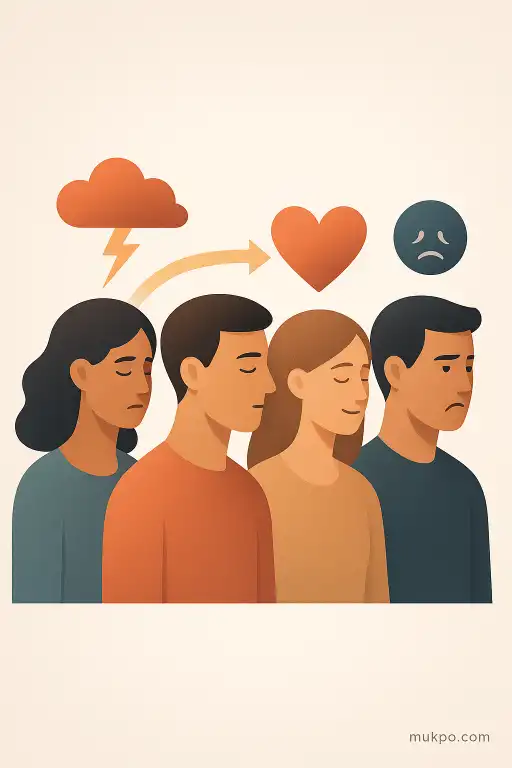
A group often “agrees” on a feeling before anyone can explain why. That’s because the body-level signals arrive first, and language follows later. People will say the meeting felt tense, or the train felt hostile, but they can’t point to a sentence that caused it. Sometimes there wasn’t one. The cues were pre-verbal: stares held a bit too long, fewer nods, less backchannel sound, more people keeping their hands still.
Once the mood is shared, it changes what gets interpreted as normal. Neutral comments land as criticism. Silence reads as judgment. Laughter reads as mocking. Observers can watch this shift in real time: the same bland statement gets a relaxed “sure” early on, and a guarded “fine” later, even though the words haven’t changed.
Related reads
- How bombardier beetles fire boiling chemicals as defense
- Earworms explained: why a fragment of a song repeats in your head
- A cave where bats abruptly changed their songs and left scientists baffled
- How Jupiter keeps its Great Red Spot from fading
- Why your stomach growls louder at the worst possible moments
- A mailbox that filled up with letters addressed to fictional people