
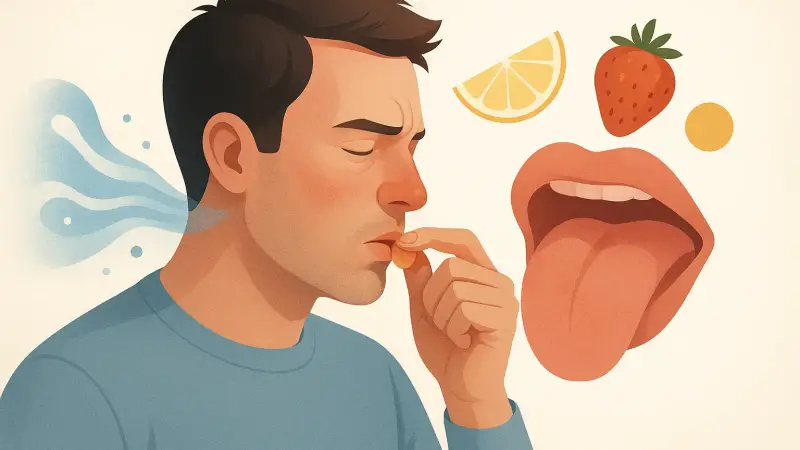
You notice it the first time you eat something you normally love while you’re sick. A bowl of chicken soup tastes like warm saltwater. Coffee loses its bite. This isn’t one single event tied to one place. It happens everywhere, from winter colds in Canada to flu season in the UK to year-round respiratory bugs in the US. The core mechanism is pretty plain: a cold blocks airflow to the smell receptors high in the nose, and smell is doing a lot of the work people casually call “taste.” On top of that, inflammation and mucus change how odor molecules move, and the brain gets less useful information to build flavor.
Taste buds are only part of flavor
Taste on the tongue is limited. It mainly detects sweet, salty, sour, bitter, and umami. The detailed identity of a food—strawberry versus cherry, cumin versus cinnamon—mostly comes from smell. When someone says food “has no taste” during a cold, they’re often describing the loss of aroma, not a failure of taste buds.
A concrete example is peanut butter versus plain peanuts. The tongue can still pick up fat and salt, but the roasted, nutty character relies heavily on smell. With a blocked nose, both can blur into the same flat, oily-salty impression.
A stuffy nose shuts down retronasal smell
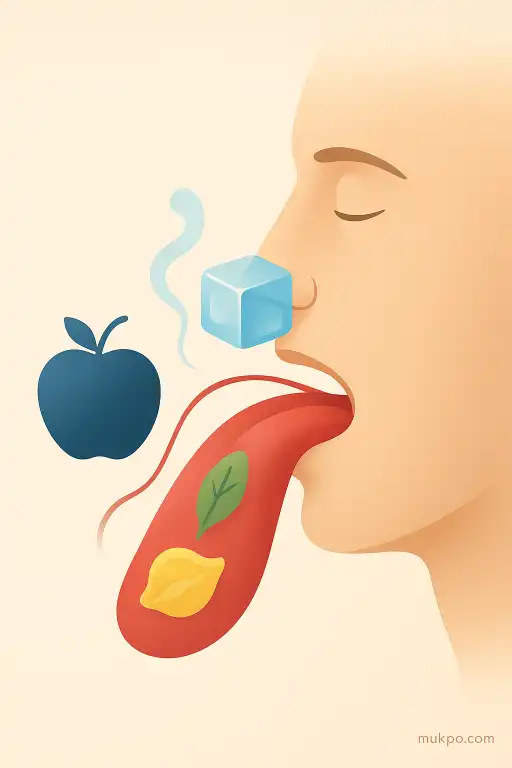
Most smell during eating isn’t from sniffing. It’s retronasal olfaction: aromas travel from the back of the mouth up into the nasal cavity while chewing and swallowing. A cold congests the nasal passages and changes airflow patterns, so fewer odor molecules reach the olfactory epithelium where smell receptors sit.
One overlooked detail is the timing. Even if someone can breathe through their nose a little, thick mucus can trap or slow odor molecules. That reduces the quick bursts of aroma that normally arrive with each chew, so the brain gets weaker signals and the “shape” of the flavor fades.
Inflammation changes the chemistry of the nose and mouth
A cold isn’t just blockage. The lining of the nose becomes inflamed, and the fluid environment around receptors changes. Odor molecules have to dissolve into mucus to reach receptors. If mucus is thicker or its composition shifts, the mix of molecules that successfully reaches receptors can change, even when airflow isn’t completely shut.
The mouth also shifts. Dehydration from fever or mouth breathing can reduce saliva. Saliva helps dissolve and spread taste compounds across the tongue. With less saliva, sweet or salty foods can feel muted, and dry foods can seem especially bland because fewer molecules are moving efficiently to taste receptors.
Your brain fills gaps, and colds leave bigger gaps
Flavor is a combined perception built from smell, taste, texture, temperature, and even sound. The brain is always stitching these inputs together. When smell input drops, the brain leans harder on what’s left, so texture and basic tastes can become more noticeable while nuance disappears.
This can create odd mismatches. A fizzy drink may still feel sharp because carbonation stimulates trigeminal nerves that detect irritation, not taste. Meanwhile, the citrus aroma that normally tells the brain “lemon” doesn’t arrive, so the drink feels prickly and sour but strangely anonymous.
It isn’t always the same bug, and it doesn’t always affect people the same way
Different respiratory viruses affect different tissues, and severity varies. A simple rhinovirus cold may mostly cause congestion, while other infections can produce more widespread inflammation and fatigue that changes appetite and attention. That’s why two people can eat the same meal while sick and report different distortions.
There’s also a practical split between “I can’t taste because my nose is blocked” and “something smells wrong even when I can breathe.” The first is usually mechanical loss of retronasal smell. The second can involve temporary changes in smell processing, and it’s less predictable. People often notice it with foods that rely on delicate aromatics—fresh herbs, tea, or fruit—where small changes in smell input make a big difference.
Related reads
- The mushroom that glows to attract spring beetles
- Why bread sometimes grows mold in perfect circular patches
- An elevator that refuses to open on floors with odd birthdays
- How volcanic ash shapes global weather patterns
- How a tiny meteorite impact changes local soil chemistry
- The bench that always held a single lost glove belonging to the same person