What you notice first
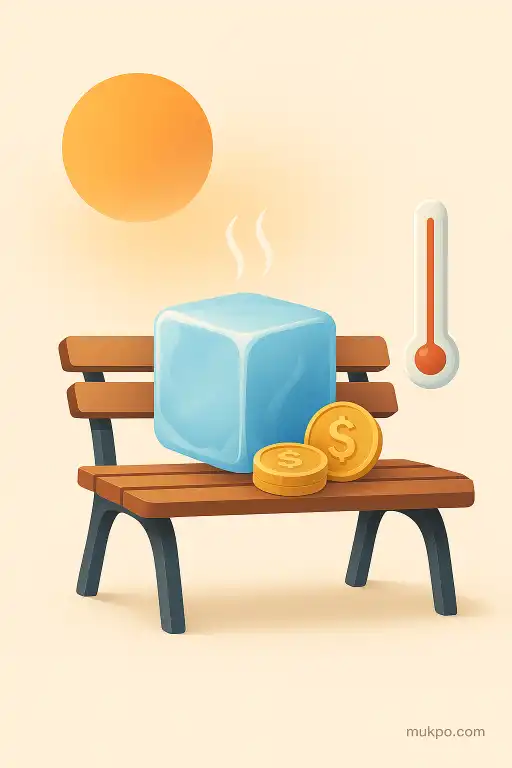
On a hot day, you sit down and the bench doesn’t just feel cool. A few minutes later, it can hand you back coins that are noticeably colder than your fingers expect. This isn’t one famous bench in one famous town. It’s a small trick people describe around different outdoor seats, like shaded metal benches in cities and park benches built into stone in Mediterranean plazas, and even some modern “smart benches” that hide electronics inside. The core mechanism is simple: the bench is acting as a heat sink, and the coins are acting like tiny heat sponges. The surprise comes from how fast metal can move heat when the right parts of the bench stay cooler than the air.
Why a bench can stay cooler than the day
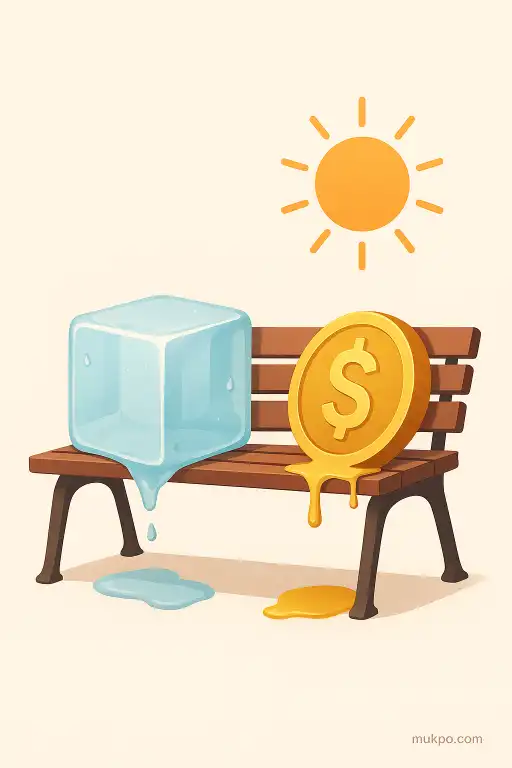
Benches don’t have to be “cold.” They just have to be cooler than your skin. A bench anchored to a thick slab of stone or concrete can stay below air temperature for hours because the ground changes temperature slowly. Shade matters more than people think. A bench under a tree can avoid direct solar heating, while the ground beneath it stays cooler from overnight. If the bench has a metal frame bolted into masonry, that metal becomes a fast path for heat to flow away from anything touching it.
There’s also radiative cooling. Surfaces that “see” a clear sky can lose heat by infrared radiation, sometimes dropping a bit below the surrounding air temperature. It varies with humidity and cloud cover, so it’s not guaranteed. But it’s one reason certain outdoor surfaces can feel oddly cool in the morning or in late afternoon even when the forecast is still warm.
How coins get cold so quickly
A coin changes temperature fast because it’s small and it’s metal. Metals conduct heat well, so the whole coin comes to the bench’s temperature quickly. Your hand does the opposite. Skin is warm and wet, and blood flow keeps delivering heat, so it keeps “reheating” itself. That’s why the coin can feel colder than the bench felt a moment earlier. The coin is now a cooled object pressed against warm, sensitive skin, and your nerves interpret that rapid heat loss as “cold.”
One overlooked detail is contact area. A coin laid flat has a lot of contact with a smooth bench surface, so it exchanges heat efficiently. A coin on a rough wooden slat touches only at a few points, so it won’t cool nearly as much. This is also why coins cool more on stone, metal, or polished concrete than on painted wood, even if both benches “feel” similar at first touch.
What makes it seem like the bench is “giving” them to you
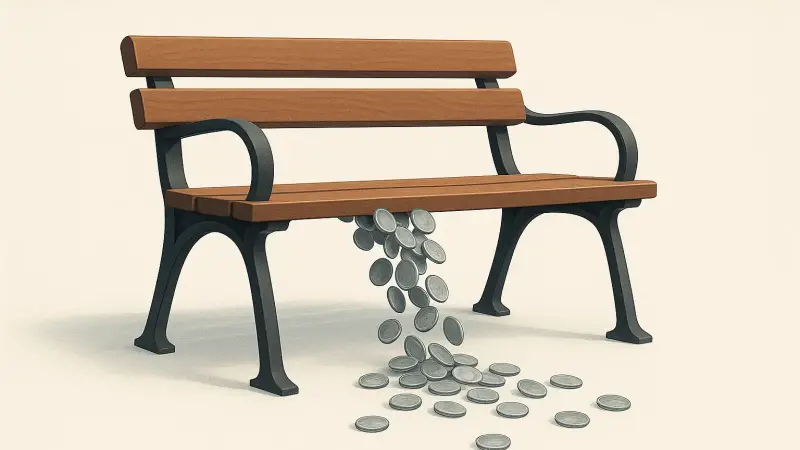
The “giving” part is usually just good hiding places plus gravity. Many benches have seams where slats meet, drain gaps, bolt holes, or a lip where the seat meets the backrest. Coins fall into those spaces and sit there until someone shifts weight, the bench flexes, or a vibration shakes them loose. On older benches, a tiny sag in the seat can slowly roll coins toward the lowest point, where they collect out of sight until they spill.
A concrete situational example is a metal-slat bench with a central support bar. People often tuck change under them while tying a shoe, or coins slip from a shallow pocket when someone stands. Later, another person sits, the slats deflect a few millimeters, and a couple coins drop onto the pavement. They’re cold because they’ve been pressed against a shaded metal piece that’s been draining heat into the bench frame and the ground.
When the effect is stronger, and when it isn’t
It’s strongest when the bench is shaded, well-connected to the ground, and made with conductive parts like steel supports or stone seats. It’s weaker when the bench is sunbaked, insulated from the ground (for example, mounted on rubber feet), or made mostly of wood or plastic. Wind can cut both ways. It can warm a cool bench toward air temperature, but it can also help a shaded bench dump heat and stay closer to whatever the ground is doing.
It’s also why the coins sometimes feel “too” cold compared to the day. The coin doesn’t need to be freezing. It only needs to be cooler than your skin and able to pull heat from it quickly. When that cooled coin comes out from a bench seam and lands in your palm, the sensation is immediate, and the story becomes about a bench that pays out chilled change.