
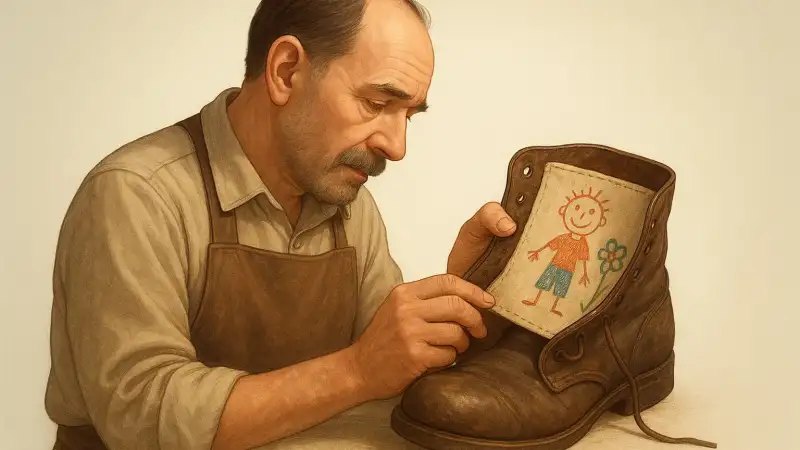
Most people look inside an old boot only as far as the lining. A working cobbler goes farther, because you have to. When a pair is a century old, the “inside” is layered: insole, midsole, filler, sometimes old repairs stacked on old repairs. That’s where surprises show up. It isn’t one single famous incident with one named shop that everyone agrees on. Reports like this circulate around repair benches in different places. You hear versions from the UK, from parts of Europe, and from the US. The mechanism is consistent, though. Paper gets tucked into footwear, and time seals it in.
How a drawing ends up hidden in a boot
Old boots were often built with a cavity under the insole. Makers filled that space to level the footbed. The filler could be cork, felt, leather scraps, even whatever was on hand. Paper slips were easy. They were thin, they didn’t squeak, and they could take up a low spot. Sometimes it was a deliberate note. Sometimes it was just material that happened to be nearby on a bench where children were also present.
A child’s drawing fits the same logic. Workshops were frequently attached to homes. Kids did homework or doodled wherever there was a flat surface. If a scrap ended up under a boot insole, it could stay there for decades because nothing touches it again unless someone rebuilds the bottom. The outside wears out first. The hidden layers can remain undisturbed through multiple resoles.
What a shoemaker has to do to find it
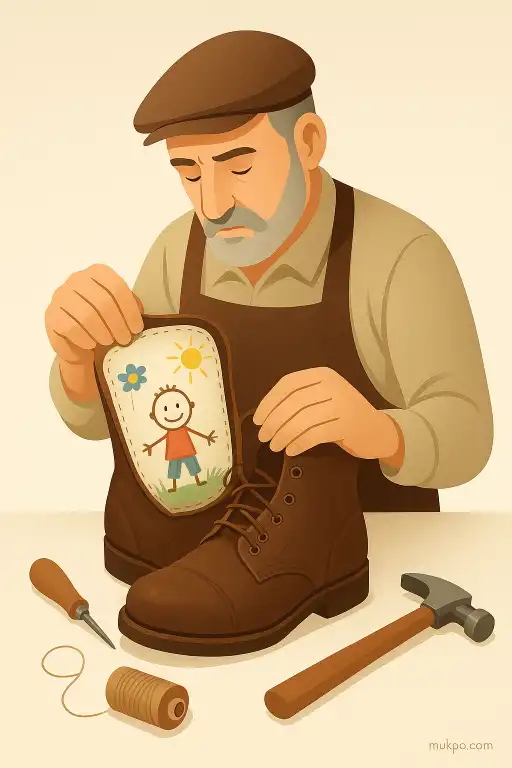
You don’t see something like that during a quick polish. It shows up when the repair crosses into reconstruction. The cobbler removes the old outsole and heel stack, then peels back the welt or separates the upper from the sole depending on the construction. Only then does the insole come up. That’s when paper appears, usually brittle and darkened, sometimes stuck to old paste.
A detail people overlook is the smell. Old filler holds on to whatever it absorbed: sweat salts, smoke from old rooms, oils from polishes, glues that have changed chemistry. When the insole lifts, the shop gets a sudden, specific odor that tells the cobbler how sealed the boot was. If paper is present, it often has a tide line where moisture once reached it, even if the drawing itself is still legible.
Why it survives for a hundred years
Footwear is rough on the outside but oddly protective on the inside. The layers compress into a tight sandwich with very little light and limited air. That reduces fading and slows some kinds of decay. If the boot spent long periods dry, the paper can remain surprisingly intact. If it cycled through damp basements or wet winters, the same drawing might survive only as a stain or faint graphite impressions.
The drawing is often hand-stitched in because of repair habits. Cobblers sometimes secure loose fillers with a few stitches through the insole, especially if the boot had to be stabilized quickly or the adhesive available wasn’t trustworthy. Those stitches can accidentally “bind” a piece of paper into place. A later resole might leave that stitched packet untouched because removing it risks tearing the insole or changing the fit.
What the drawing can and can’t tell you
A child’s drawing feels like an instant story, but most of the context is missing. Unless there’s a name, a date, a school header, or a recognizable address, attribution is usually unclear. Even then, it’s hard to know whether the child drew it in the workshop, whether it was carried in a pocket, or whether it was reused as filler long after it was made.
What it can show is the working life around the boot. Pencil marks suggest a certain kind of paper and a certain kind of moment: something done quickly, with whatever was nearby. Crayon can indicate a younger child, but it also might be a later addition by someone sorting through old scraps. Sometimes the most informative part is not the picture but the back: faint writing, arithmetic, or a torn edge that matches a notebook binding style from a particular period, though even that varies by region.
What usually happens after it’s found
Once paper shows up inside a boot, the repair becomes a judgment call. Keeping the drawing intact can mean changing the planned work, because the boot still has to go back together safely. Some cobblers photograph the layers as they come apart, because the removal process destroys the original arrangement. The paper may be too fragile to flatten without cracking.
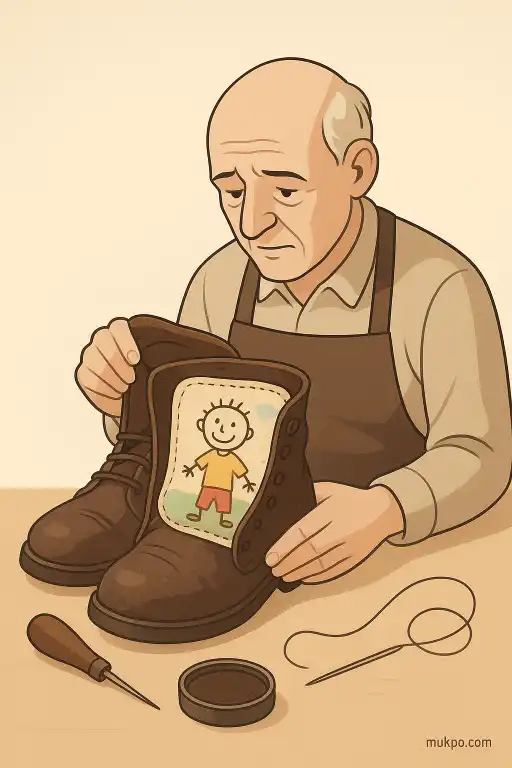
In shops that see a lot of heritage repairs, the find often ends up treated like a small artifact. It might be stored with the customer’s permission, returned in a sleeve, or simply documented and discarded if it’s already disintegrating. The strangest part is how ordinary the moment can feel: a bench light, a lifted insole, and a child’s line drawing sitting where a foot has been pressing for decades.
Related reads
- How micrometeorites alter planetary atmospheres
- How quantum coherence helps plants harvest light
- The Tambora eruption that turned 1816 into a year without a summer and sparked food riots across Europe
- A lost photograph that appeared framed in different homes with a new person’s face each week
- Jellyfish that revert to adolescence when stressed
- Sleep fog and the slow brain: what causes those first groggy minutes