
Polarized light is information most eyes miss
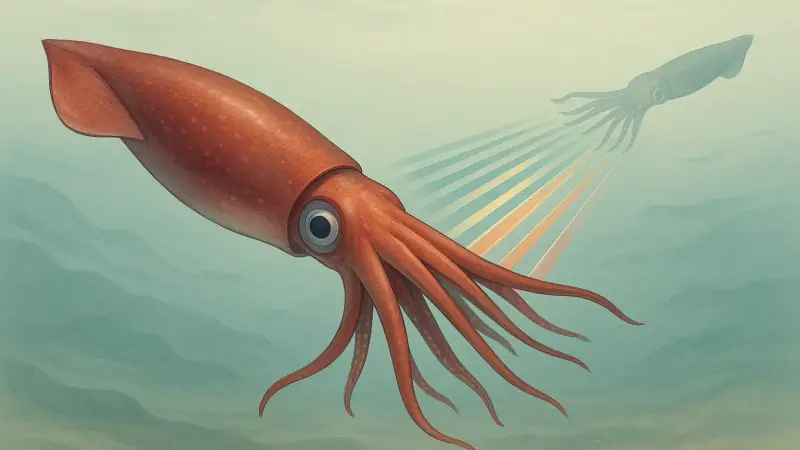
People talk about squid “changing color,” but a lot of their signaling doesn’t look like much to us at all. That’s because it can ride on polarized light, which is a property of light most human eyes don’t detect. This isn’t one famous incident in one place. It shows up across cephalopods studied in different waters, including the Hawaiian bobtail squid (Euprymna scolopes) in Hawaii and reef squids in the Indo-Pacific, as well as cuttlefish observed in the Mediterranean. The basic mechanism is simple: they can both sense the orientation of light waves and actively shape it on their skin.
A concrete way this plays out: two squid can be close together over pale sand, looking “plain” to a diver, while still flashing strong polarization patterns at each other. That hidden layer matters underwater because scattering and glare can wash out regular contrast. Polarization can stay readable even when color fades with distance or depth.
How a squid eye can detect polarization
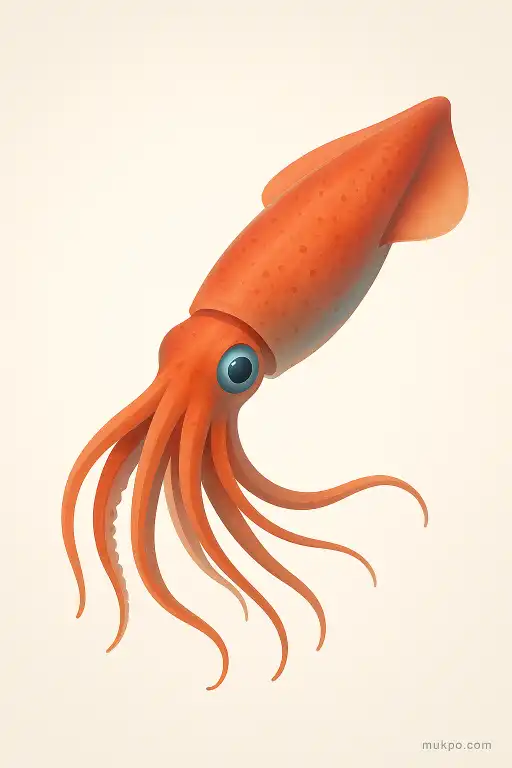
Squid don’t do polarization vision the way insects do. Their retina has photoreceptors with microvilli arranged in specific directions. Those microvilli act like tiny antennas that respond better to certain e-vector orientations of polarized light. In many squid, neighboring receptor cells are oriented roughly at right angles to each other, so the retina samples at least two polarization angles at once. The brain can compare those channels and treat the difference as contrast.
A detail people usually overlook is that this system is baked into the geometry of the retina, not added on as a separate “polarization organ.” It can also create tradeoffs. Because polarization sensitivity depends on receptor orientation, the animal’s head angle and the angle of incoming light can change what stands out. It’s not a single fixed filter that works identically in every pose.
Skin structures that make polarization patterns
To send polarized signals, squid rely on iridophores—cells that reflect light using layered structures, a bit like microscopic stacks. The spacing and alignment of those layers affect not just color but the polarization of the reflected light. By changing the state of these cells, a squid can shift how strongly it polarizes reflected light and where on the body that effect appears.
This is separate from chromatophores, the pigment sacs that expand and contract to make dark blotches and stripes. Chromatophores are great for brightness and pattern. Iridophores are better for directional reflection and polarization. A squid can run both at the same time, so a visible body pattern and a polarization pattern can be partially independent layers.
What polarized signaling is used for underwater
One likely use is communication that stays private from animals without polarization vision. Many fish probably see some polarization, but sensitivity varies by species and context, and it’s still unclear exactly who can read which signals in the wild. For squid, the advantage is that the message can be conspicuous to another squid while remaining subtle to an observer relying mostly on color and brightness.
Another use is better visual contrast when hunting or watching other animals. Transparent or silvery bodies can be hard to see in open water. Polarization cues can make edges, reflections, or tissue structures pop out. Underwater glare is also heavily polarized, especially near the surface. Being able to interpret that glare can help an animal separate “shine” from “shape” when everything is moving.
A small scene that shows the hidden layer
Imagine a diver watching a squid hover above rippled sand on a bright day. The animal looks mottled and calm. Then it turns slightly, and a camera with a polarizing filter reveals flashing bands across the arms and face that weren’t obvious before. The squid didn’t need to “get brighter.” It changed the polarization signature of what it reflected, which a polarization-sensitive eye would register as a strong, high-contrast pattern.
The overlooked detail in that kind of moment is how angle-dependent it is. A polarization pattern can appear or vanish with a small change in viewing position or the squid’s posture. That makes it useful for quick, directional signaling—strong to the intended receiver at the right angle, and much less noticeable off-axis, even in the same patch of water.
Related reads
- Smell triggers that pull up entire childhood scenes instantly
- Tiny rituals that calm panic and feel oddly effective
- The laundromat known for returning socks with secret notes stitched inside
- A museum statue that sprouts crystals after humid nights
- Microscopic glass spherules hidden in Antarctic snow
- Mondegreen mechanics: why your brain insists on wrong song words