
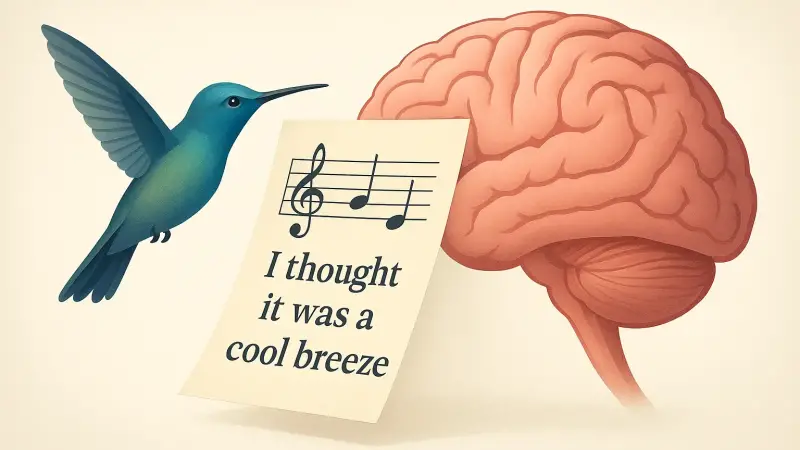
Hearing words that aren’t there
Someone sings “Hold me closer, Tony Danza,” and it lands because it feels oddly plausible in the moment. This isn’t one single place or incident. It shows up everywhere people share pop music, from U.S. radio to karaoke nights in Japan to football crowds in the U.K. The basic mechanism is simple: the brain has to turn a fast, messy sound stream into words, and it does that by guessing. When the signal is unclear, it leans on familiar word patterns and whatever meaning seems likely, even if the actual lyric is different.
The overlooked detail is that the wrong lyric often “fits” the singer’s mouth better than it fits the dictionary. Consonants get softened or dropped, vowels stretch, and syllables get compressed to match the beat. That makes several different phrases sound nearly identical, especially in choruses where everything is dense.
Why music makes speech harder
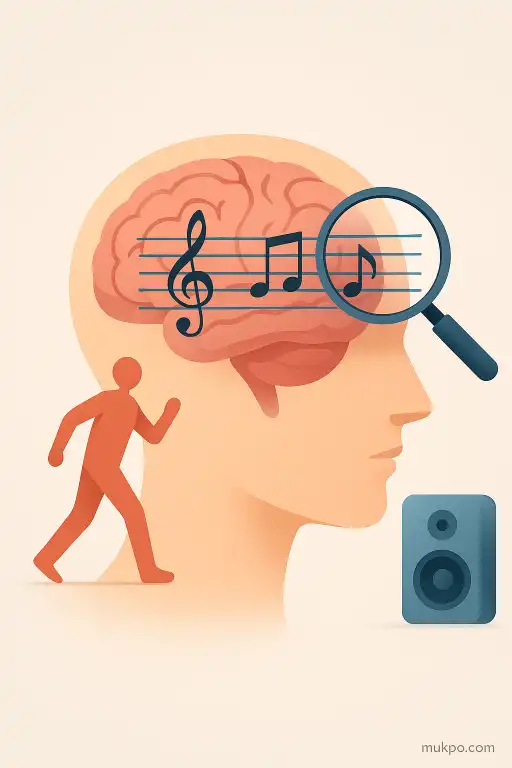
Spoken conversation has built-in help. There are pauses, turn-taking, and usually a stable pitch. Singing strips a lot of that away. Notes can hold one vowel for a long time and bury the consonants that would normally mark word boundaries. Drums and cymbals also live in frequency ranges that overlap with key speech cues. So the bits that separate “wrapped up” from “racked up” can get masked, and the listener is left with something that sounds like language without being clean language.
Add studio production and it gets trickier. Compression evens out loud and soft parts, which can flatten consonant detail. Reverb smears sound over time, which blurs where one word ends and the next begins. Even when the lyric is perfectly enunciated in the booth, the final mix can turn it into a smooth, ambiguous surface.
The brain’s fill-in-the-blanks system
Perception isn’t just hearing. It’s prediction plus correction. The brain uses learned templates for common syllable shapes and word sequences, then matches incoming audio against them in real time. If the match is weak, the prediction can win. That’s why a listener can feel certain about a lyric they’ve never actually checked. The experience is “I heard it,” not “I inferred it.”
Context pushes those predictions. If a song is about romance, the brain expects certain words and phrases. If it’s a holiday song, seasonal vocabulary becomes more available. This is why the same fuzzy syllables can be heard differently depending on mood, expectation, or even what someone else sang in the car five minutes ago.
Why the wrong lyric sticks
Once a mondegreen gets planted, repetition does the rest. Choruses repeat, and repetition is a memory engine. The wrong phrase becomes familiar, and familiar things feel correct. There’s also a social effect: a misheard line is easy to quote. People repeat it as a joke, and the joke version can become the version that pops up automatically when the song starts.
There’s also a timing problem. Many listeners only get one pass at a line, while driving or cooking or talking. Attention is limited, so the brain commits early. Later, even if the real lyric is seen in print, the old auditory memory can keep resurfacing because it’s tied to the melody and beat, not just the words.
A concrete example of how it happens
Picture a loud bar during karaoke. The backing track is bright, the room is echoey, and the singer is watching the screen more than the mic technique. A line like “Excuse me while I kiss the sky” (often misheard as “kiss this guy”) can lose the crisp “sk” and “ky” edges once the music swells. The listener’s brain grabs the nearest clean phrase that matches the rhythm and vowel sounds, and “kiss this guy” snaps into place as a complete, ordinary sentence.
Even outside karaoke, small production choices tilt the odds. If a vocal is doubled, tiny timing differences can smear consonants. If a singer slides between notes, syllable boundaries get slippery. When the mix emphasizes bass and sparkle over the midrange where a lot of speech intelligibility lives, the listener is left doing more reconstruction than they realize, and the reconstructed version can feel like the only version.
Related reads
- The conman who sold the Eiffel Tower to scrap dealers in 1925 Paris
- The beach where footsteps sound like xylophone notes
- Stalin’s Lysenko campaign that turned Soviet genetics into political theater and reshaped farms
- The fungus that carpets rainforest floors in blue light
- An elevator that stops for no passengers and opens to reveal a single folded note on the floor
- The microbes living on commuter shoes