
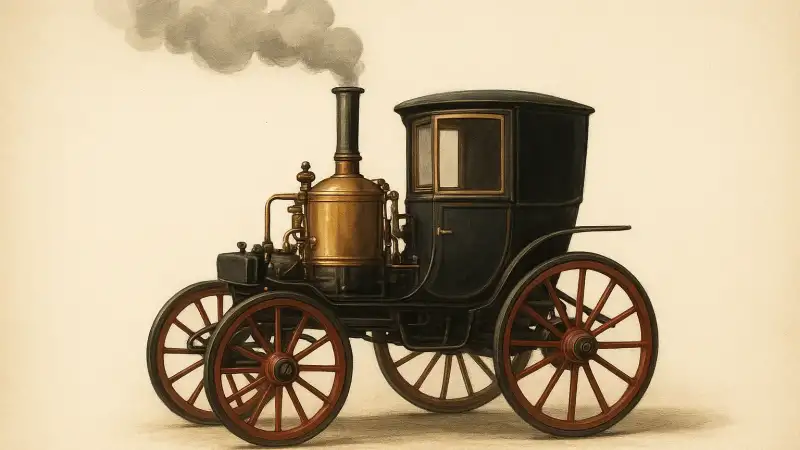
A fairground isn’t built for engines
People imagine Victorian fairs as loose, noisy places where anything could happen. But they were also controlled spaces. A gate. A keeper. A fee. Rules about what could be brought in, and what could be shown. That’s why the story of a steam carriage being “smuggled” into a London fair usually turns on a simple mechanism: not hiding an object so nobody sees it, but getting it past the moment where someone has the power to say no. With something bulky and suspicious, the trick is often paperwork, timing, or plain misdirection.
It’s hard to pin this tale to one universally agreed event. London had several big fair-like gatherings over the century, and “smuggled into a fair” gets repeated without consistent dates. What does stay consistent is the problem Victorian inventors faced: a self-moving carriage was treated less like a novelty and more like a hazard. Not just to spectators, but to horses, stallholders, and the fair’s reputation.
Why a steam carriage was a problem in London
By the time the Red Flag Act (the Locomotive Act of 1865) existed, Britain had formal restrictions on “locomotives” on roads, including low speed limits and requirements that effectively made them impractical. That law wasn’t written for fairs, but it shaped attitudes. Anything steam-driven and wheeled pulled in the same fears: boiler accidents, scalding steam, sudden noise, and the way horses bolted when startled.
Fair organizers had their own incentives. A stall, a ride, or a show was meant to keep crowds flowing. A steam carriage invited crowds to stop, argue, and demand demonstrations. It also raised liability questions before anyone used the word “liability.” One overlooked detail here is weight distribution. Early steam road vehicles could crush turf and temporary planking, or sink into soft ground, and that damage mattered to a site that had to be cleared quickly afterward.
What “smuggling” looked like without crates and tunnels
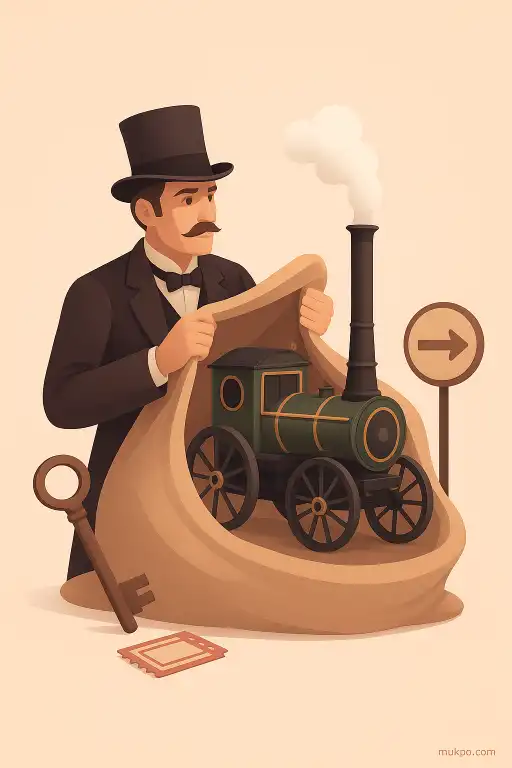
When people say “smuggled,” it rarely means a steam carriage was hidden under tarps like contraband. It usually means it was framed as something else long enough to cross the boundary. A vehicle might enter as “machinery for a display,” “boiler equipment,” or part of a contractor’s kit. The most effective moment is early in the morning, during set-up, when staff are focused on wagons, canvas, and receipts rather than the fine distinction between an exhibit and an attraction.
The misdirection can be social rather than physical. Victorian fairs relied on informal authority. A confident inventor with a couple of assistants could look like an approved exhibitor. A guard might not want to be the person who blocks someone who seems connected. Another easy-to-miss detail is how much of the “carriage” could be separated. Some designs allowed the boiler, water, and fuel to be moved in pieces. The chassis could roll in looking inert, with the working parts arriving later in plain sight.
A concrete example of the tactic: the boundary, not the build
Picture a London fairground on a public common or open field, with a narrow entry point controlled by a fee-taker. Horse-drawn wagons are coming through with tent poles, signage, barrels, and timber. A steam carriage doesn’t need to arrive under its own power to be a steam carriage. It can be towed in cold, wheels turning like any other carriage, looking like one more awkward load in a long queue.
Once it’s inside, the leverage flips. A fair can refuse entry at the gate. It’s much harder to undo entry once a heavy machine is sitting on the ground with a crowd gathering. Removing it means manpower, argument, and time. That’s the key mechanism behind most “smuggled in” stories: the inventor forces the organizer to negotiate after the fact. The overlooked detail is steam-up time. Getting pressure safely can take a while, so the first stage is often just positioning and assembling, which looks less threatening than a roaring demonstration.
Why the inventor bothered at all
Victorian inventors needed audiences that weren’t just engineers. A fair crowd included tradespeople, journalists, and the kind of person who might finance the next attempt. A controlled exhibition hall could demand fees, memberships, or credentials. A fair offered raw attention. That attention mattered because early road steam was competing against railways, which already felt like the future. A carriage that moved itself on ordinary ground was a way to argue for a different future, right in front of people who used streets every day.
It also explains why the “smuggling” story gets retold even when the exact inventor and fair can be unclear. The drama isn’t only mechanical. It’s administrative. The steam carriage wasn’t just fighting friction and boiler pressure. It was fighting the gatekeeper’s right to say no, and the social habit of treating roads, fairs, and crowds as places where machines should stay in their lane.
Related reads
- The Victorian surgeon whose public anatomy demonstration ignited a London street riot
- A supermarket aisle that keeps smelling like citrus, year after year
- How a Florentine guild in the 14th century outlawed laughter on market days
- The speeding years illusion: how perception compresses with age
- When a solar storm painted auroras across low latitudes
- How squid see and signal with polarized light