
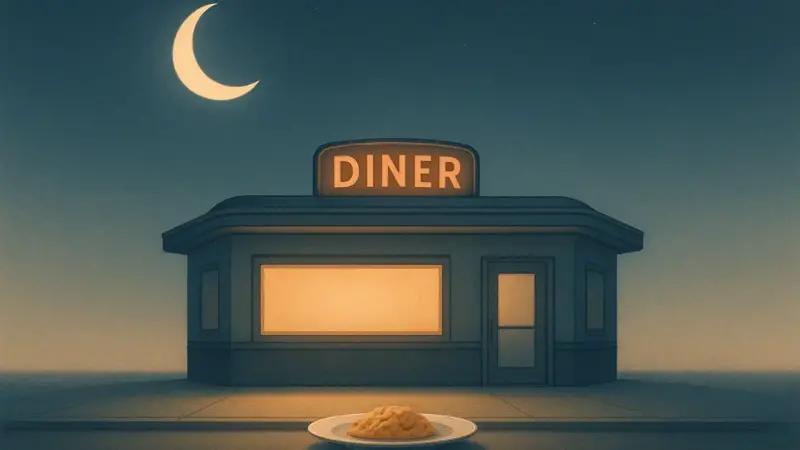
You notice it first because of the calendar, not the food. A place says it serves only one dish, and only on nights with no moonlight. Not “late,” not “after midnight,” but specifically the new moon window when the Moon is below the horizon and the sky is darker. There isn’t one famous, verified diner with this exact rule that everyone agrees on, but the idea shows up in different forms in places that keep close track of lunar phases—parts of Japan, coastal communities in Maine, and small towns in the UK. When it happens for real, the mechanism is usually practical: predictable darkness, predictable crowd behavior, and a menu that can be planned down to the last portion.
What “night without moonlight” actually means
“No moonlight” sounds simple, but it varies. A new moon is the cleanest version because the illuminated side faces away from Earth. But a moonless-feeling night can also happen when the Moon rises after closing time, or when it sets before the dinner rush. Some places mean “new moon only.” Others mean “Moon below the horizon for most of service.” If the rule is strict, it depends on an almanac, not a vibe.
The overlooked detail is local time. Lunar phase is global, but moonrise and moonset are not. A “moonless night” in Portland, Maine can have a different usable window than one in London on the same date. If a kitchen is timing a single-dish service around that, it’s basically scheduling around astronomy, not weather.
Why a single dish is the point, not a gimmick
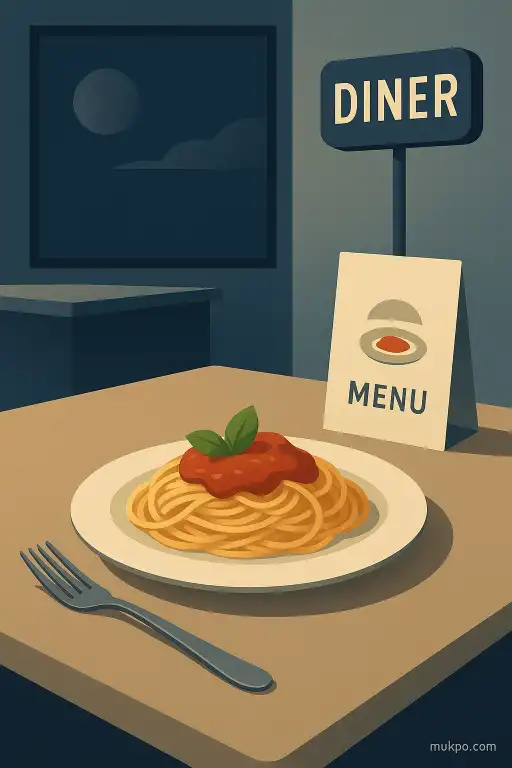
Serving one dish is how a small operation makes a rare schedule workable. Buying, prepping, and holding food for one night every month (or every few weeks) is tricky if the menu is broad. A single dish lets the kitchen standardize ingredients, prep steps, and portioning. It also lets them promise consistency when staffing is thin, because not every cook needs to know ten stations.
The dish is often something that scales cleanly and can be batch-cooked without degrading fast: a stew, a braise, a noodle bowl with a prepped broth, or a baked item that can be finished quickly. That isn’t about romance. It’s about minimizing last-minute decisions when you’ve chosen to open on an irregular, astronomy-based clock.
Darkness changes who shows up, and how long they stay
If a place ties itself to the darkest nights, it’s also tying itself to a certain kind of customer behavior. People who care about “no moon” tend to arrive with a plan. Astronomers, photographers, and anyone chasing a dark-sky experience doesn’t wander in at random. They cluster. They also tend to show up earlier than typical bar crowds, because they want the dark window, not the late-night energy.
That changes pacing inside the room. Tables turn differently when everyone arrives in a tight band of time and orders the same thing. The staff can run service like a release valve: seat, serve, reset, repeat. Even the sound changes. Less menu negotiation means fewer long ordering conversations, which is a small operational advantage people rarely notice from the dining side.
How the calendar becomes the marketing, quietly
A rare schedule solves a marketing problem without advertising in the usual way. “Next moonless night” is an easy, shareable date anchor. It’s more concrete than “pop-up soon,” but more intriguing than “every Thursday.” In communities that still read tide tables or hunting calendars, lunar timing also feels normal rather than theatrical.
It also limits expectations. A place that opens only on those nights is implicitly saying: this is a controlled service, not a full-time diner. If the dish sells out, it sells out. If the weather is awful, some operators will still open because the calendar matters more than foot traffic. Others cancel, and that’s where the uncertainty tends to live—people remember the rule, but not the exceptions.
What tends to be true when you hear a story like this
When someone describes a diner that does this, it’s often a simplified version of a more ordinary setup: a special dish on new moon weekends, a fixed-menu night scheduled around dark-sky events, or a once-a-month service that lines up with a lunar phase because it’s easy to remember. The “one dish only” part is usually accurate, because it’s the operational spine. The “no moonlight” part is where storytelling creeps in.
The easiest way to tell which version you’re dealing with is whether the timing is pinned to actual moonrise and moonset times. Places that truly run on moonlessness will cite times, not just dates, because their whole premise depends on the horizon. If they don’t, it may still be a real single-dish night—just one that borrows the Moon as a calendar hook.
Related reads
- How tiny pauses in speech reveal honesty and bluffing
- A market that sells jars labeled with the exact hour they were opened
- Methane-eating microbes that slow greenhouse emissions in thawing Arctic ponds
- Why deep-sea squid flash lopsided bioluminescence to disappear from predators
- How bristlecone pines archive millennia of drought in rings and resin
- How Joshua Norton declared himself Emperor on 1859 San Francisco streets