
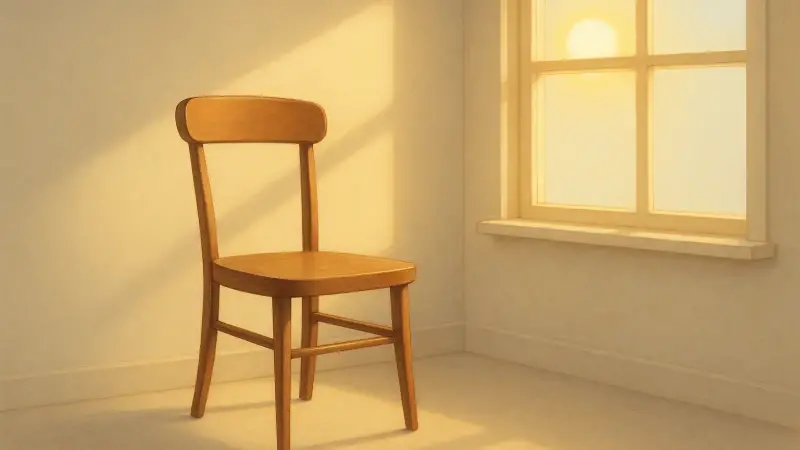
You can walk into almost any café and see it: one chair keeps ending up in the sunny window, even if nobody “assigned” it. This isn’t one specific place. It shows up in big chains and tiny rooms alike—think Starbucks in Seattle, a corner café in Paris, or a beach-town spot in Sydney. The core mechanism is simple. People move chairs to match what they want right now, and then staff reset the room in a way that keeps traffic smooth. Those two habits push furniture toward a few “stable” spots. Sunlight happens to be one of the strongest magnets because it changes how long a table feels comfortable to sit at.
Sunlight changes how long people stay
A sunny window seat isn’t just nicer to look at. It alters the temperature, glare, and even how visible you feel. Someone reading on a phone may shift away from direct sun because the screen washes out. Someone with a laptop might angle the chair to kill glare. A person who feels cold will drag a chair closer to the light without thinking much about it.
That constant micro-adjusting has a side effect. Chairs near the window get rotated, pulled out, and re-aimed more than chairs in the middle. Over a day, “more movement” usually means “more drift.” The overlooked detail is how small changes in chair angle matter. A chair turned slightly toward the glass is easier to pull farther toward the window the next time someone sits down, because the legs are already aligned to slide that way.
Paths through the room act like invisible rails

Cafés have a few dominant walking lines: the door to the counter, the counter to pickup, pickup to the trash or condiment station, and all of that to the bathrooms if there are any. People avoid snagging themselves on chair backs and table corners. So they nudge obstacles away from the path, usually without stopping their conversation.
Where does a nudged chair go? Toward edges. That often means toward walls and windows. A sunny window is usually on an edge, so it becomes a natural “storage” area for chairs that got moved out of the way. Even if a chair was borrowed from the window, a different chair might get pushed there later because it’s the nearest low-friction place to clear the lane.
People borrow chairs, but they don’t return them
Watch a busy hour. A pair arrives and grabs a third chair from the window so a bag has somewhere to go. Someone else pulls a chair from a two-top to make a four. A person waiting for a drink parks a chair near the entrance for a minute, then leaves it. Borrowing is common. Returning is rare.
This creates a simple imbalance. The window is a frequent source because it’s visible and easy to access without “taking” from someone’s active table. But the window is also a destination because it’s along the edge and feels like a safe place to put things. Over time, the same area can keep collecting chairs, even if the specific chair changes.
Staff resets favor symmetry and speed, not the original layout
When staff tidy, they’re optimizing for fast clearing and fast seating. They push chairs in, straighten the obvious lines, and make sure nobody trips. If there’s a “nice” visual anchor in the room—often the window—aligning furniture with it can feel like the quickest way to make the space look orderly.
That reset doesn’t necessarily restore the initial plan, even if there was one. It tends to reinforce the positions that already worked for traffic that day. If the window area ends up being where extra chairs collected, the reset may keep one there because it looks intentional and saves time. Small choices like stacking chairs near a wall or leaving one at a spot that helps staff squeeze past can quietly make the window the default endpoint.
The “best seat” keeps changing, and the chair follows
The sunny spot isn’t constant. Morning light hits one pane. Afternoon light hits another. In winter, sun feels like comfort. In summer, it can feel punishing. So the “best seat” shifts over the day, and people chase it by dragging chairs a little left or right along the glass.
Once a chair has migrated toward that bright patch, it tends to stay in the orbit of the window because the next person notices it first. A chair in the center blends into the grid. A chair already near the light reads as available and slightly special, even if it’s the same model as every other one. That tiny visibility advantage is often enough to keep the cycle going.
Related reads
- How having too many options makes decisions feel impossible
- Why strangers’ glances sometimes feel like being watched
- Why Saturn’s rings vanish and reappear depending on our viewpoint
- When an entire harbor froze solid and the climate mechanics that caused it
- Why the walking palm appears to relocate and the root mechanics behind it
- The bakery oven that chimes at midnight with an impossible melody