
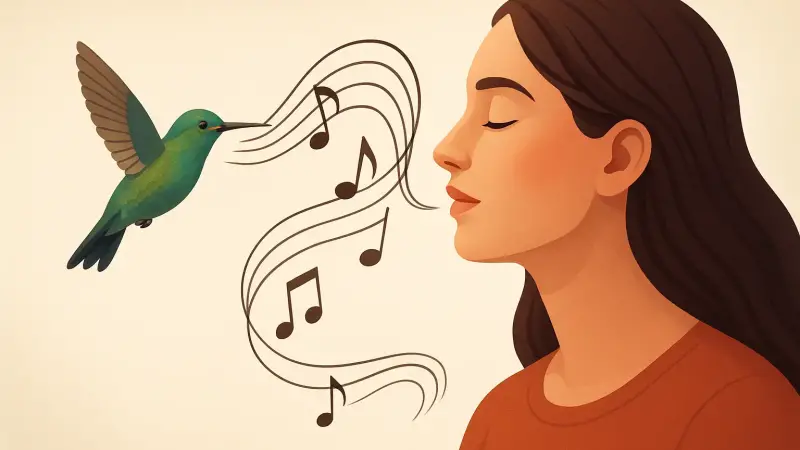
When a song is already over, but your brain keeps going
You can be washing dishes and suddenly your head is playing the same eight words again. It’s not one famous incident or one “sticky” place where this happens. It’s everyday life. It can be the hook from “Bad Guy” by Billie Eilish, the chorus of “Don’t Stop Believin’” by Journey, or the jingle that plays before a YouTube video. The basic mechanism is simple: the brain is good at predicting patterns, and a chorus is built to be predicted. When the song stops, the prediction system doesn’t always stop on cue. It keeps filling in what it expects next, even in silence.
Choruses are designed to be easy for memory to grab
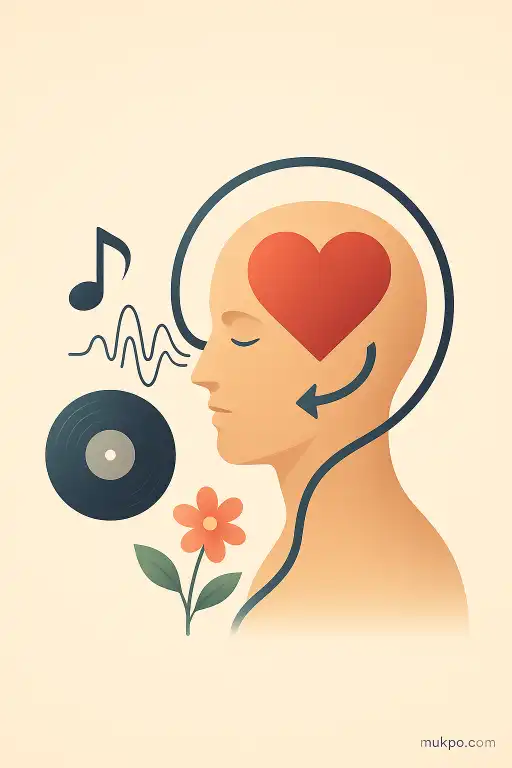
A chorus usually repeats the same melody and the same words. Repetition is not just marketing. It’s a memory trick. The brain stores sequences more easily when they come back unchanged, and when they sit on a steady beat. Choruses also tend to use small melodic steps and a narrow vocal range, so the tune is easier to “simulate” internally without effort. That matters because a loop in your head isn’t a full recording. It’s a rough mental model that works better when the melody doesn’t leap around.
There’s also the timing. Many pop choruses land after a build-up, so the brain has been waiting for that release. That anticipation strengthens the imprint. A detail people overlook is how often the chorus starts with the same rhythm each time, sometimes even the same consonant sounds. Those sharp onsets give the brain clear “anchors,” like a perfect place to restart the phrase when it slips.
Your mind treats an unfinished musical phrase like a loose end
Earworms often show up when the music is cut off, interrupted, or left unresolved. A song ends, but the last thing you heard might have been a partial phrase. Your brain is constantly completing patterns, and music is one of the clearest pattern systems it deals with. So it keeps running the next bar, then the next, until it lands somewhere stable. That’s one reason choruses loop: they’re the most stable, repeatable part of the structure, so the mind keeps returning to that safe “restart point.”
This can happen even when you’re not paying much attention. A chorus overheard in a grocery store can stick because the auditory system still tracked the beat and the pitch contour. Attention changes how strongly it lands, but it doesn’t have to be intense focus. The brain is willing to store a simplified outline of the hook, then replay that outline later when there’s downtime.
Why it shows up at weird moments, not while you’re listening
The loop often starts when the mind has spare capacity. Walking to the train. Showering. Waiting for a page to load. Those moments reduce external input and repetitive tasks don’t demand much planning, so internally generated sound can pop forward. It’s similar to how a half-remembered name appears when you stop actively searching. The brain’s background processes keep working, and when conditions are quiet enough, the output becomes noticeable.
A common situational example is hearing a snippet in a short video, especially if it’s the same chorus repeated across multiple clips. The repetition isn’t just inside the song anymore. It’s in the environment. That repeated exposure strengthens one specific segment, not the whole track, so the mental replay is more like a loop than a full song.
Why one line sticks and the rest disappears
Most people don’t replay verses in their head as often because verses carry more information. They have more lyrical variation and less repetition. The chorus is built around a small set of words that fit the rhythm neatly, and the rhythm often mirrors natural speech stress. That fit matters. If a lyric lands cleanly on the beat, it’s easier to “hear” internally. If it’s syncopated or wordy, the brain’s internal timing slips and the replay falls apart.
The overlooked detail is that the “stickiness” can come from tiny sound features, not just catchiness. A hard consonant at the start of a key word, a rhyme that lands exactly on a strong beat, or a repeated vowel sound can make the line easier to reboot. When the brain loses its place, it snaps back to the most reliable entry point, and that’s often the first half of the chorus, not the part you’d pick consciously.
Related reads
- Why years start to fly: the perception trick that shrinks long stretches
- The San Juan pig whose shooting nearly sparked a war between Britain and America in 1859
- A hoard of century old coins uncovered beneath a town square
- The Ottoman edict that closed coffeehouses and criminalized gossip
- How mental shortcuts steer snap judgments
- How mangrove roots act like natural filters for microplastics