
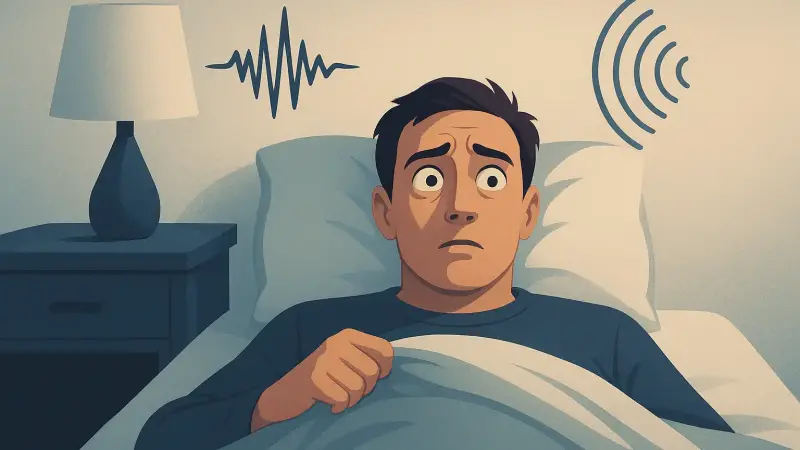
A radiator ticking in a New York apartment, a fox scream in a London back garden, a distant train horn outside Chicago—none of that is rare. It’s also not one single place or event. But at night the same ordinary sounds can feel louder, closer, and oddly wrong. Part of it is physical. Part of it is attention. The world changes when the sun goes down, even if your room doesn’t. Traffic thins out. Shops close. Heating systems cycle differently. Your eyes stop doing as much work, and your brain starts leaning harder on hearing. That shift alone can make a familiar noise feel like it came from somewhere it didn’t.
Night removes the masking noise you forgot was there
Daytime is noisy in a way people don’t notice because it’s constant. Cars on asphalt, HVAC fans, office printers, distant voices, even wind interacting with buildings. That background sound masks small, sharp noises. When it drops at night, the “signal-to-noise” ratio changes. A click from a cooling pipe was always present, but it used to be buried under everything else. Now it sits alone in the mix, so it registers as louder and more important.
There’s also a timing effect. A single creak separated by long silence feels bigger than a creak surrounded by other sounds. The gap makes the brain treat it like an event. It isn’t just volume. It’s contrast.
Sound can carry differently after dark
Outdoor sound doesn’t move through the same air all day. After sunset, the ground cools and the air near the ground can become cooler than the air above it. That temperature layering can bend sound waves back toward the ground instead of letting them drift upward. The exact effect varies with weather and terrain, so it’s not guaranteed. But on some nights, distant noises like highway hum or a train can seem to “sit” over a neighborhood more than they do in the afternoon.
A specific detail people overlook is humidity. Moist air absorbs less high-frequency sound than very dry air, so certain crisp components of a noise can carry a little better when conditions are right. It’s subtle. But it changes what arrives at your ears, and that changes what you think you’re hearing.
Your brain turns up the gain when vision isn’t doing as much
In low light, vision becomes less detailed and less reliable for quick identification. The brain compensates by putting more weight on hearing. That doesn’t mean your ears physically become superhuman. It means attention shifts. A small sound gets more processing power because it might matter. In a bright room you can glance at the corner and settle it. In the dark you can’t, so the sound keeps its grip longer.
This is why a familiar house noise can feel “new” at 2 a.m. The sound itself hasn’t changed much. The interpretation has. Without a matching visual cue, the brain tests more possibilities before it settles on the boring one.
Direction and distance are easier to misread at night
Humans localize sound using tiny differences between the ears, plus reflections off walls, ceilings, and furniture. At night, people often lie down, turn their head differently, or have one ear pressed into a pillow. That changes those cues. It can make a noise seem like it came from the hallway when it actually came from the window, or like it moved when it didn’t.
Rooms also behave differently when the house “settles.” Heating turns off. Pipes cool. Wood contracts. Those changes create intermittent sounds that don’t repeat on a neat schedule, which makes distance judgments worse. The brain likes predictable patterns. Irregular timing reads as “unknown source,” even when it’s just a building doing normal building things.
Nighttime meaning is different, even for the same sound
Context changes how threatening a sound feels. Footsteps in an apartment hallway at noon usually fit a story: neighbors, deliveries, maintenance. At 3 a.m., the same footsteps may not match an expected script. The sound hasn’t become supernatural. It has become harder to place into a normal routine. That uncertainty makes it feel creepier.
Even animal sounds get recategorized. A cat yowl, an owl call, or a fox scream can land as “human-like” in the dark because the brain is already scanning for unusual social cues. The late hour adds weight to the interpretation. The noise feels louder partly because it feels like it means something, and meaning is what the brain is built to chase.
Related reads
- The mushroom that smells like rotting meat to lure flies
- A street mural that rearranges its bricks to spell new names at dawn
- How a single antibiotic reshapes your gut microbiome
- The park fountain that refilled itself with freshwater during a drought
- A radio frequency that broadcasts the same lullaby across three countries
- Why certain minerals split light into rainbow halos