

You can watch it happen in a familiar place like an elevator in a New York City apartment building, a Zoom call where everyone’s camera is on, or a dinner table where the server just walked away. Someone says something small. Anything. A weather comment. A joke that isn’t really a joke. It’s not one single cultural rule or one specific moment. It varies by country, group, and setting. But the mechanism looks similar: silence gets interpreted fast, and people start scanning for what it might mean. When that scan feels risky, speech becomes a quick way to lower uncertainty, even if the words don’t add much.
Silence gets treated like a signal
In ordinary conversation, people expect a certain rhythm. When it breaks, the brain doesn’t label it as “nothing.” It often labels it as “something happened.” That “something” could be boredom, disapproval, confusion, or a social misstep. The problem is that the meaning is unclear, and unclear meanings are uncomfortable in groups.
The scramble to speak is partly a scramble to stop the mind from filling in worst-case explanations. A neutral pause can feel like a tiny test. Even when nobody is judging, it can feel like they are, because humans are built to read social cues quickly and defend their standing.
Turn-taking pressure is real and physical
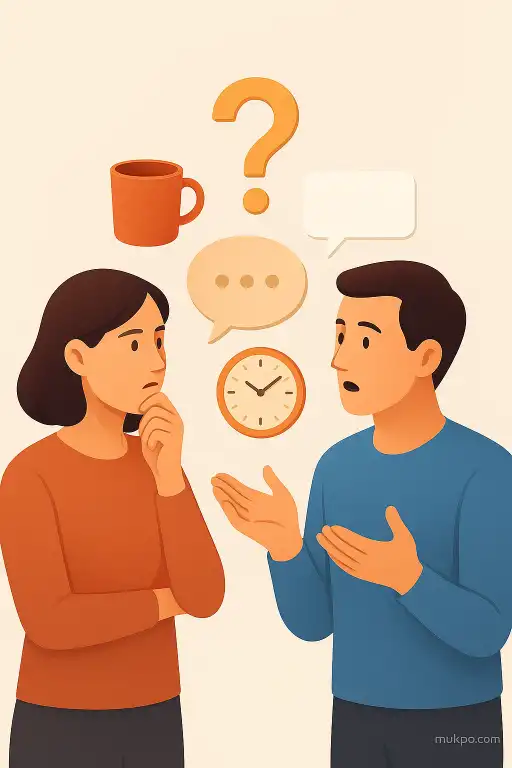
Conversation has an unspoken system for who talks next. People track it without thinking. When the system stalls, someone has to “pay” the cost of restarting it. That cost can feel like exposure: if you speak and it lands badly, now the silence is your fault. So the longer the pause goes, the more pressure builds for someone to jump in and reset the flow.
A specific detail people overlook is how fast this timer starts. The pause doesn’t have to be long. A couple of beats after a question can trigger a little spike of alarm, especially if the last line sounded like it needed a response. You’ll sometimes see the body react before the words come: a quick inhale, a posture shift, eyes flicking to check who will rescue the moment.
People protect their social position, even in low-stakes rooms
Awkward silence threatens more than comfort. It can threaten roles. In a work meeting, silence after a suggestion can make the speaker feel they misjudged the room. In a first date, silence can feel like a verdict. In a family conversation, it can hint at conflict that no one wants to name. Talking, even about something trivial, can be a way of signaling “we’re still fine.”
This is why the most talkative person in the group often does the most silence-filling. It isn’t always personality. It can be job-like behavior. They’ve learned that keeping the air moving keeps the group stable, and stability is a kind of status. If the room goes quiet, they feel responsible for the temperature dropping.
Silence can mean different things across cultures and subcultures
Not every group treats silence as a problem. In Finland and Japan, for example, longer pauses can be more accepted in some settings than in the United States or the UK, where rapid back-and-forth tends to be read as engagement. Even within one country, subcultures differ. A therapy session, a classroom, a bar conversation, and a religious service all teach different rules for how long quiet is allowed to last.
That mismatch creates a special kind of awkwardness: two people can both be behaving politely by their own standards and still unsettle each other. One person waits because they think interrupting is rude. The other interprets the wait as disapproval and rushes to fill it. The scramble is sometimes just a clash of timing norms.
Filler talk works because it buys time
When someone blurts “So, yeah,” or asks an obvious question, it can sound meaningless. But it serves a function. It stakes a claim to the floor without committing to a real idea yet. It buys a second to plan a safer sentence. It also gives others a chance to jump in, which can spread the risk around.
In a concrete scene like a Zoom meeting, the effect gets sharper. Lag and audio delays make people fear they’re talking over someone, so they hesitate. Then the silence stretches. Someone fills it with a quick “Can you all still hear me?” even if they already know the answer. The words aren’t the point. The point is reestablishing that the channel is open and the group is still coordinated.

Related reads
- How a meteorite can seed new minerals in desert soils
- An island where cats outnumber people by the dozens
- The Italian town that banned high heels to stop tourists chipping its ancient stones
- How short routines calm decision anxiety
- The 1814 London brewery disaster that flooded streets with porter
- The town that resurfaces from a reservoir when waters fall